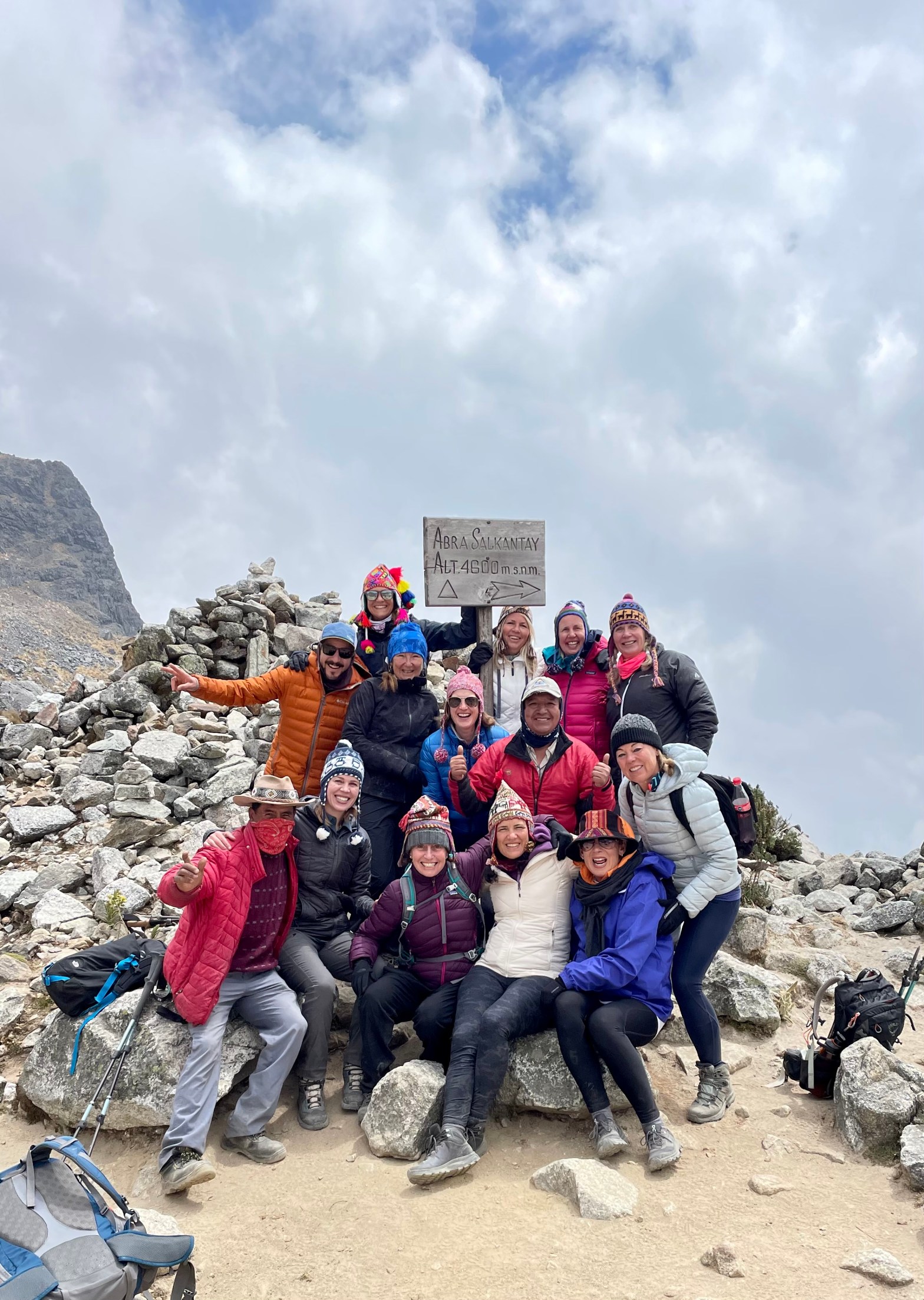
SEPTEMBER 3-15, 2022
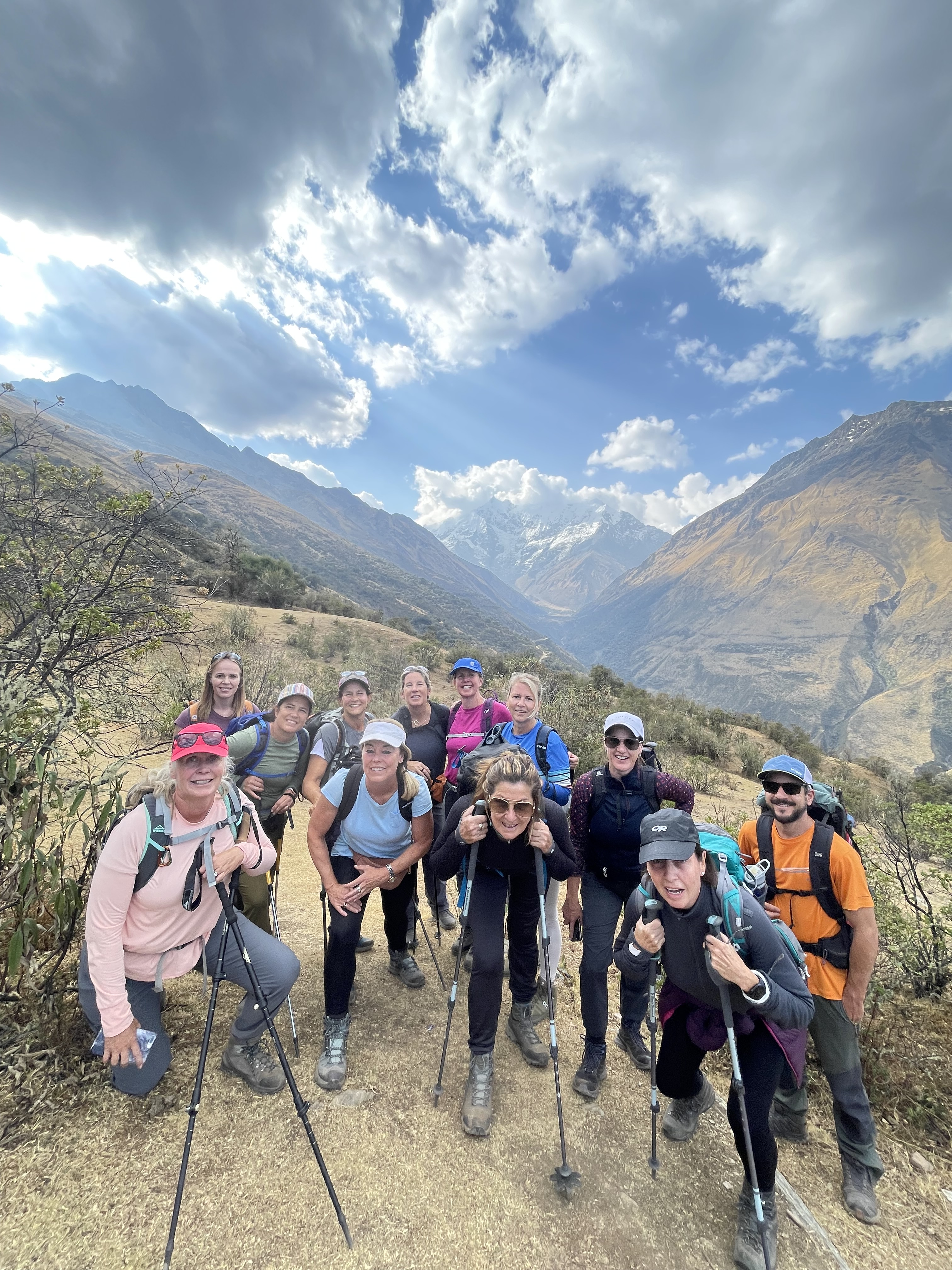
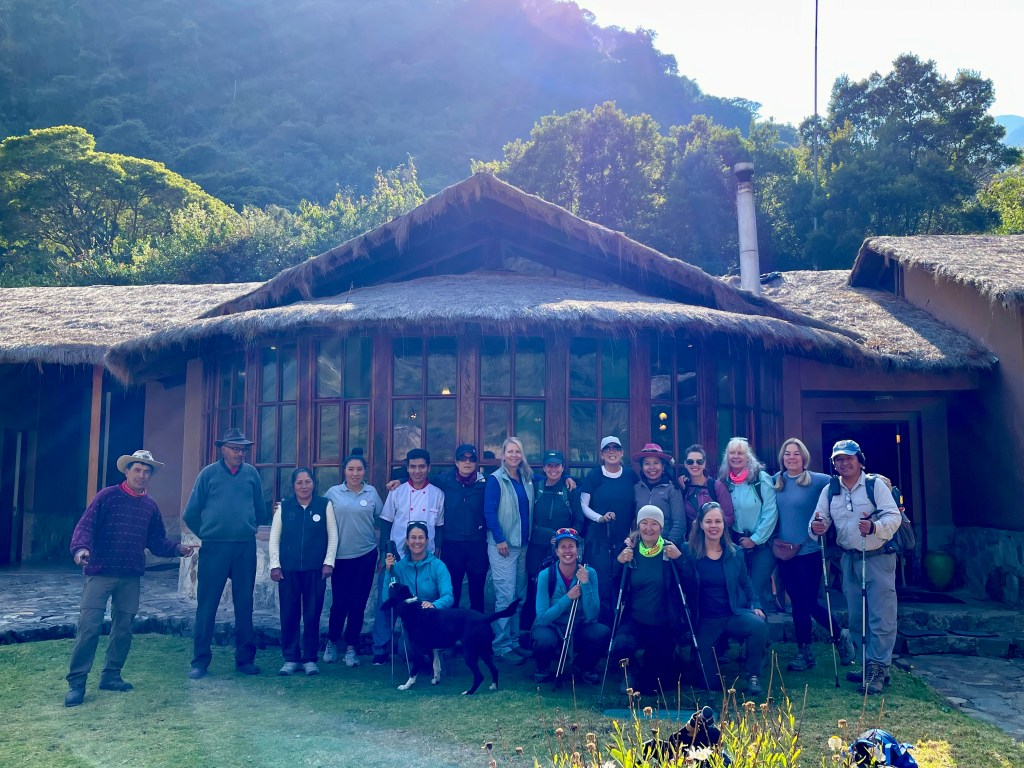
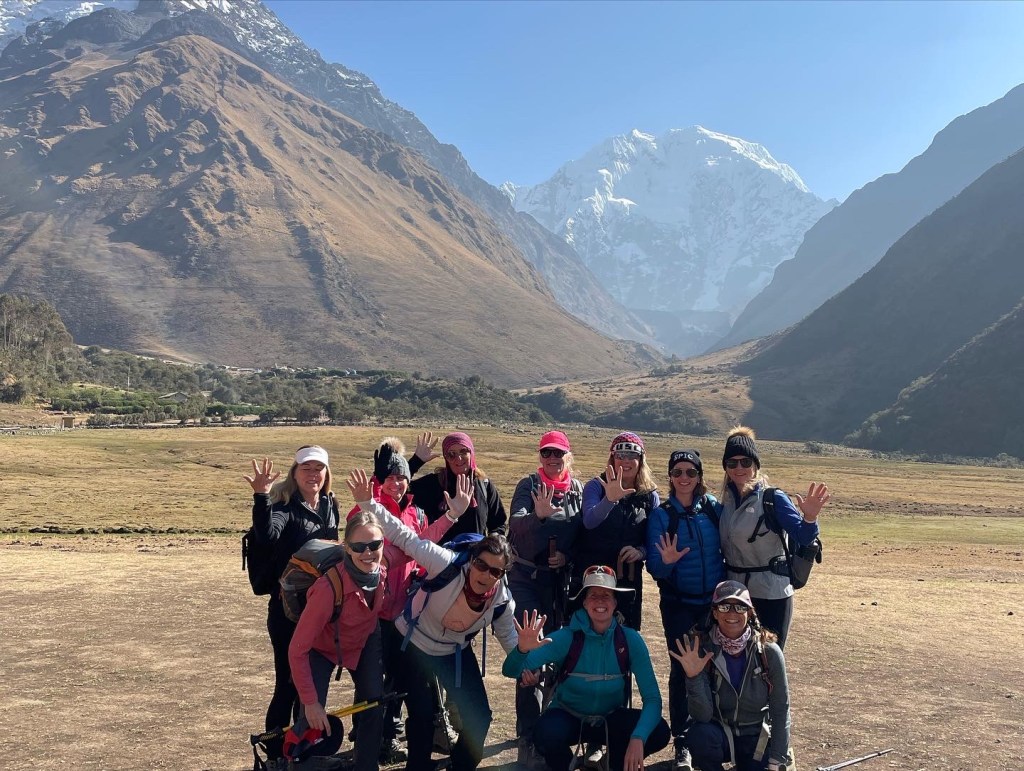
Peru, how we loved you! This South American country is magnificent, ancient, welcoming, and rich in its people and traditions. Hiking the Salkantay Trail was challenging, emotional, spiritual, and utterly life affirming. Here is a photo diary of our adventure:
“In the face of adversity, our true character is revealed. The Incas’ resilience is a lesson for us all.” Mark Adams, author, Turn Right at Machu Picchu (a must read before you go!)
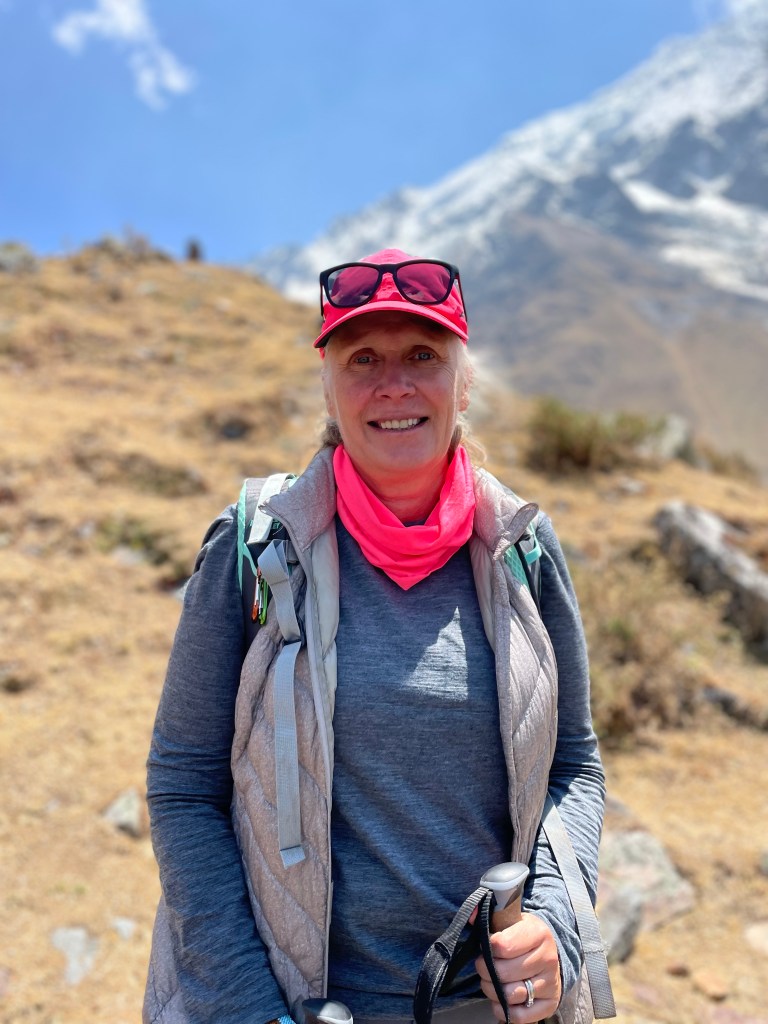
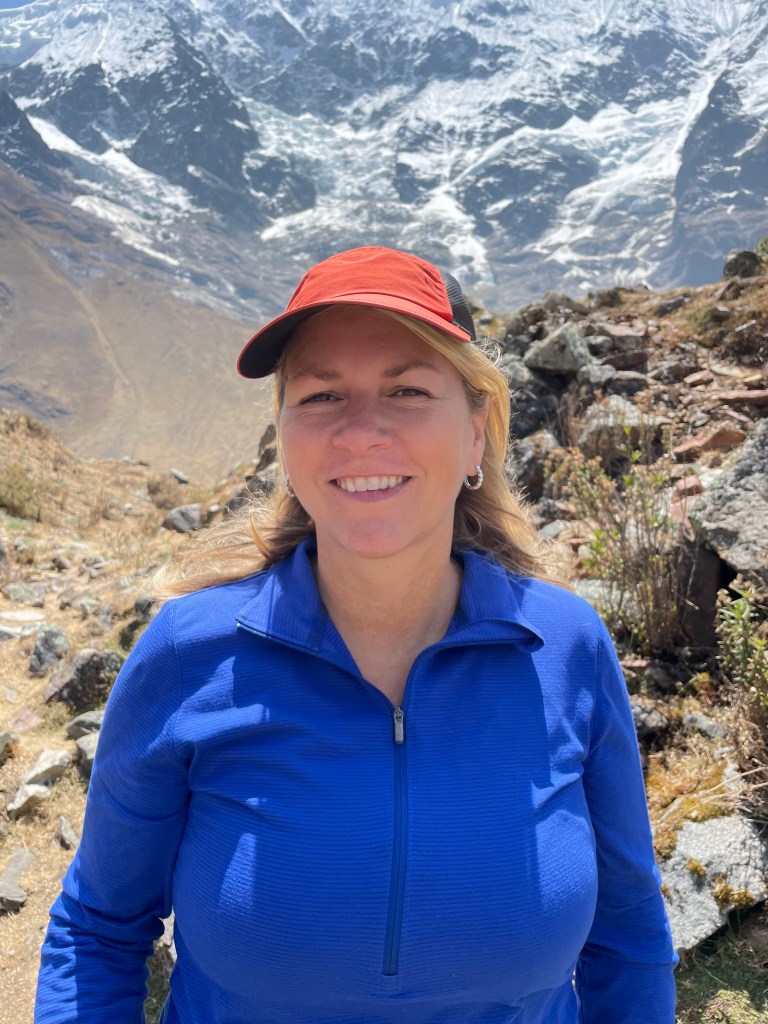
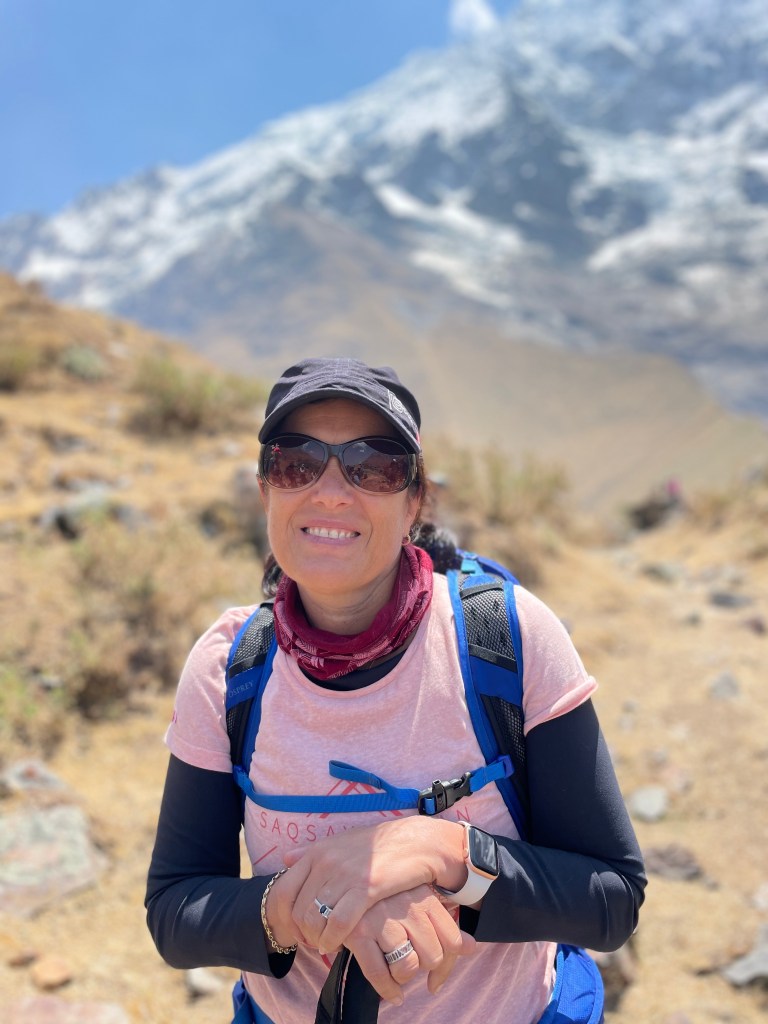
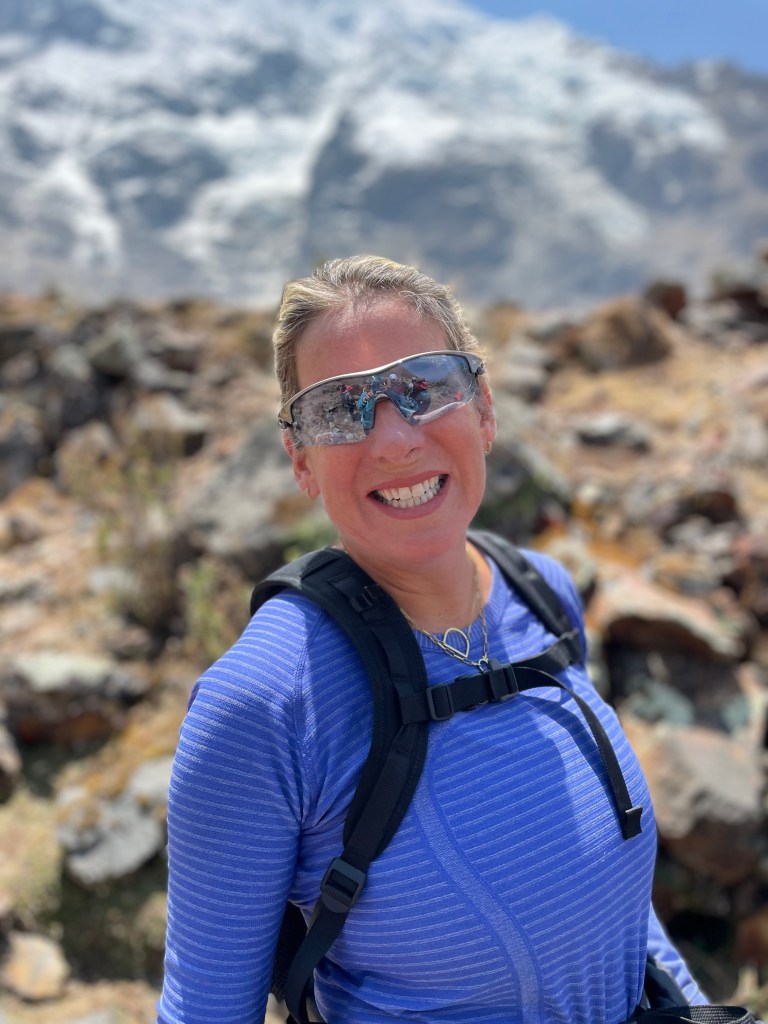
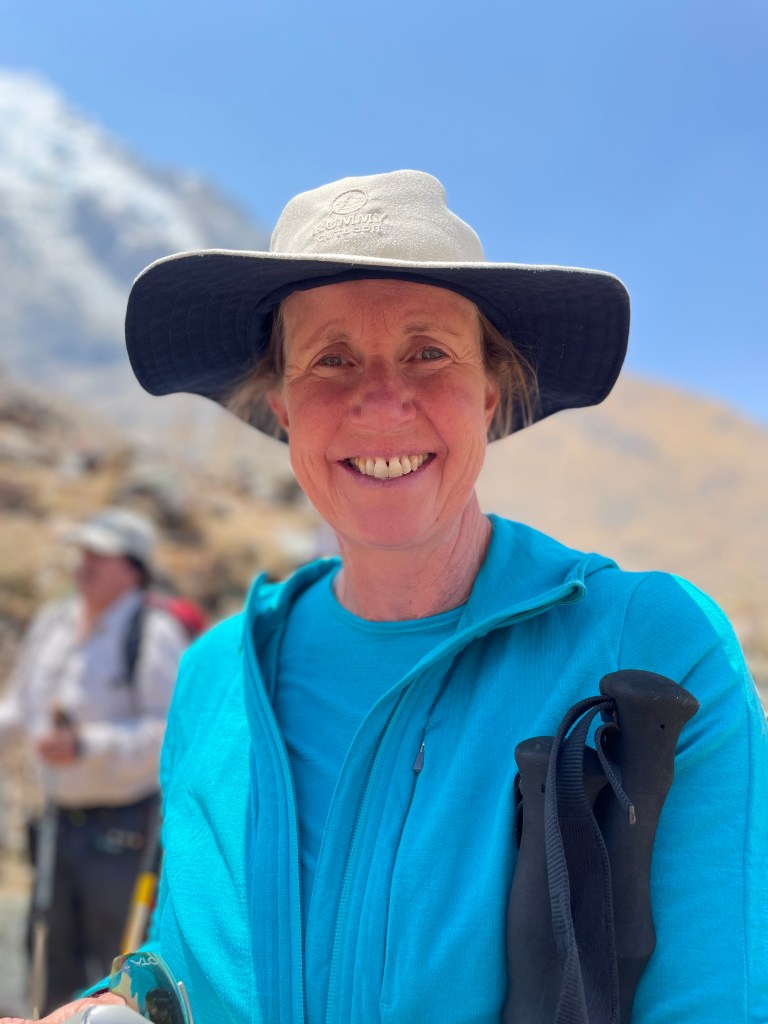
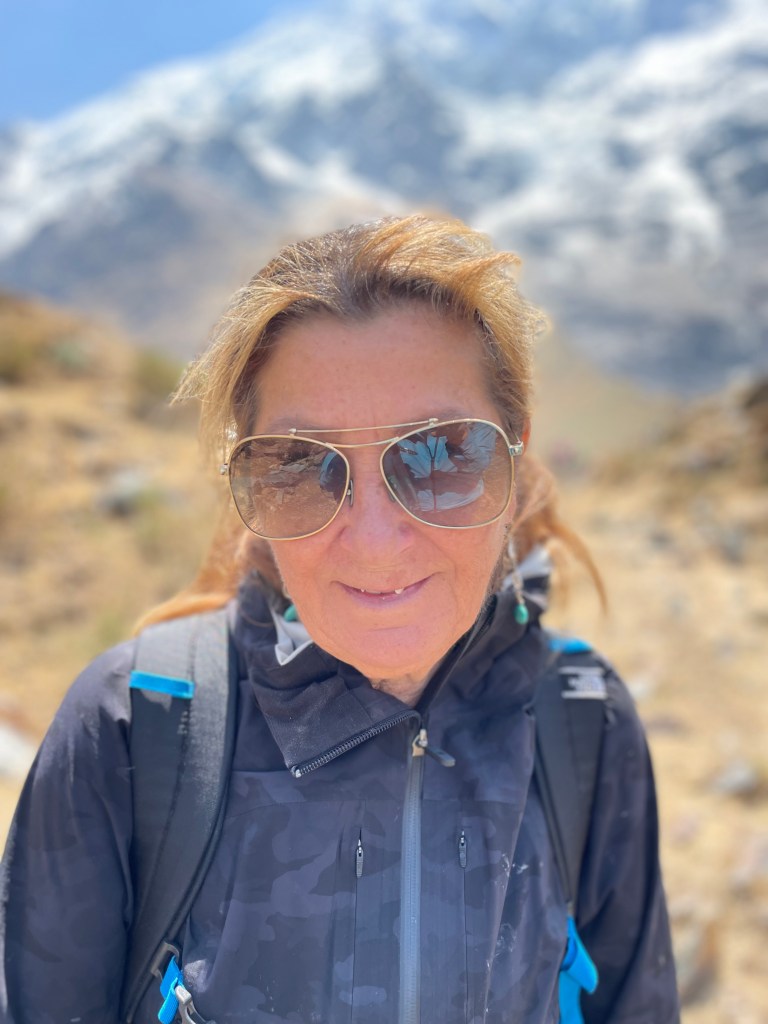
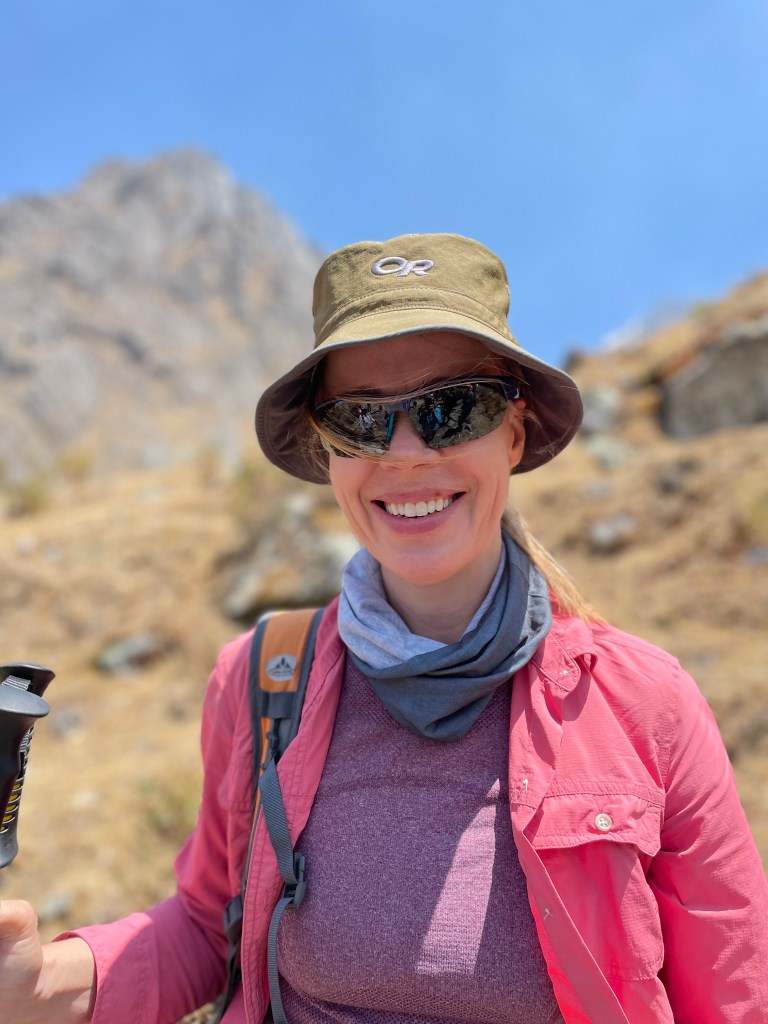
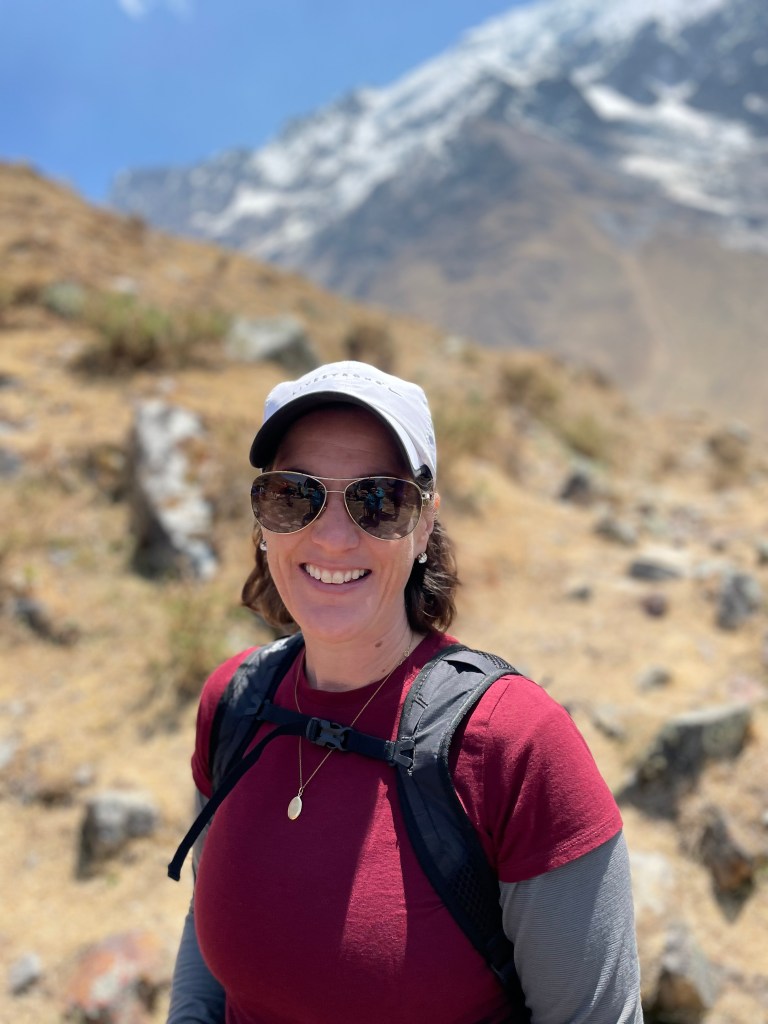
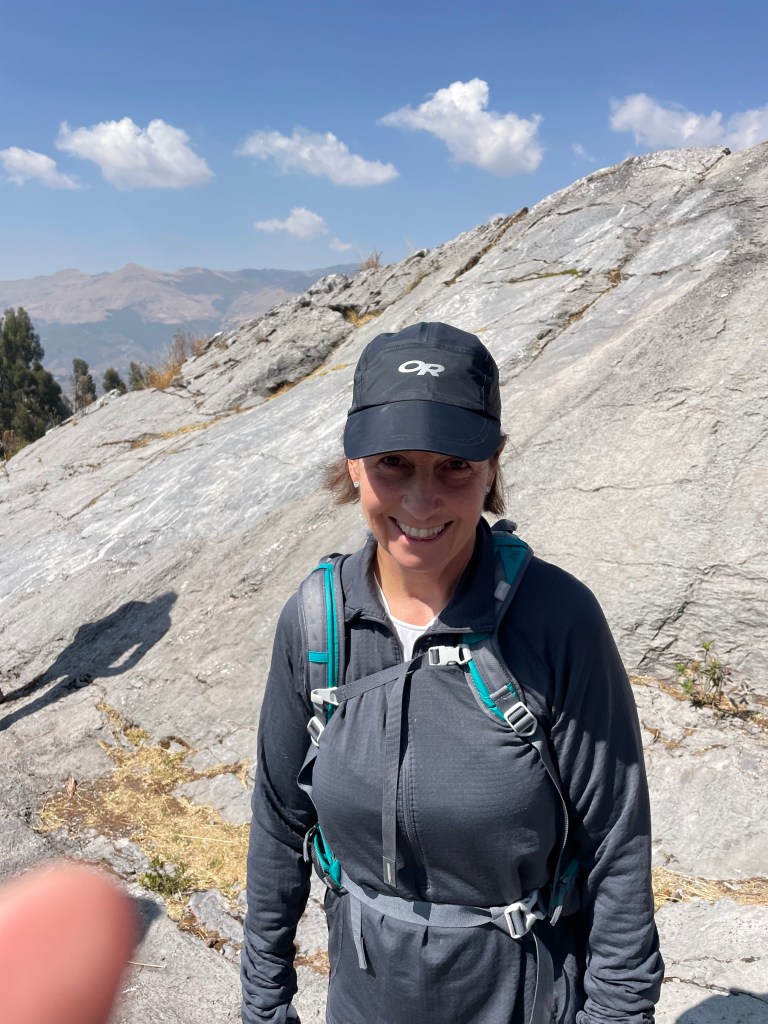
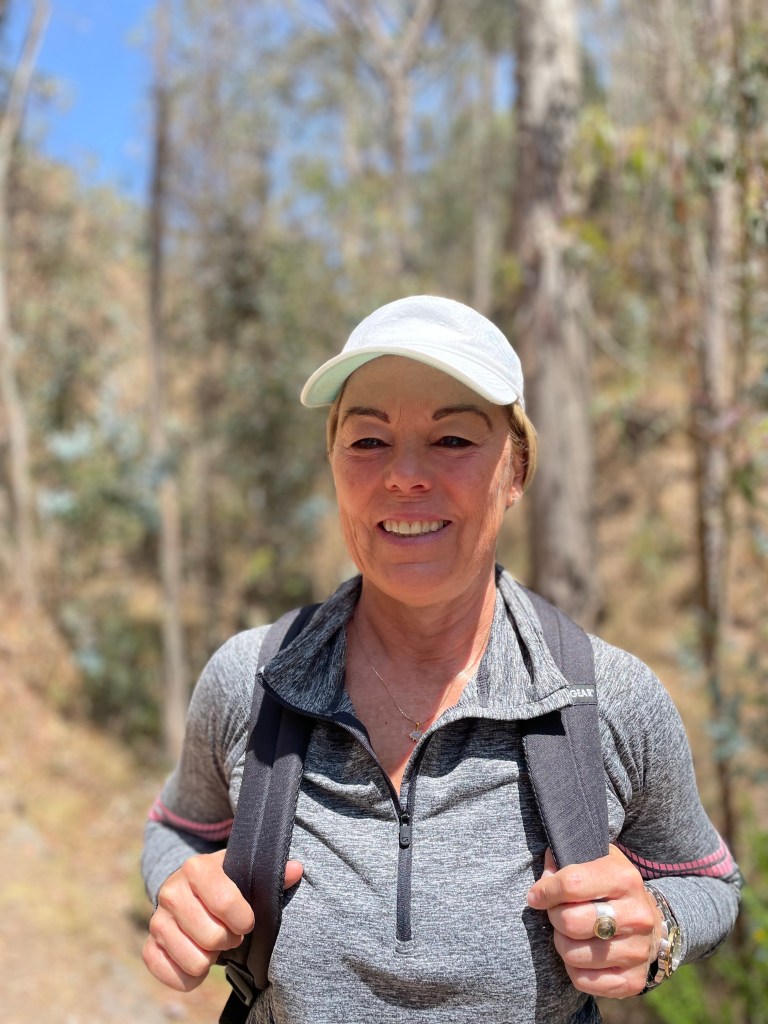
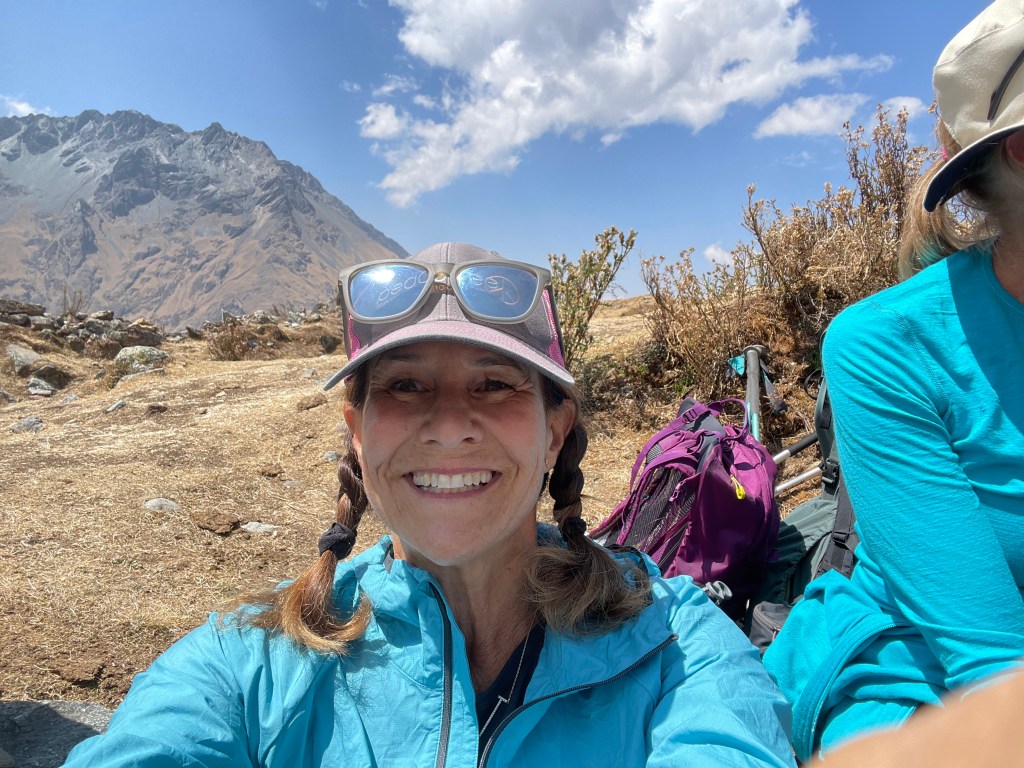
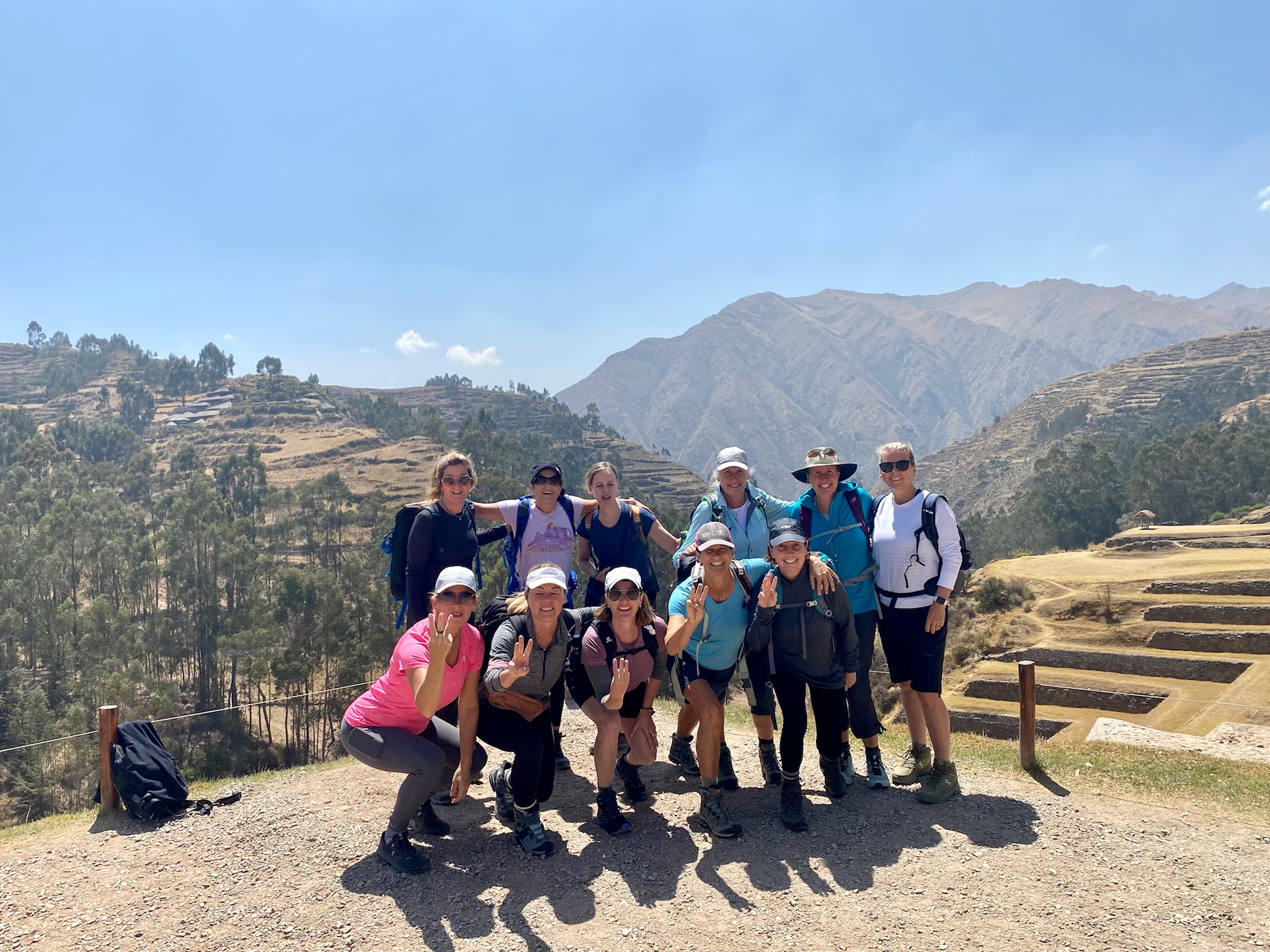
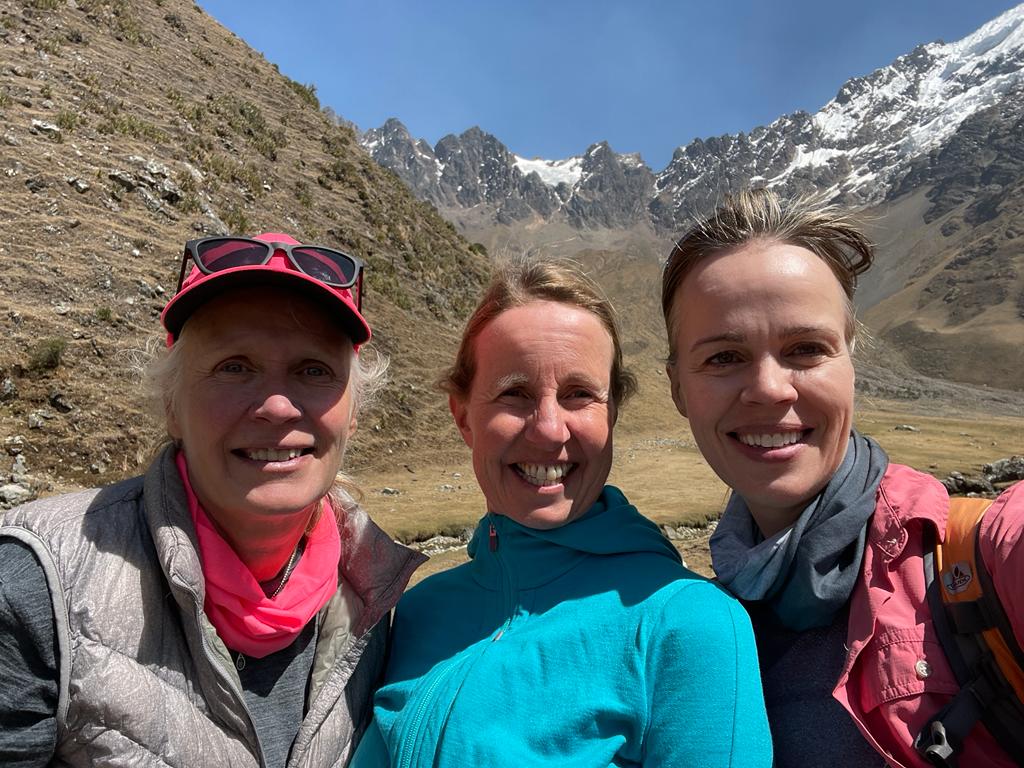
THE SISTAS
GUIDING COMPANY
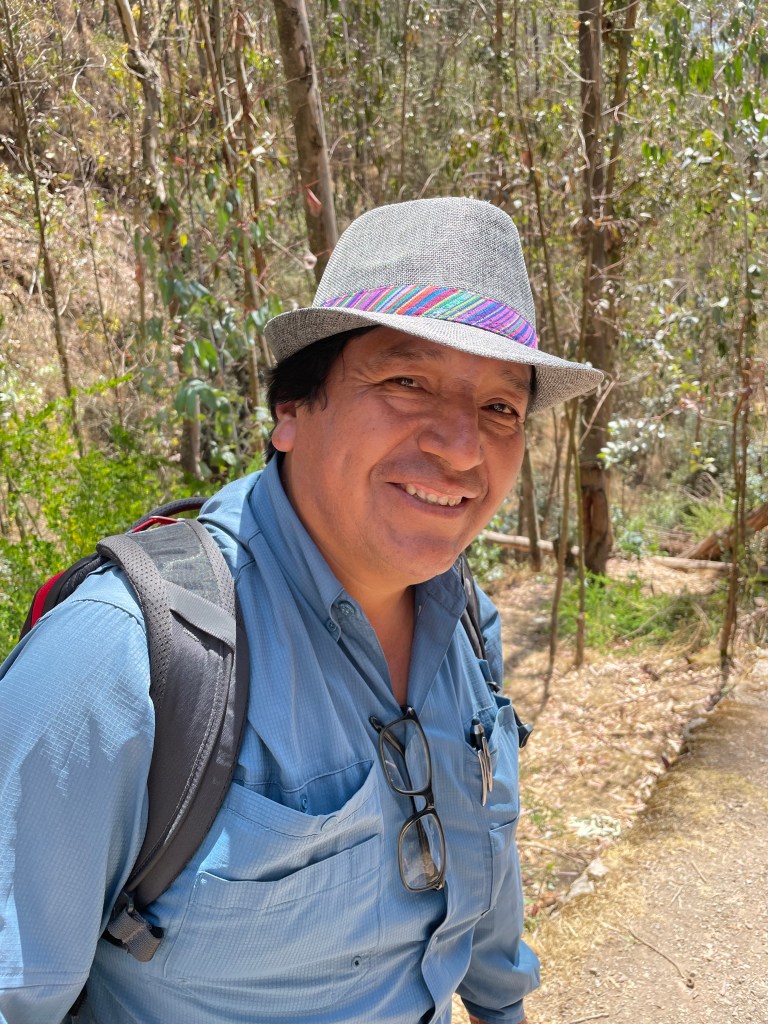
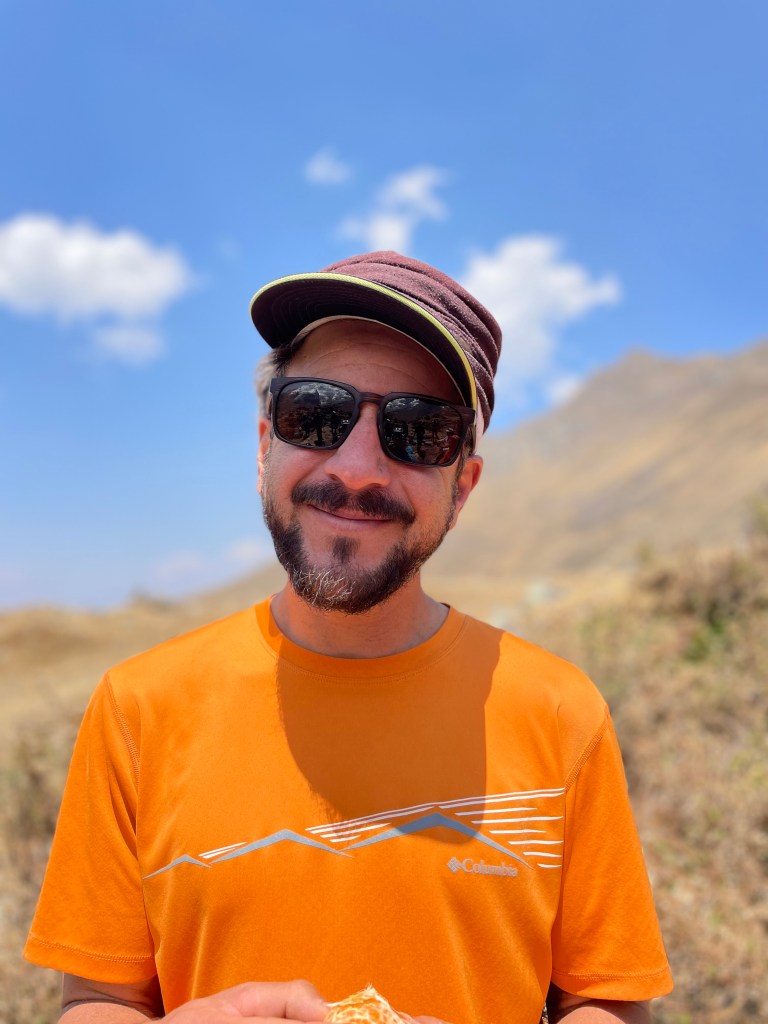
I highly recommend Mountain Lodges of Peru to organize and guide your trip. Our lead guide, Wilfredo Huillca, is the most caring, intellectually curious guide: he is a scholar versed in architecture and history, as well as a musician. Our second guide, Daniel, was infinitely patient, a great conversationalist, and an amateur yogi who treated us to nightly stretches. We were in great hands. Moreover, they own the most INCREDIBLE (and only) lodges along the Salkantay Trail!
DAYS 1 & 2: LIMA
ACCOMMODATION: We doubled up in rooms and stayed at the gorgeous Miraflores Park, A Belmond Hotel. Located in the posh neighbourhood of Barranco, it offers top notch service and rooms, and wonderful dining (especially the breakfast smorgasbord).
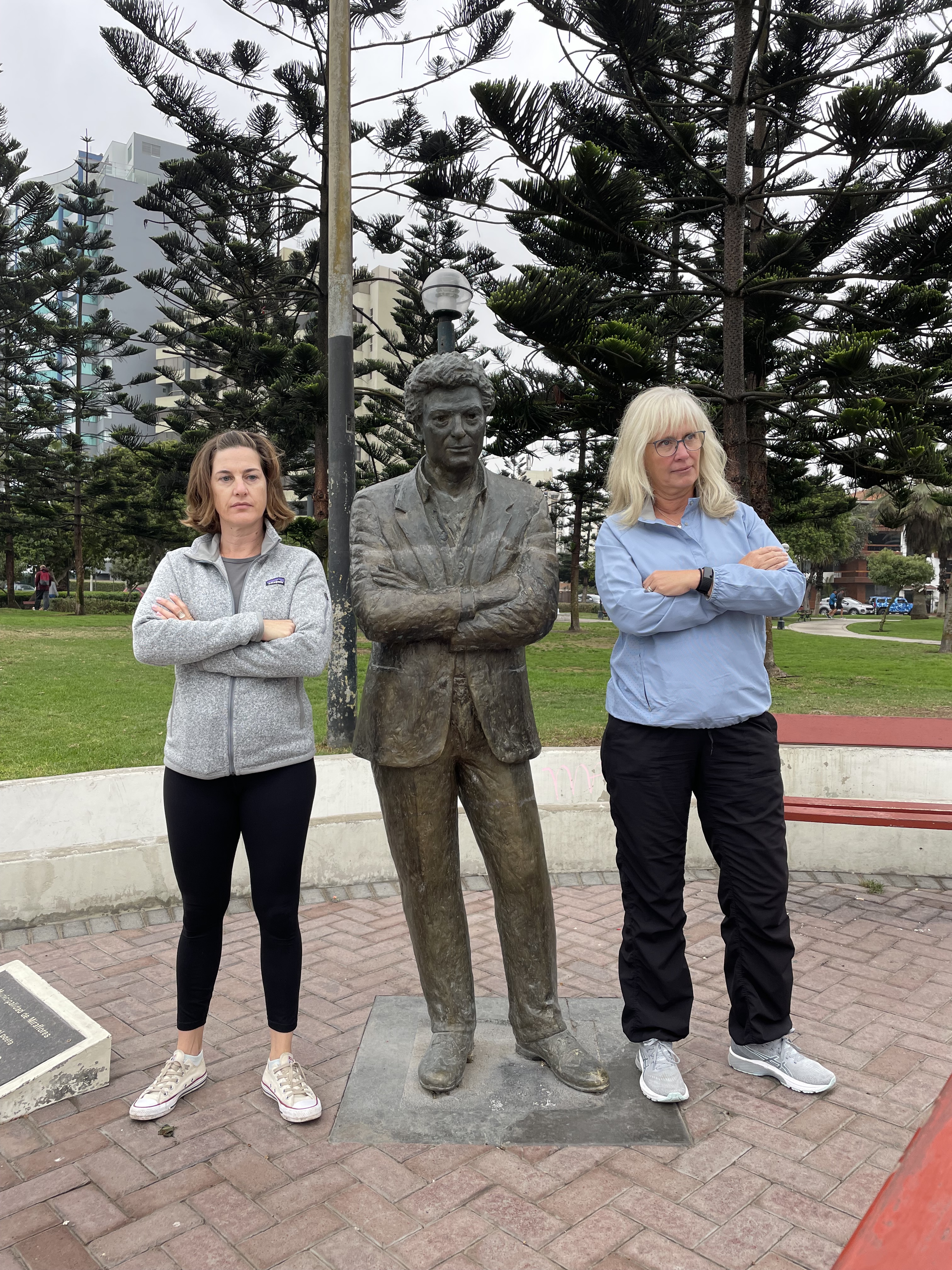
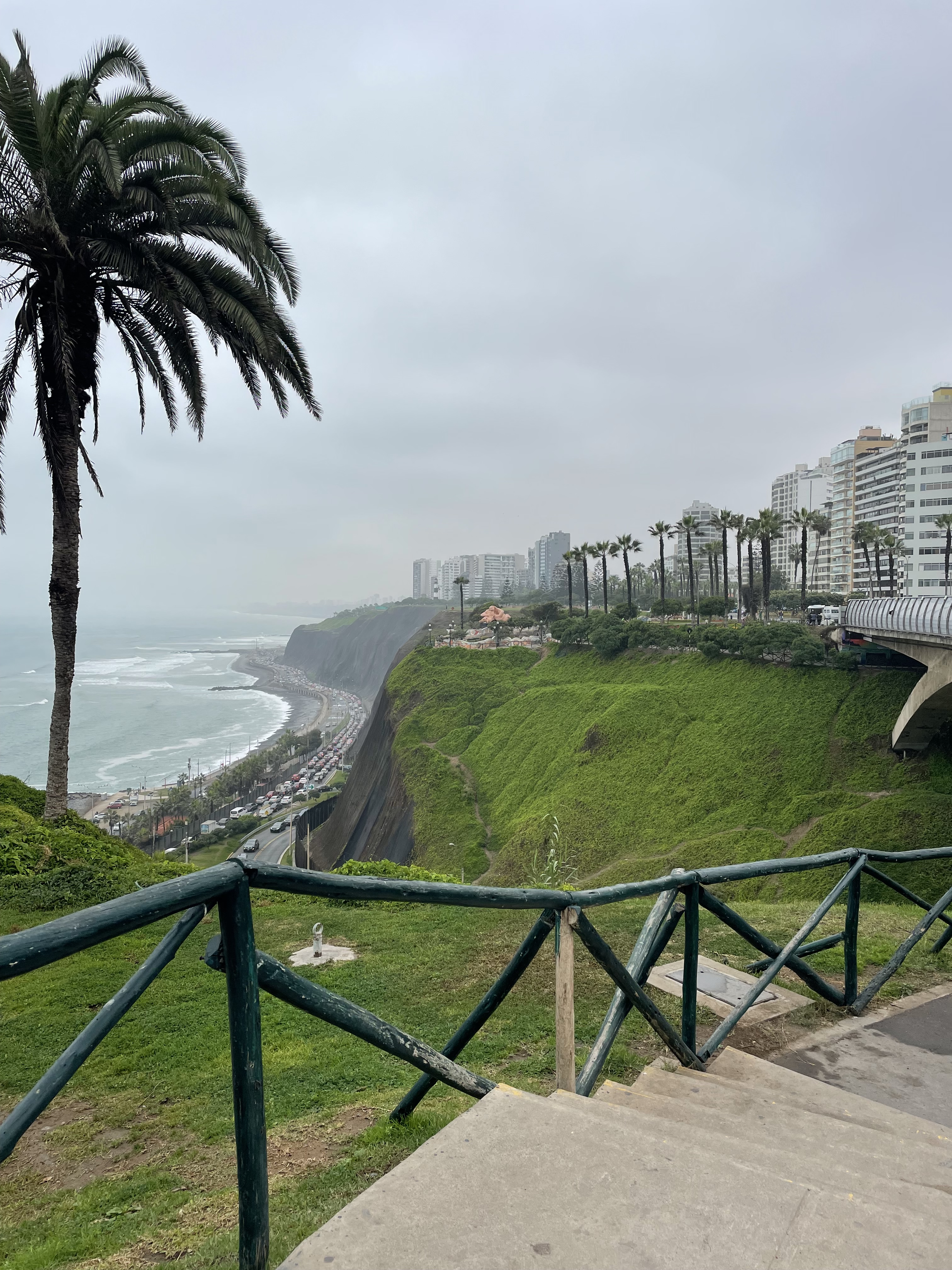
While we were waiting for everyone to arrive, we walked the cliffside promenade and cosmopolitan local streets, ventured out on the long pier, and dined at the hotel.
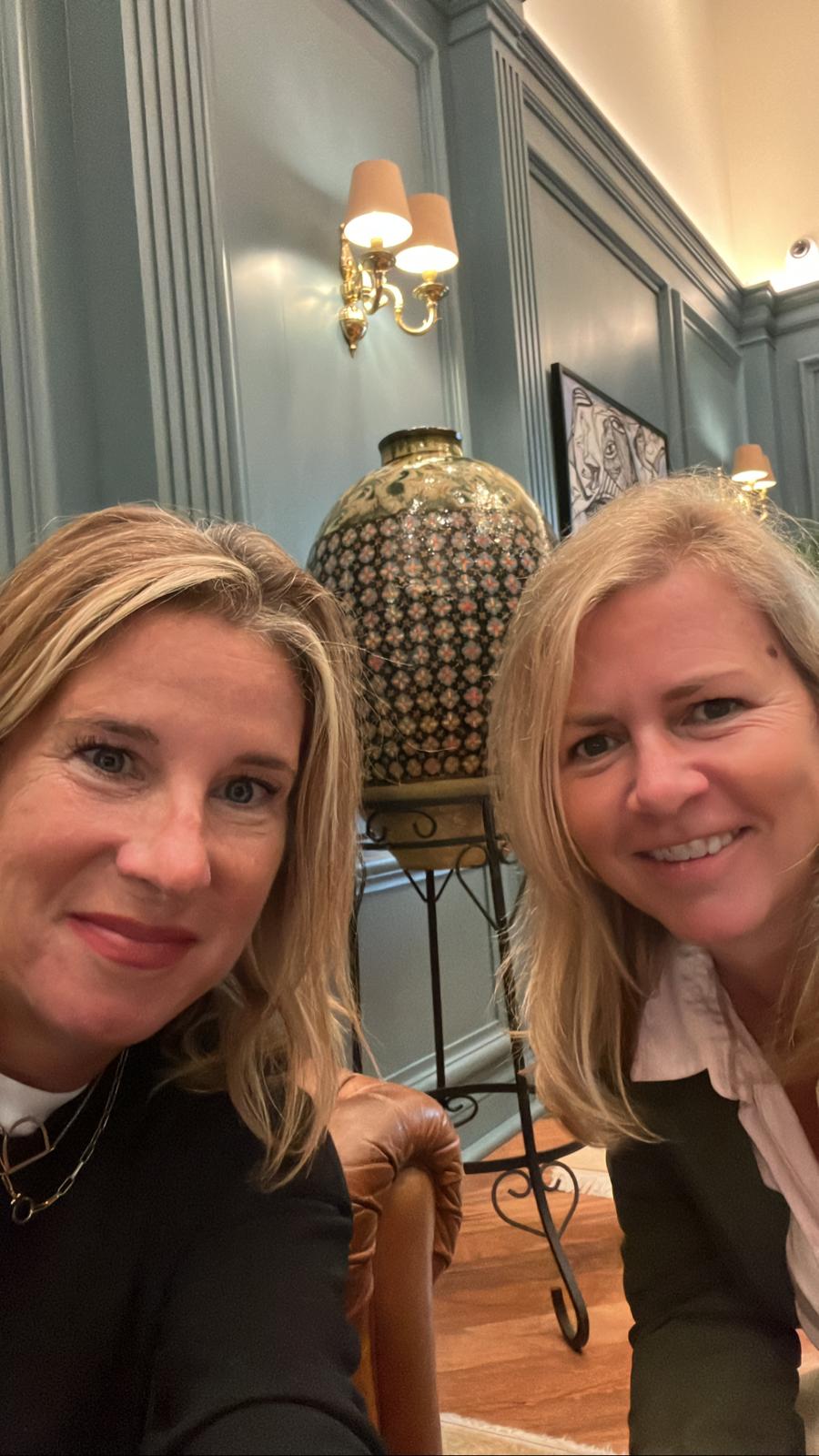
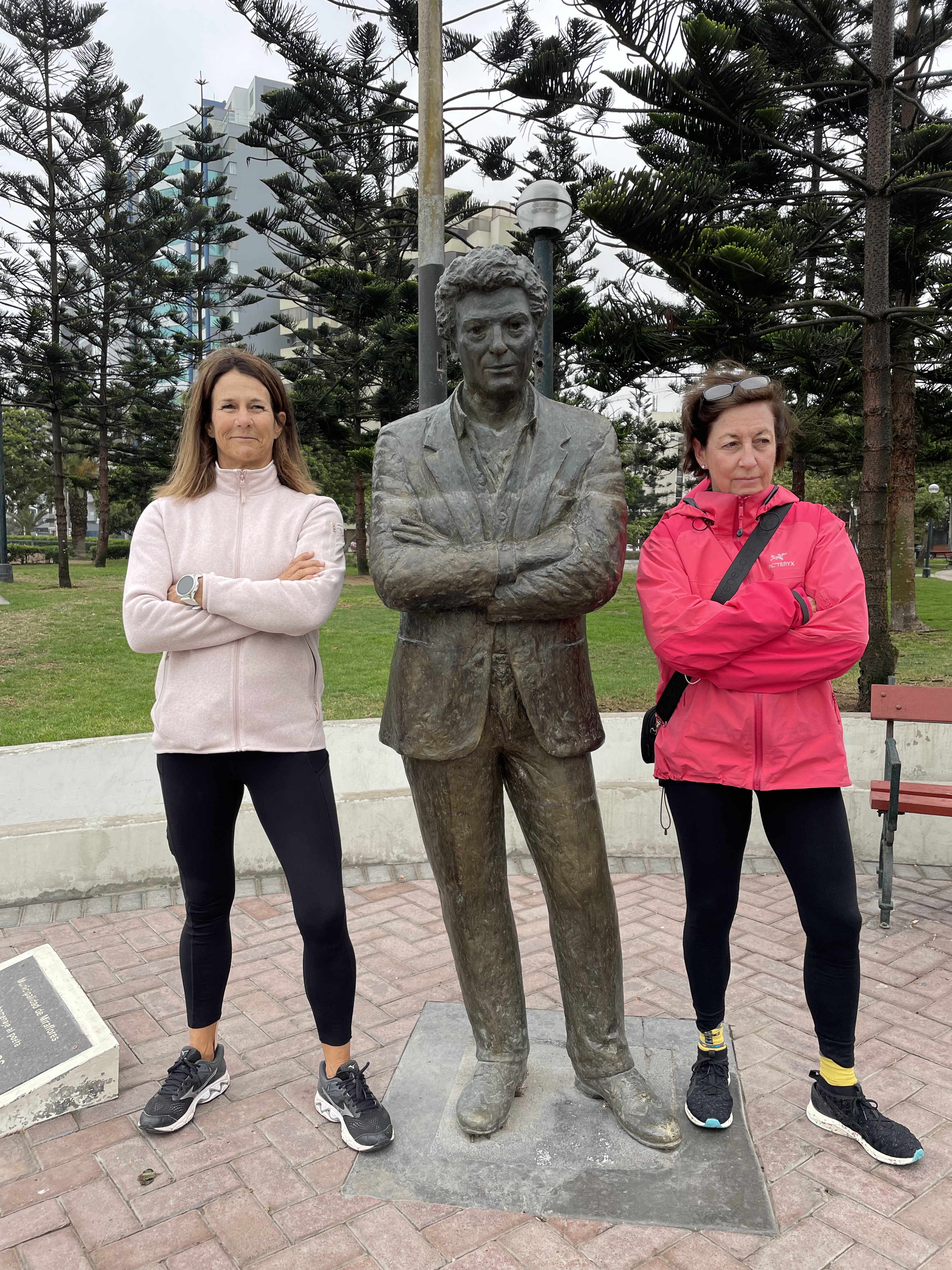
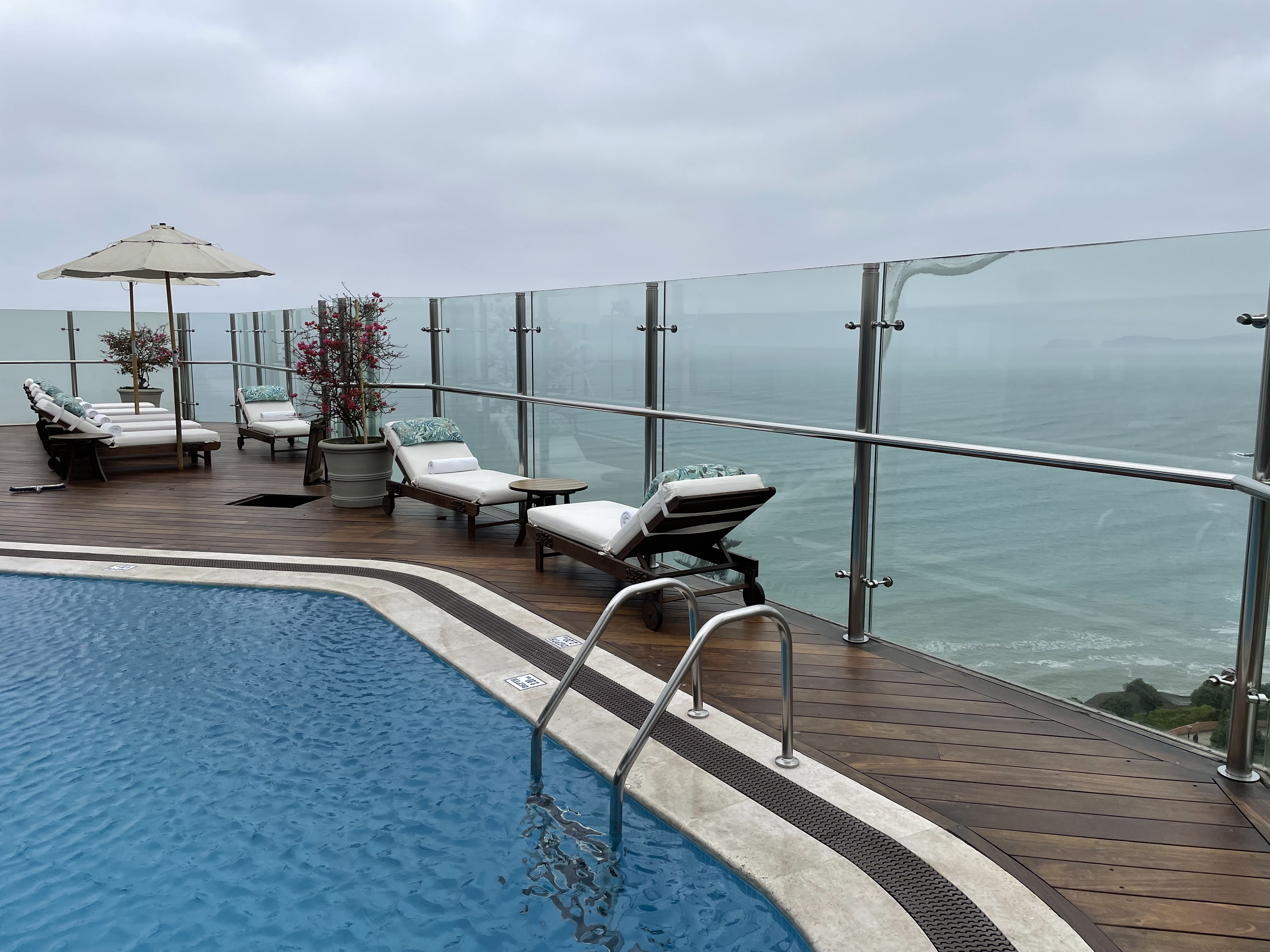
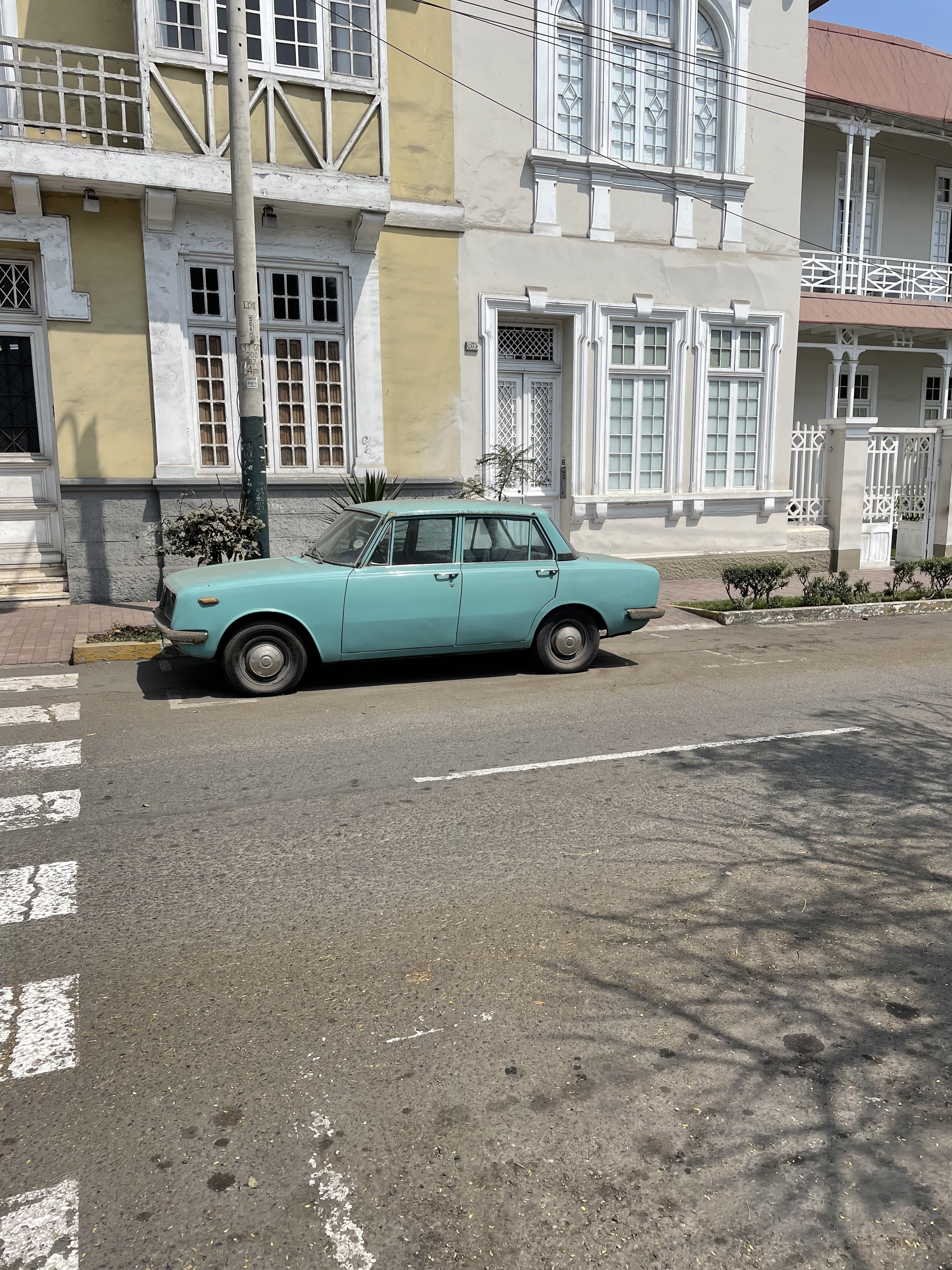

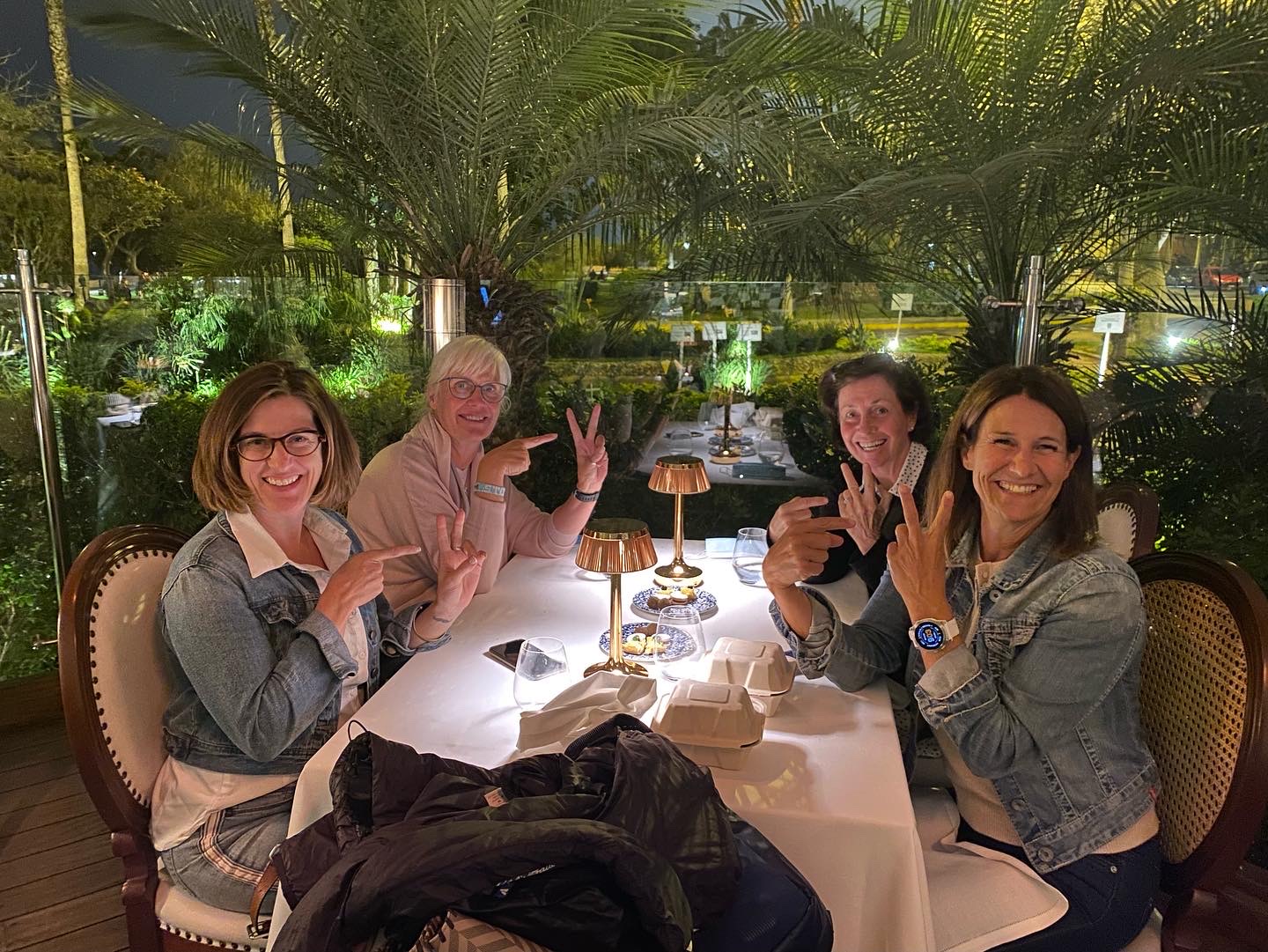
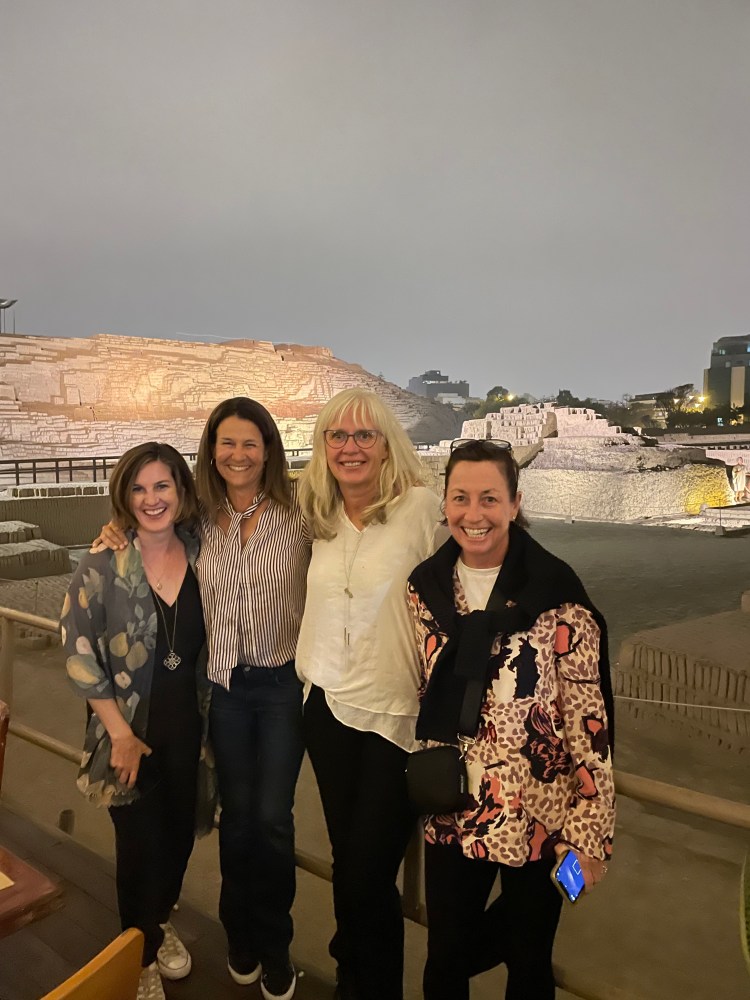
Our coolest meal was inside 1500-year-old Incan ruins, in the heart of Lima, at Huaca Pucllana Restaurante. The menu is Peruvian fusion.
DAY 3: CUSCO
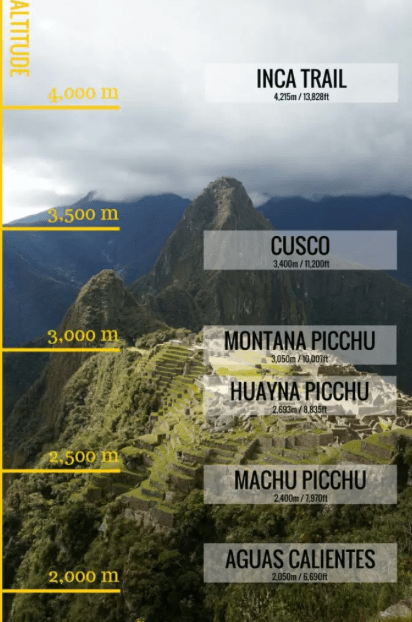
Peru’s 3rd highest city, Cusco is not only a living history lesson but also the gateway to Machu Picchu, the Salkantay Trail, and adventure. “The city of Cusco extends throughout the Huatanay river valley. Located on the eastern end of the Knot of Cusco, its elevation is 3,399 m (11,152 ft). To its north is the Vilcabamba mountain range with 4,000–6,000-meter-high (13,000–20,000-foot) mountains.” When your plane lands, you never descend. You keep going up until you land on the runway: it sort of blows your mind. I love this image to explain the altitude:
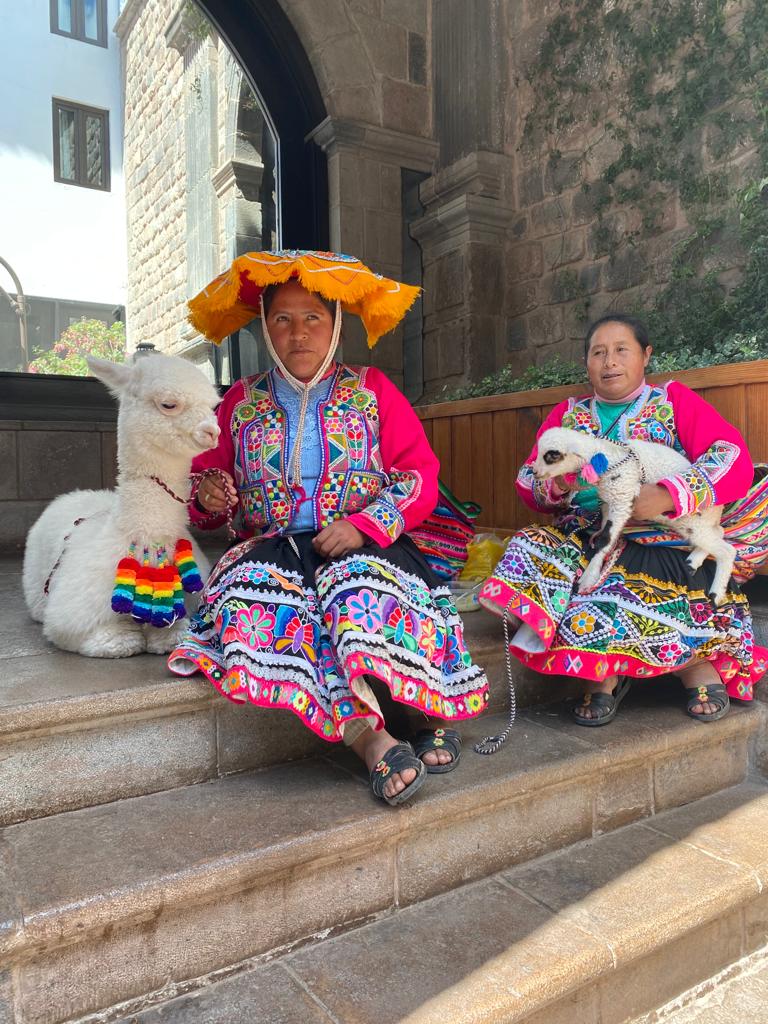
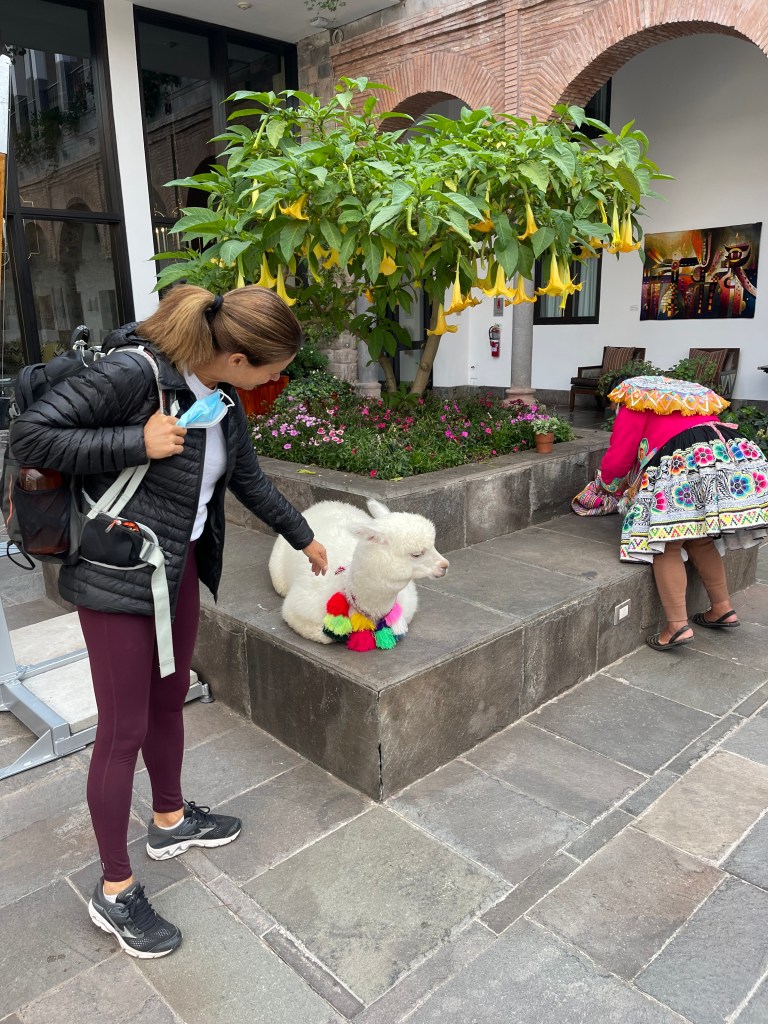
ACCOMMODATION: From September 3-7, we stayed in a 16th century converted convent in the heart of Cusco: JW Marriott El Convento Cusco. I’ve stayed in some questionable Marriotts but this one, full of ancient relics, with a great spa, restaurant, gym and yoga classes, is amazing. Local vendors, with their alpacas, hang out in the centre courtyard. And, like all the good hotels, they pump extra oxygen into your room to help with acclimatization because altitude sickness is real.
DAY 4: FULL DAY SACRED VALLEY TOUR
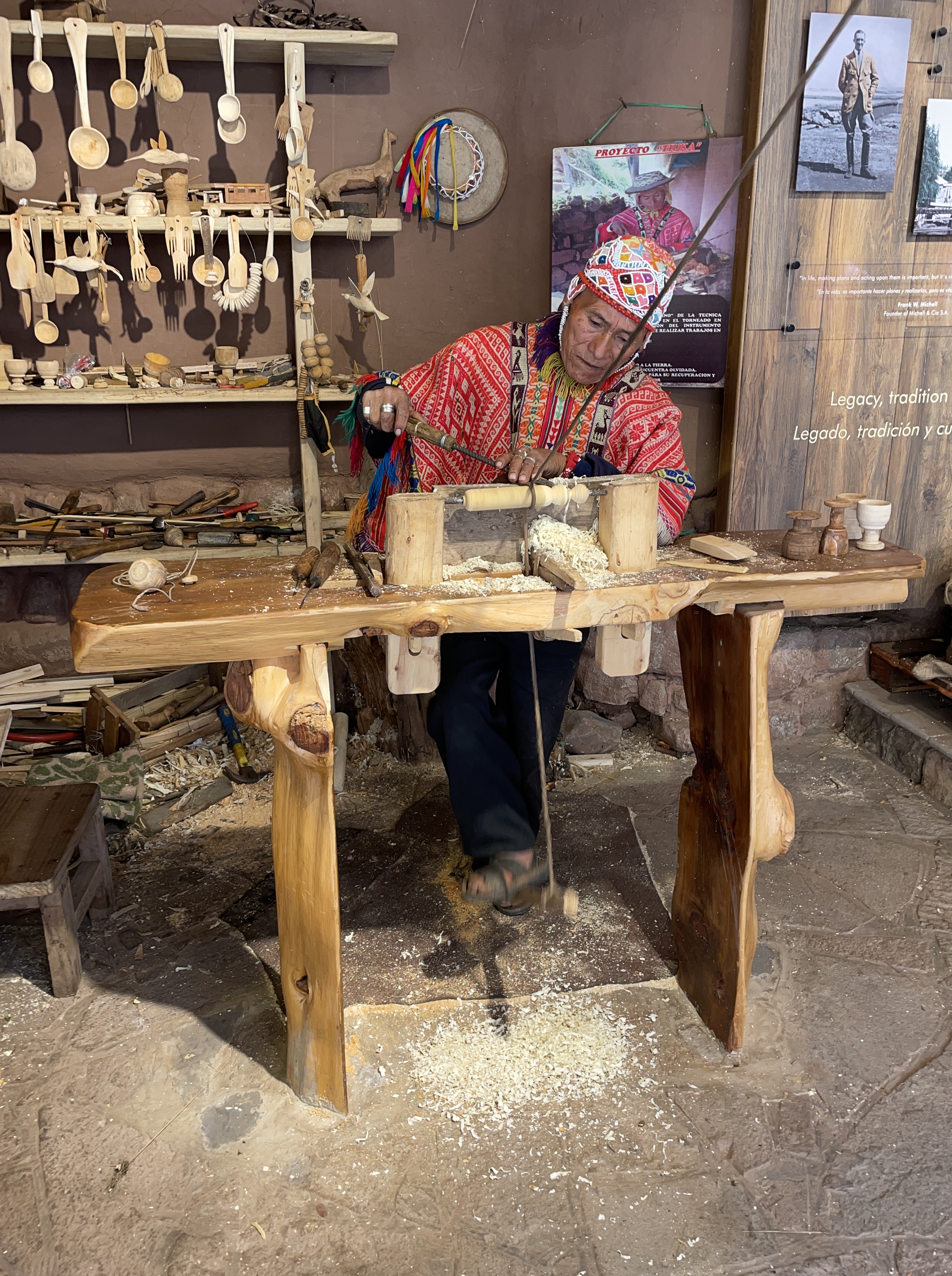
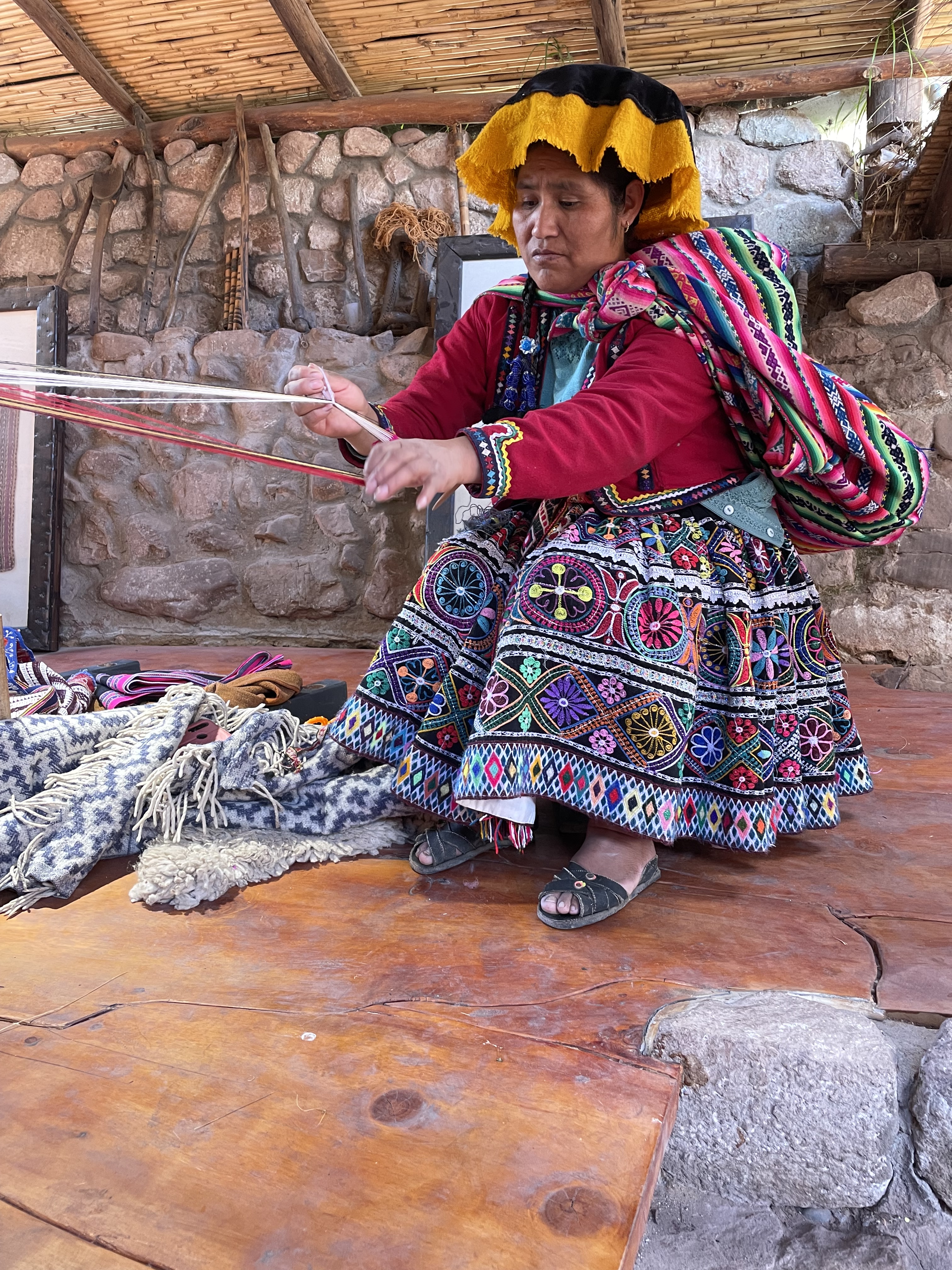
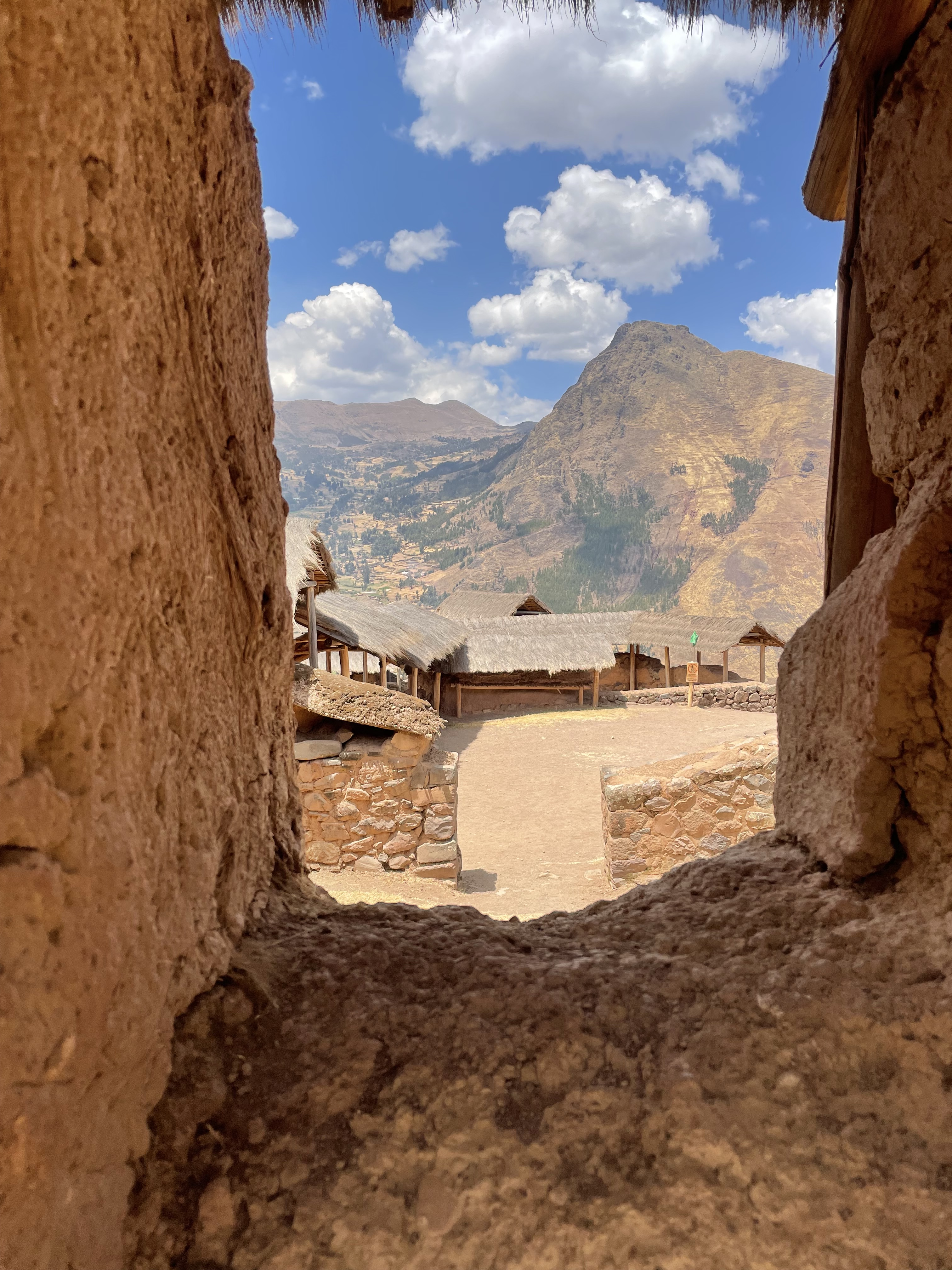
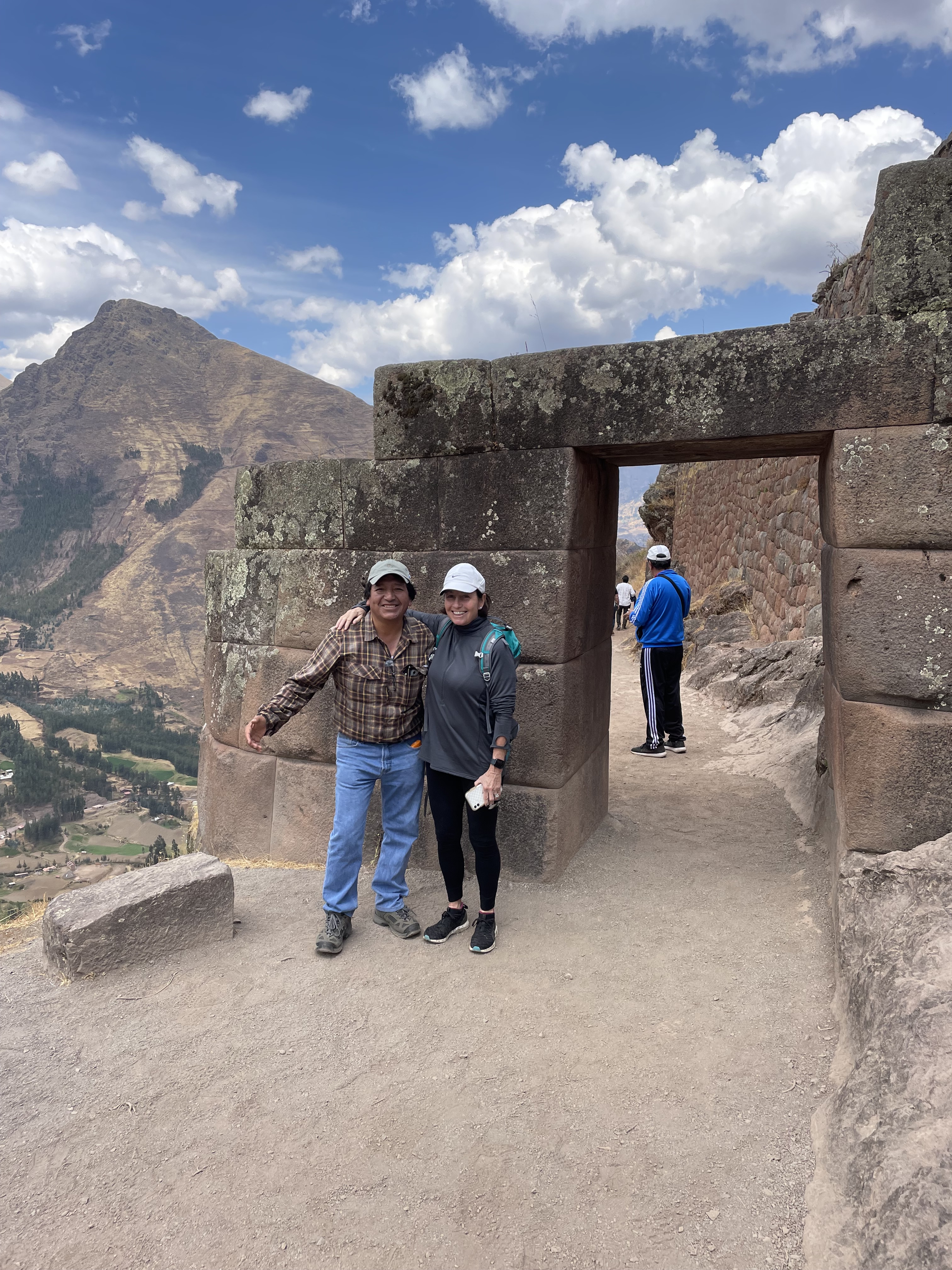
To acclimate and learn about the Incan culture, we toured a small artisan shop and then travelled one hour north of Cusco and walked the Parque Arqueológico Pisac. The elevation of this mountain-top location is 3350 m/ 10,990 ft. It’s 920 m/3018 ft higher than Machu Picchu, and 50 m/164 ft lower than Cusco.
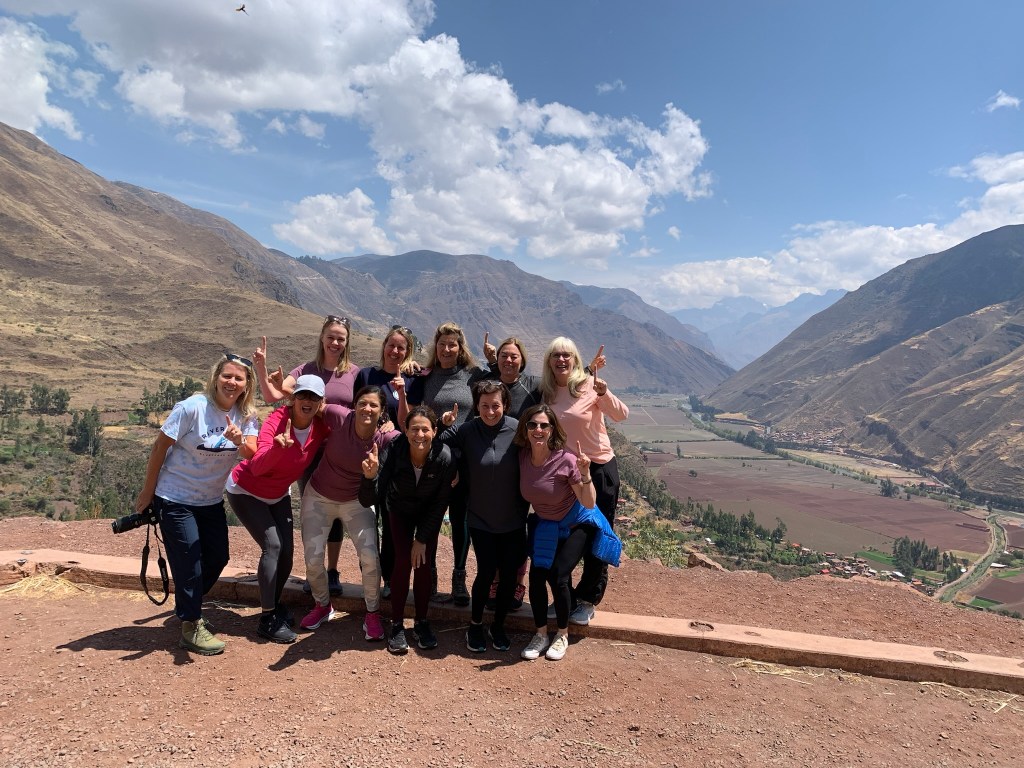

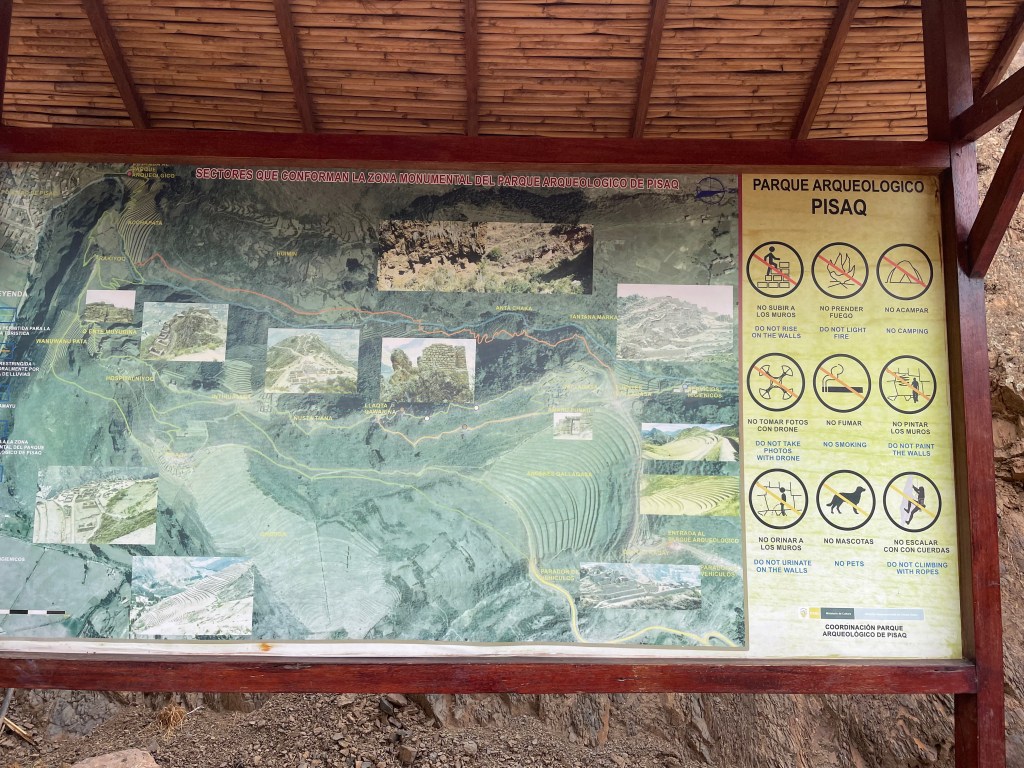
The Pisac ruins are in the Sacred Valley, which is created by the Urubamba River, which flows toward and then around three sides of Machu Picchu. Pisac served as residences, terraced farms, an observatory, ceremonial site, and military station.



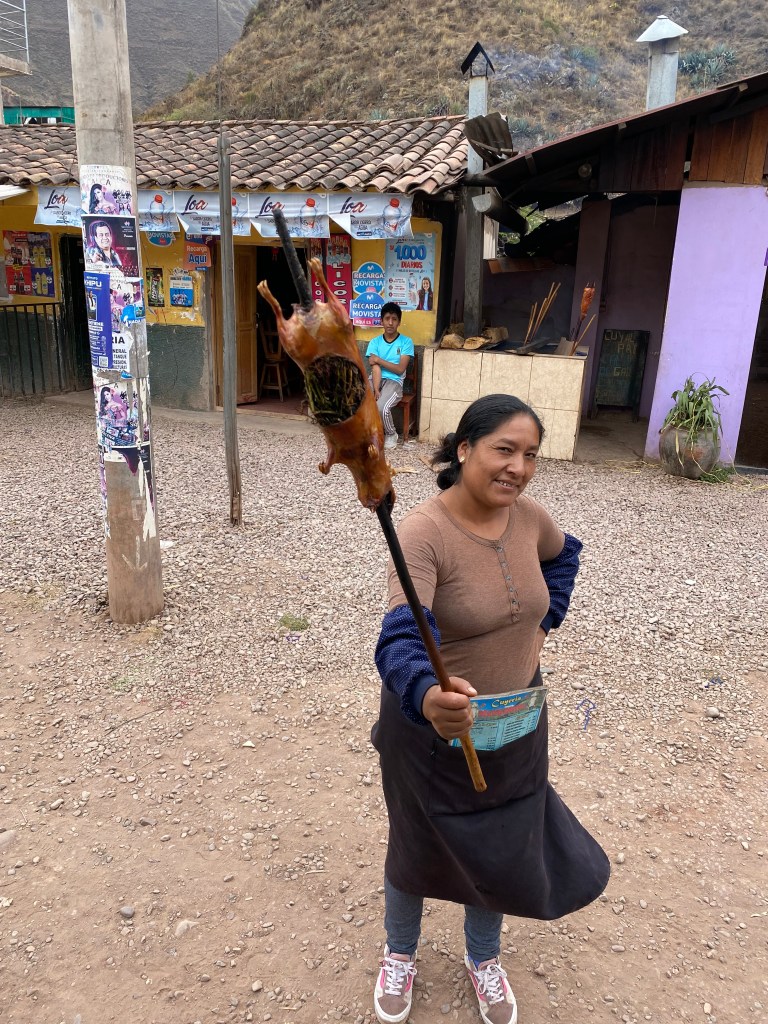
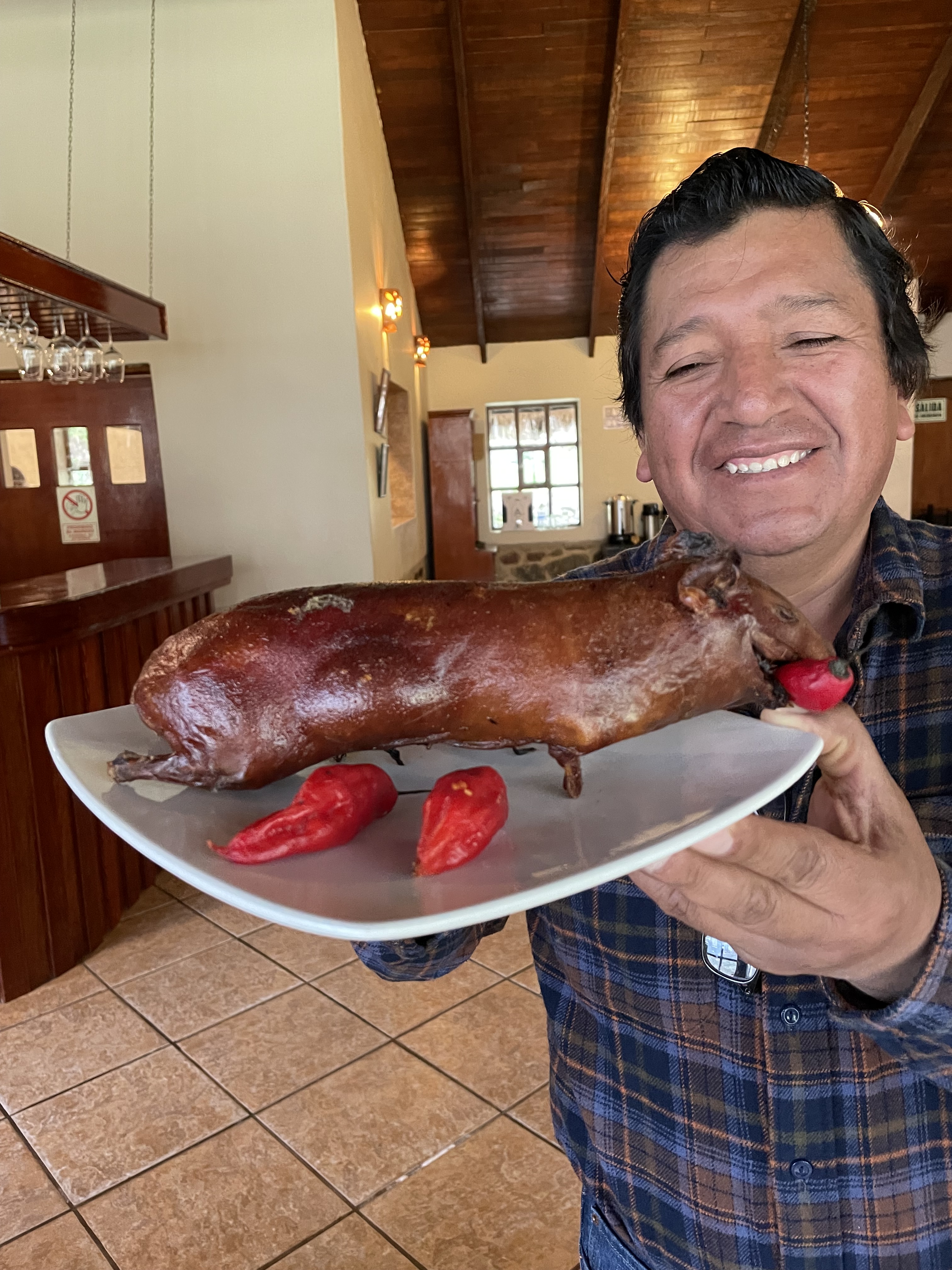
And a common Peruvian dish, sold most places roadside, is cuy. This is roasted guinea pig stuffed with goldenrod, on a stick. Colleen tried it. I just couldn’t get past the face.
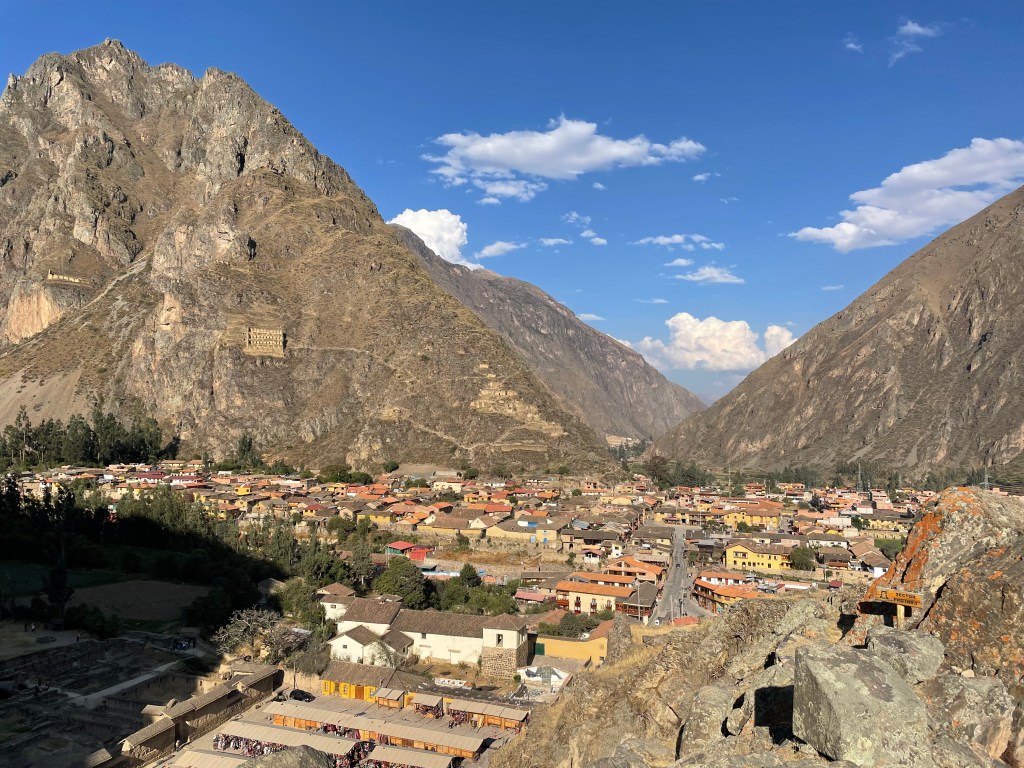
We then walked Ollanta, a quaint 13th century Incan village of cobblestone streets, and hiked the breathtaking ruins of Ollantaytambo.
Both temple and fortress, Ollantaytambo is one of the few places where the Spanish conquistadors lost a major battle. It is guarded by huge, steep terraces (which are a workout when you are adjusting to the altitude!)
From the Lonely Planet: “The rebellious Manco Inca had retreated to this fortress after his defeat at Sacsaywamán. In 1536 Hernando Pizarro, Francisco’s younger half-brother, led a force of 70 cavalrymen to Ollantaytambo, supported by large numbers of indigenous and Spanish foot soldiers, in an attempt to capture Manco Inca.
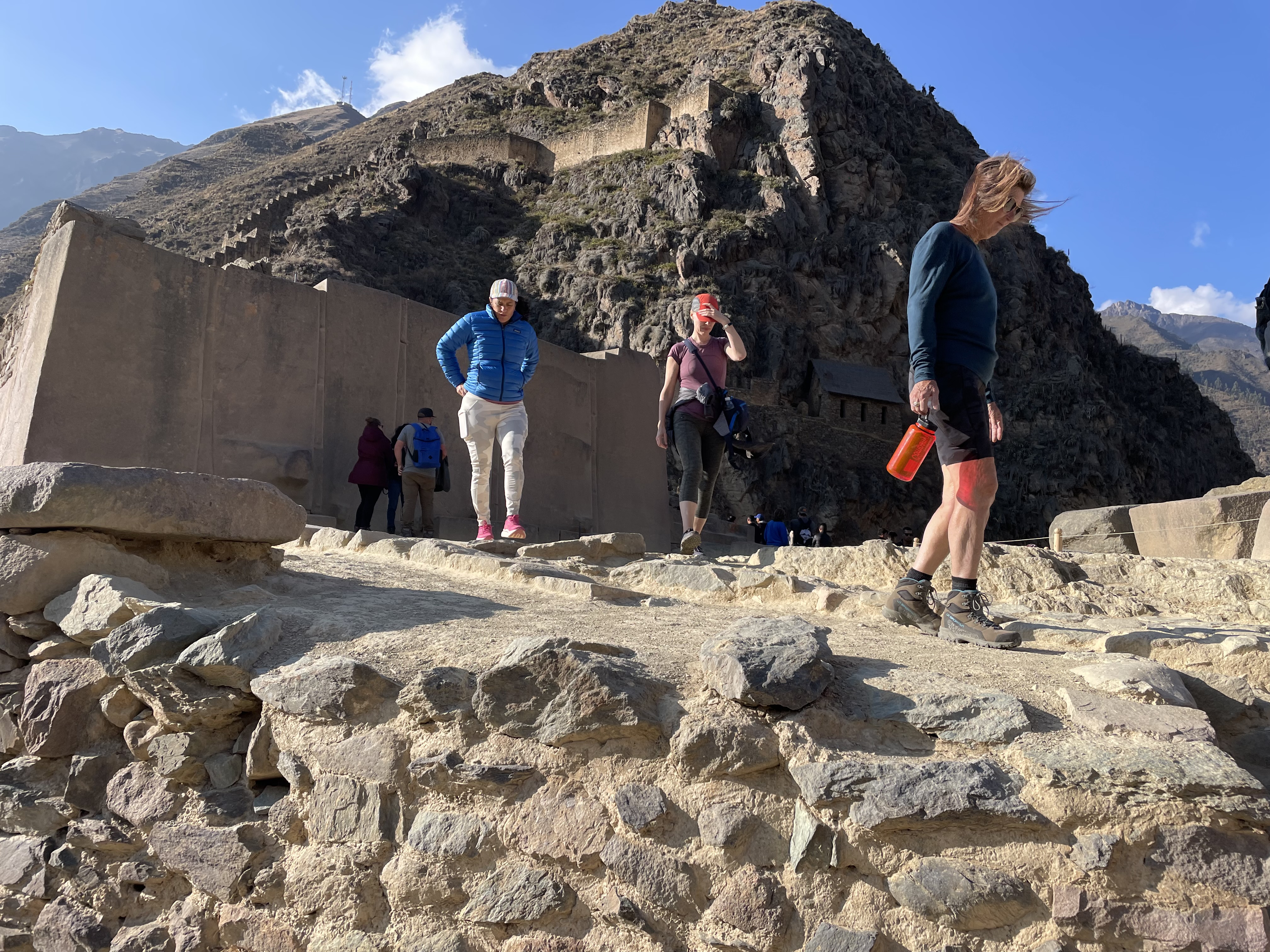
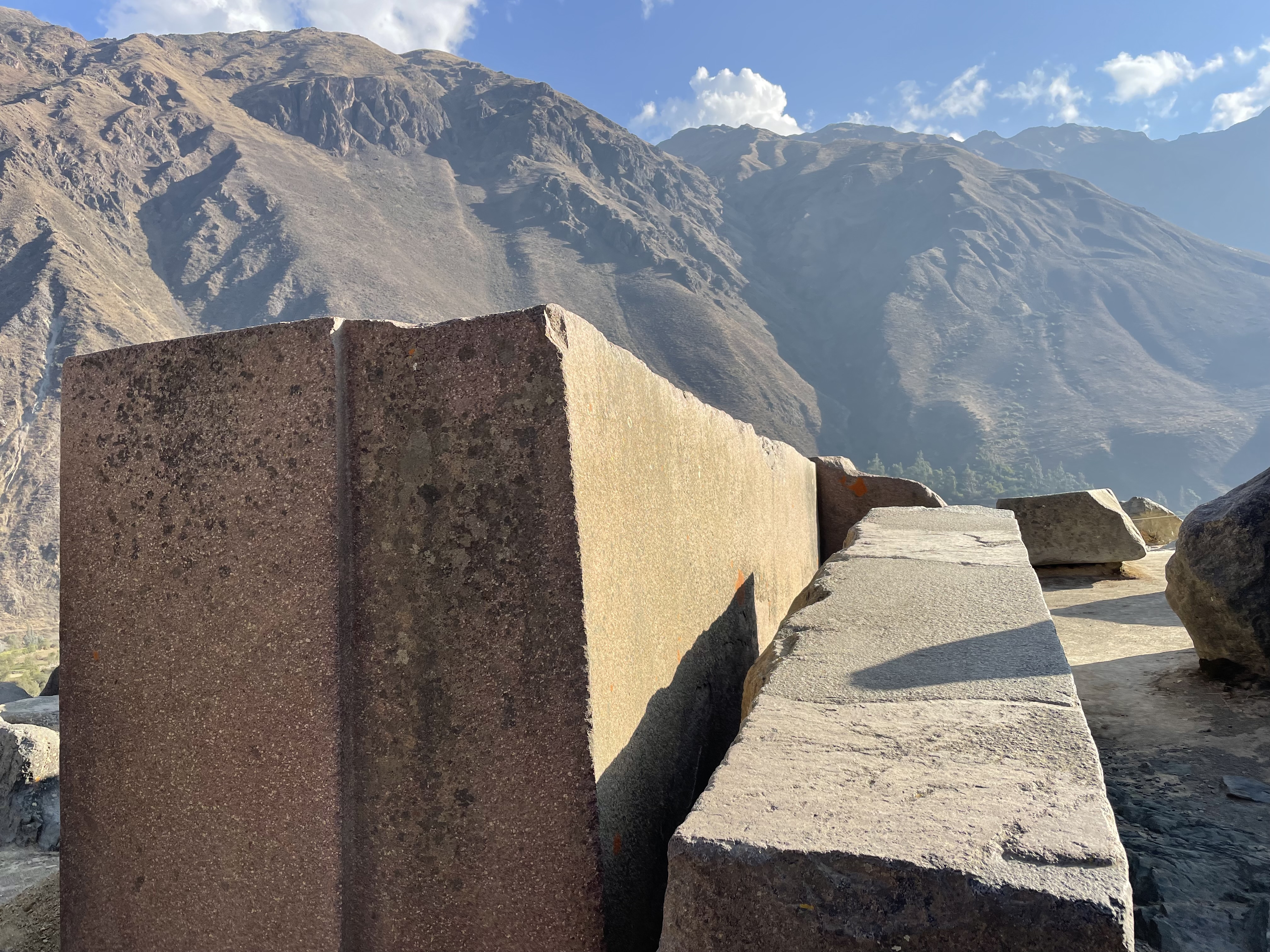
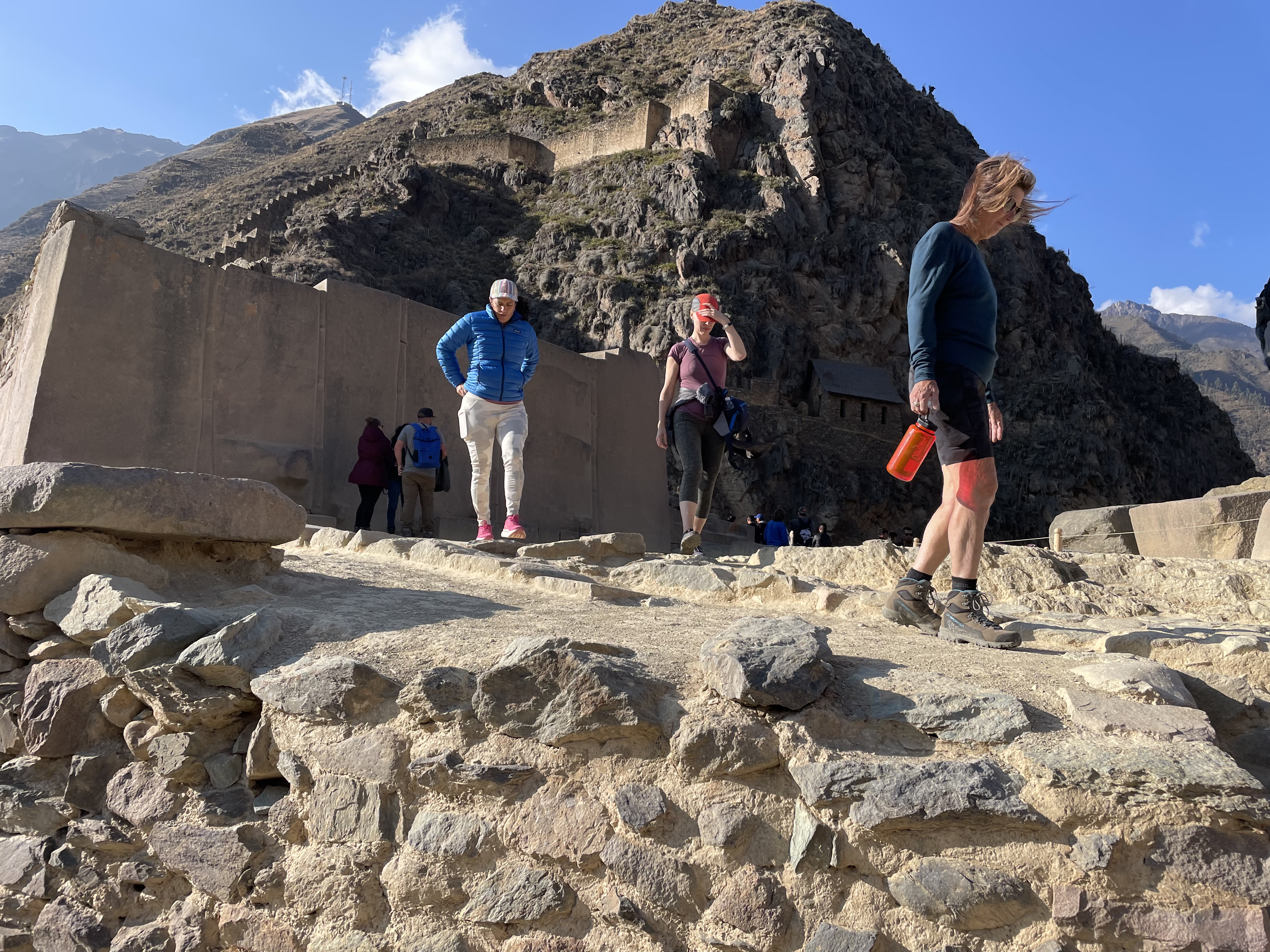



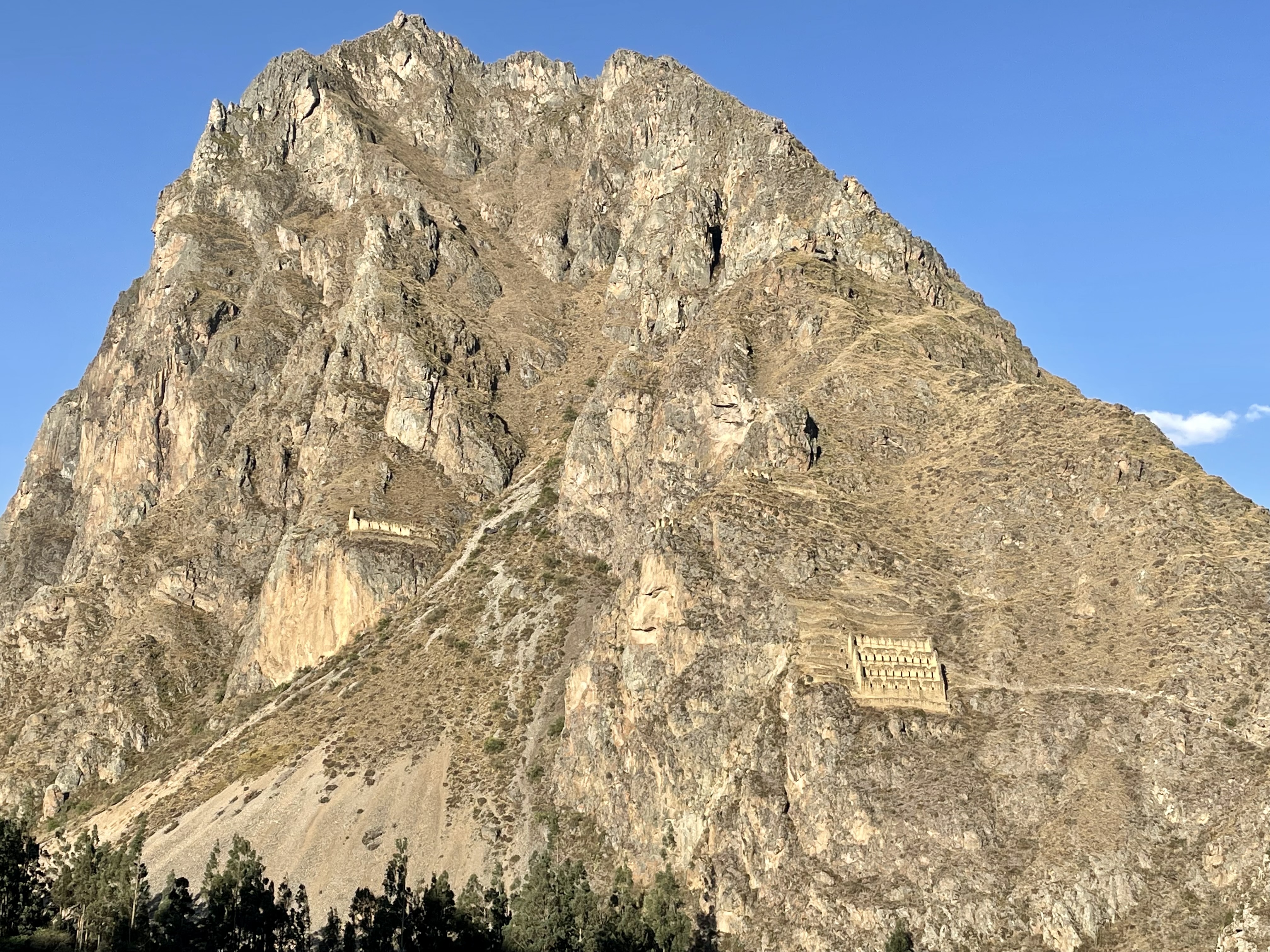

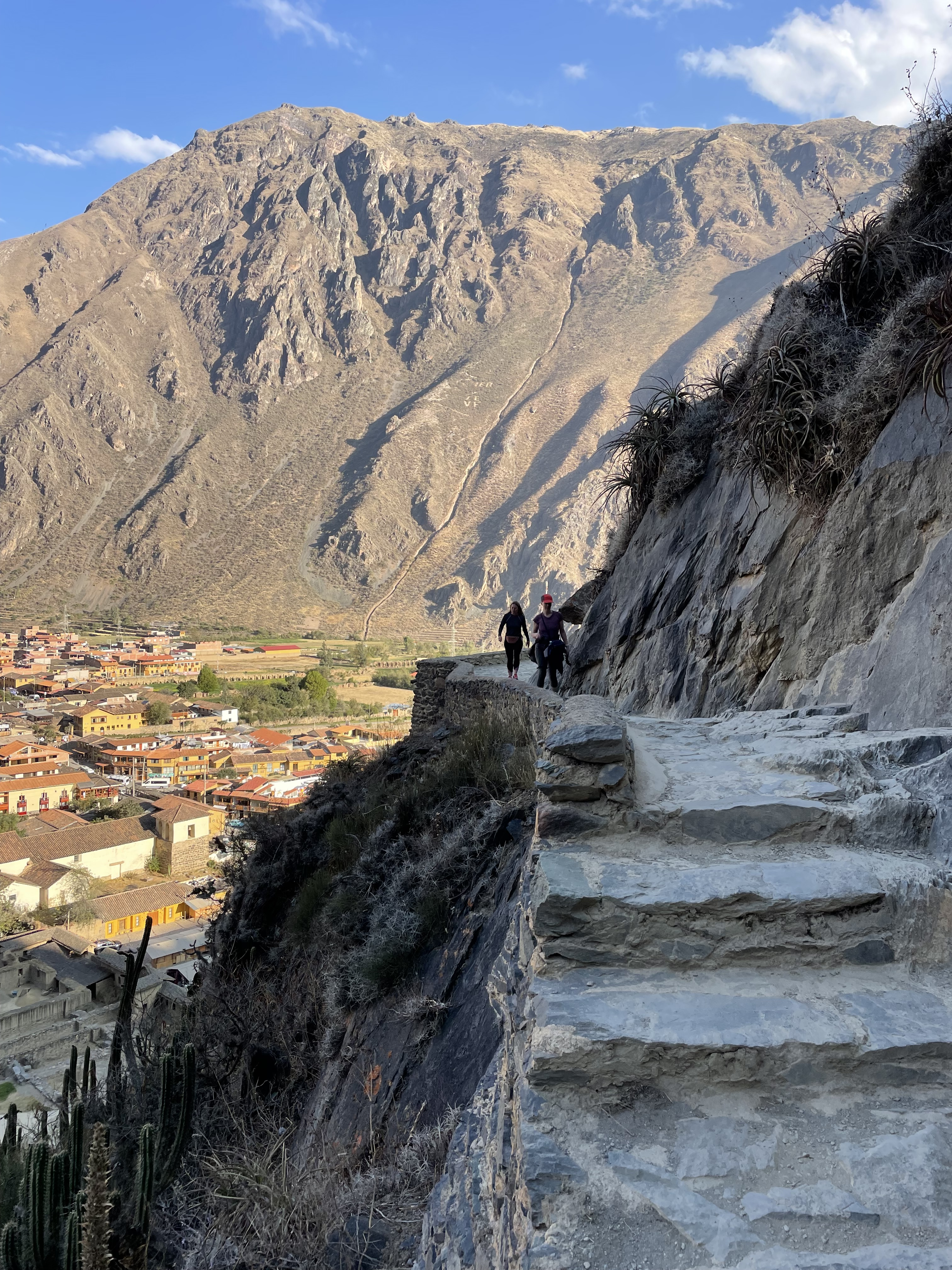


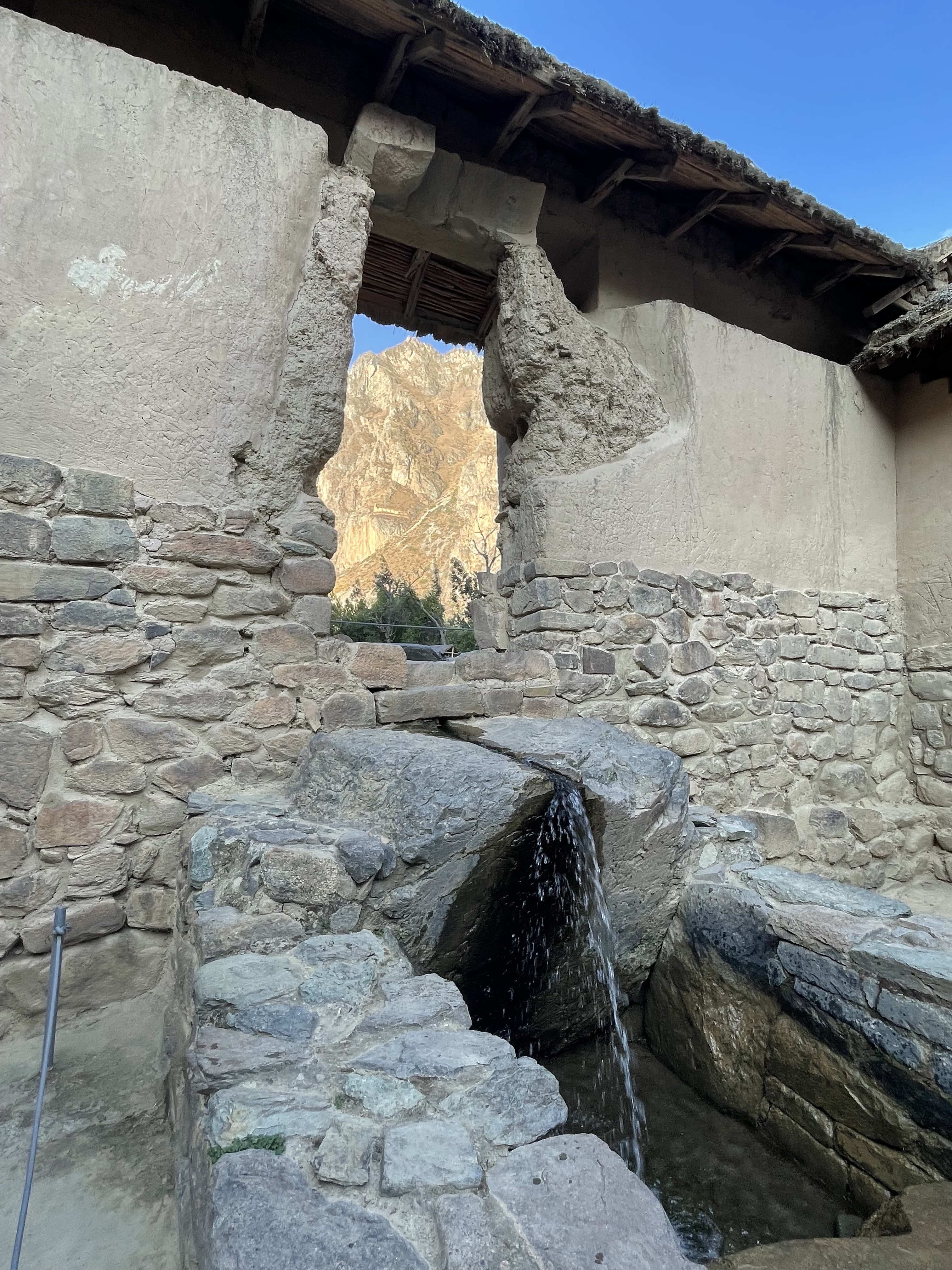
The conquistadors, showered with arrows, spears and boulders from atop the steep terracing, were unable to climb to the fortress. In a brilliant move, Manco Inca flooded the plain below the fortress through previously prepared channels. With the Spaniards’ horses bogged down in the water, Pizarro ordered a hasty retreat, chased down by thousands of Manco Inca’s victorious soldiers.

Yet the Inca victory would be short lived. Spanish forces soon returned with a quadrupled cavalry force and Manco fled to his jungle stronghold in Vilcabamba.
Though Ollantaytambo was a highly effective fortress, it also served as a temple. A finely worked ceremonial center is at the top of the terracing. Some extremely well-built walls were under construction at the time of the conquest and have never been completed. The stone was quarried from the mountainside 6km away, high above the opposite bank of the Río Urubamba. Transporting the huge stone blocks to the site was a stupendous feat. The Incas’ crafty technique to move massive blocks across the river meant carting the blocks to the riverside then diverting the entire river channel around them.”
DAY 5: 1/2 DAY CUSCO CITY TOUR AND PISCO SOURS
On this day, we visited the UNESCO World Heritage site, Sacsayhuamán, a citadel on the northern outskirts of Cusco, the historic capital of the Inca Empire. “The complex was built by the Incas in the 15th century, particularly under Sapa Inca Pachacuti and his successors. Megalithic walls constructed of gigantic stones were built on the site, with the workers carefully cutting the boulders to fit them together tightly without mortar. You cannot imagine what an incredible feat this is: imagine building these walls that fit perfectly together, without modern machinery. Today, the site is used for modern day Incan winter solstice and new year’s festivals.

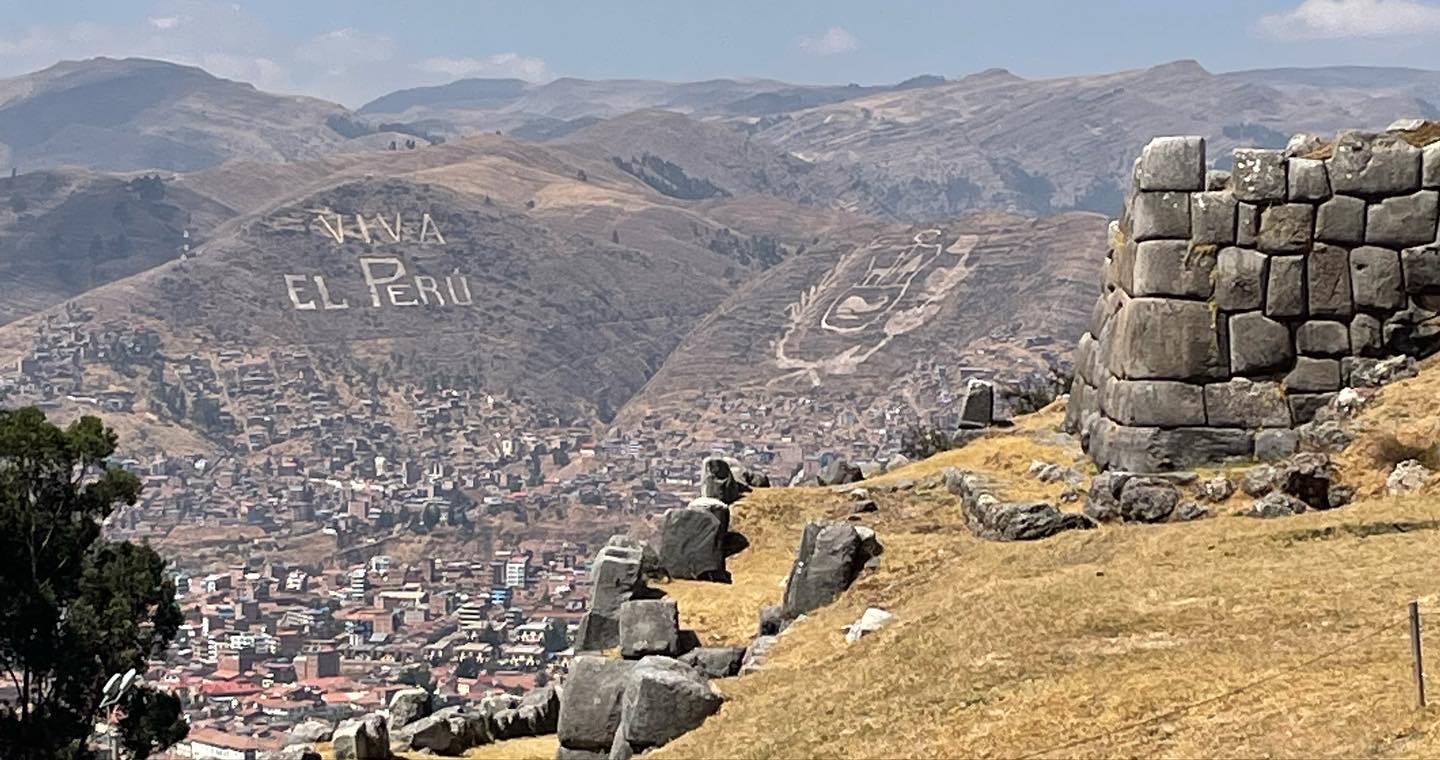
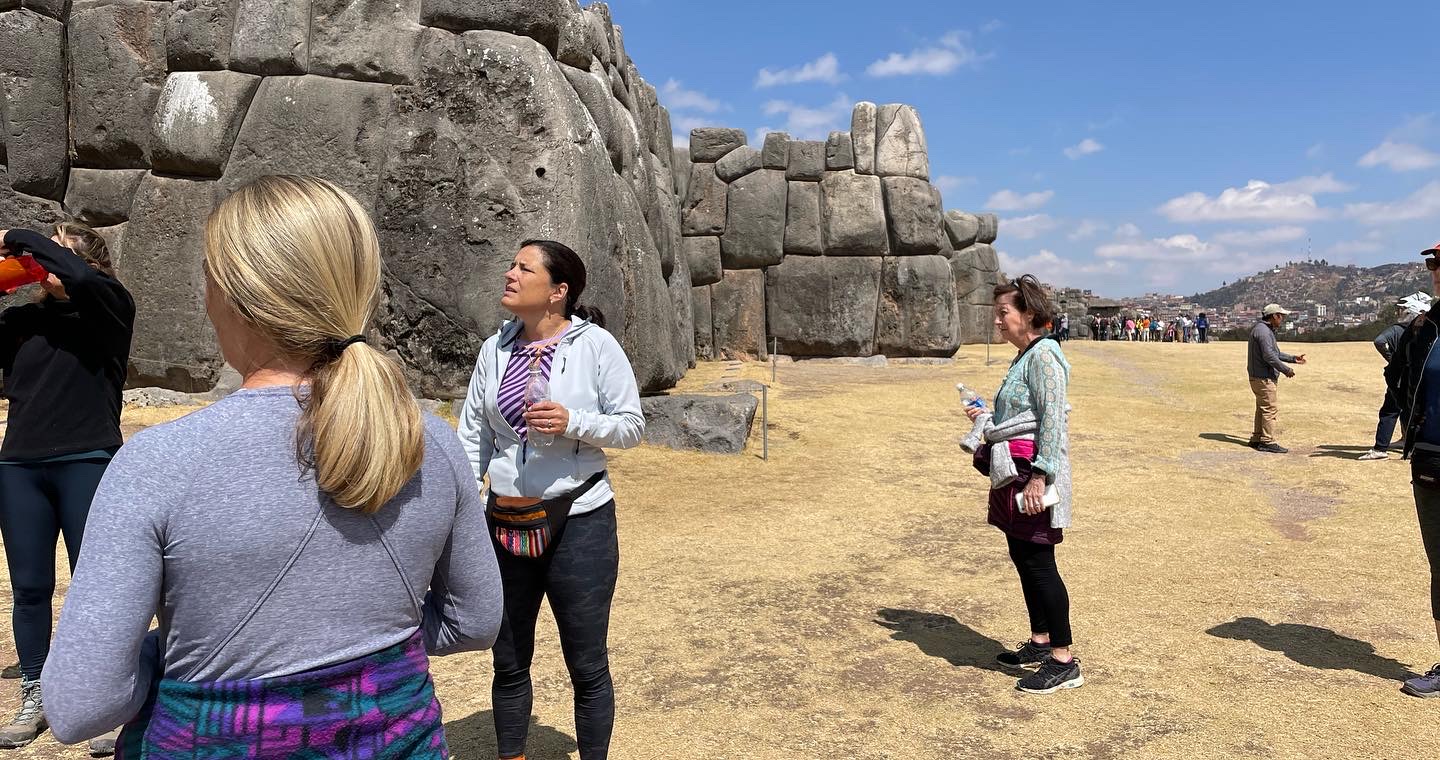
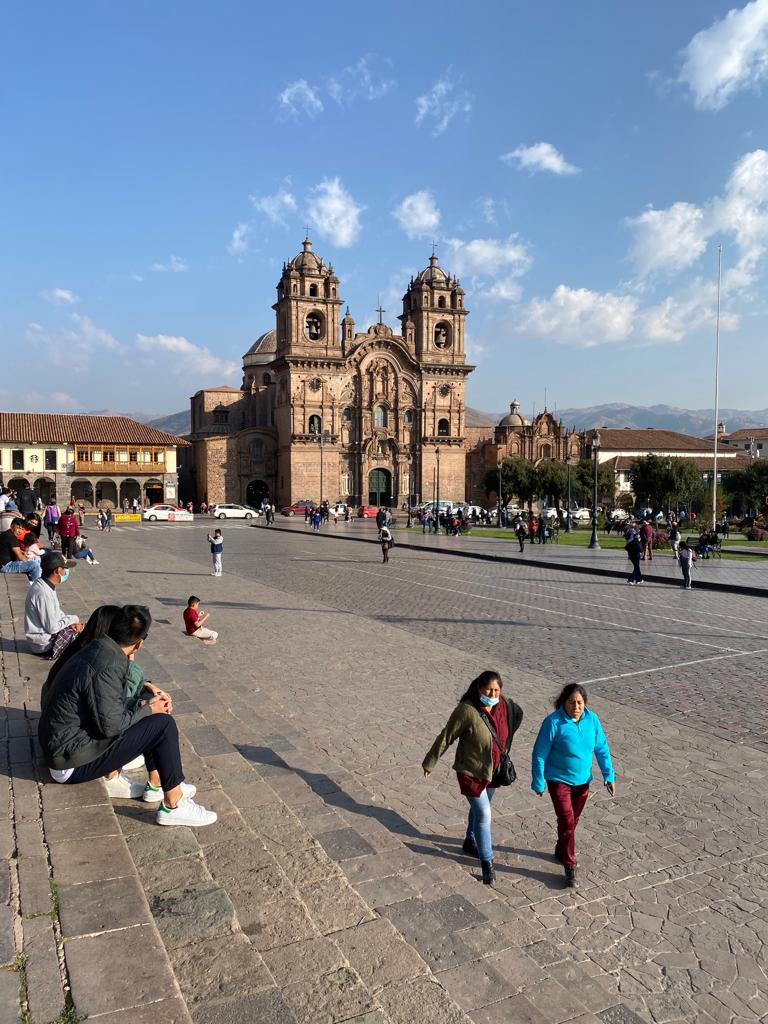
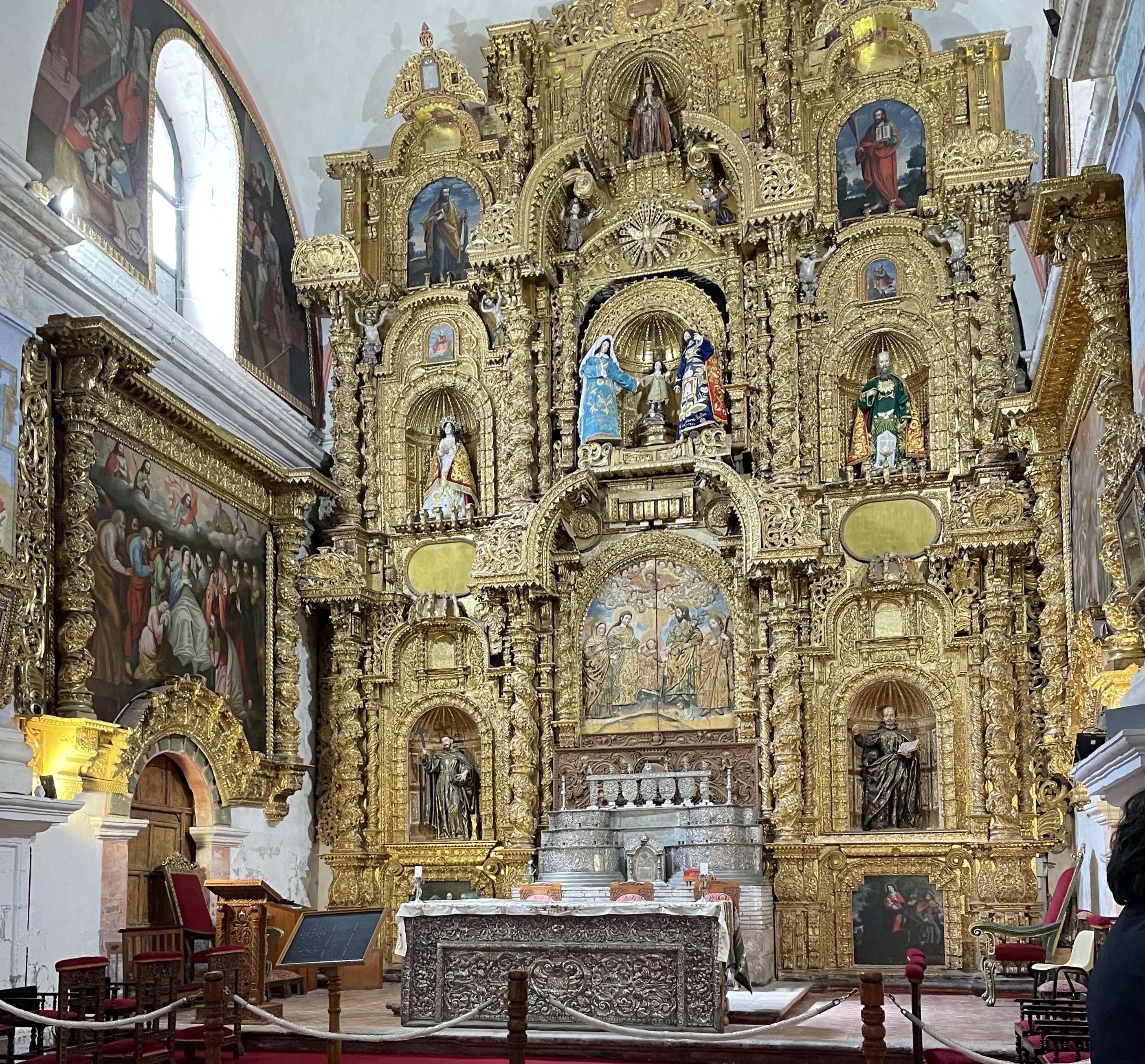
After this, the group divided and conquered. Wilfredo guided some of us through the streets of Cusco, explaining its rich history: this culminated in a tour of the ornate Cathedral Basilica of the Virgin of the Assumption, the main temple of the city. The Spanish built their church right on top of an Incan temple: colonialism on steroids.
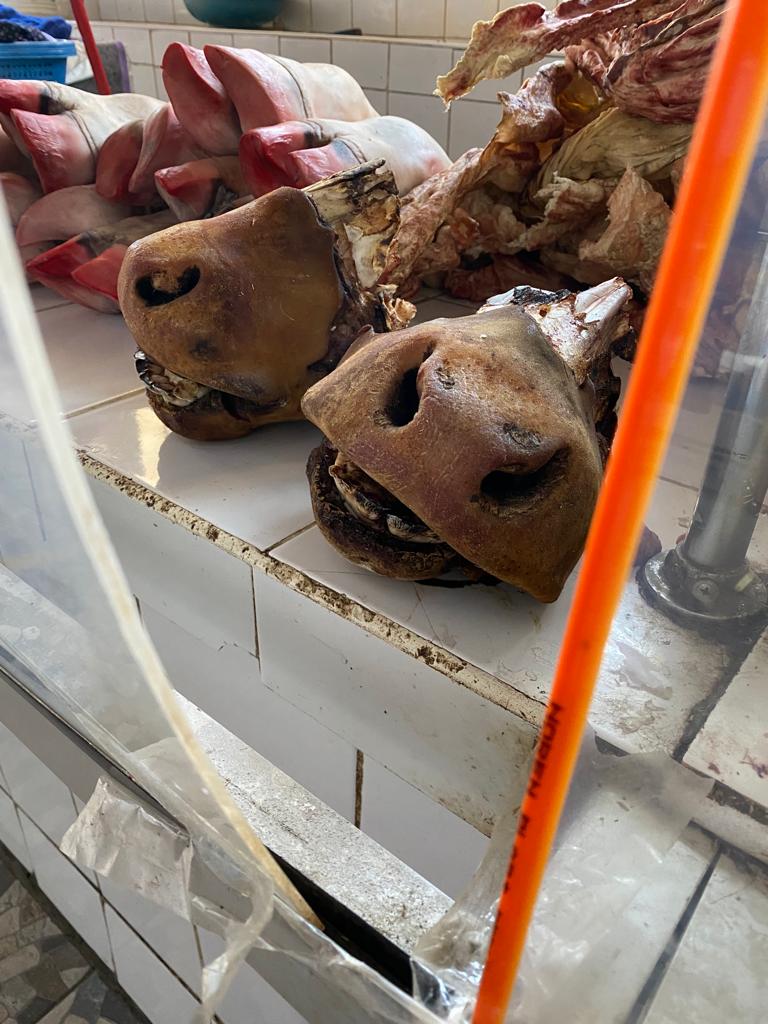
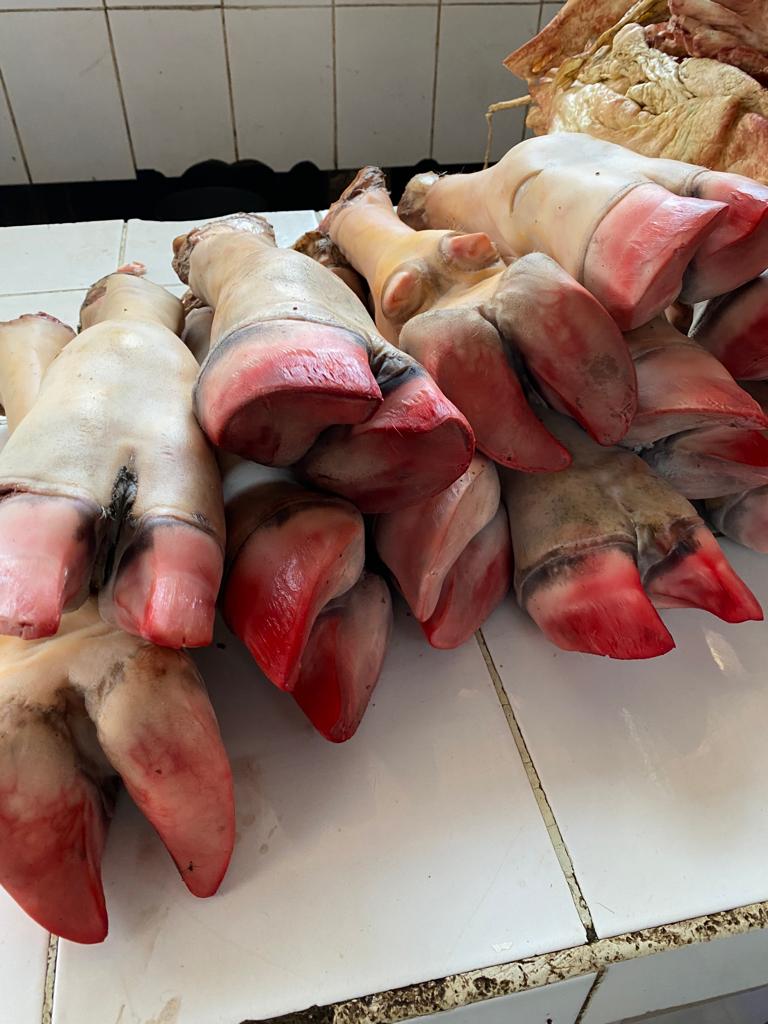
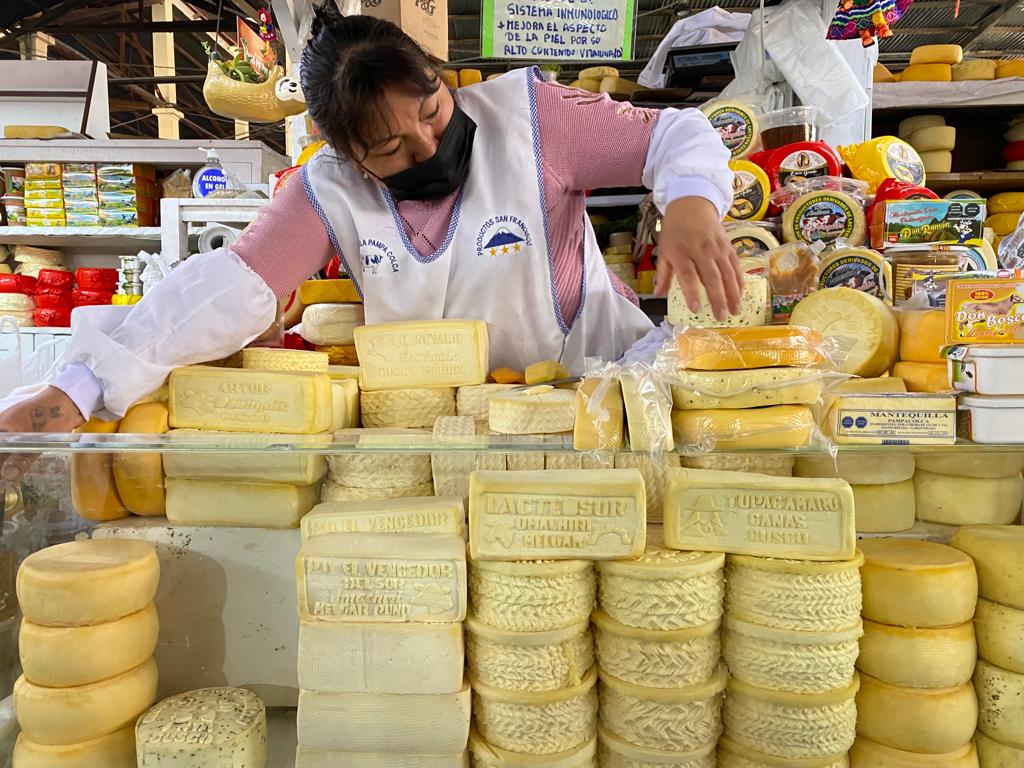
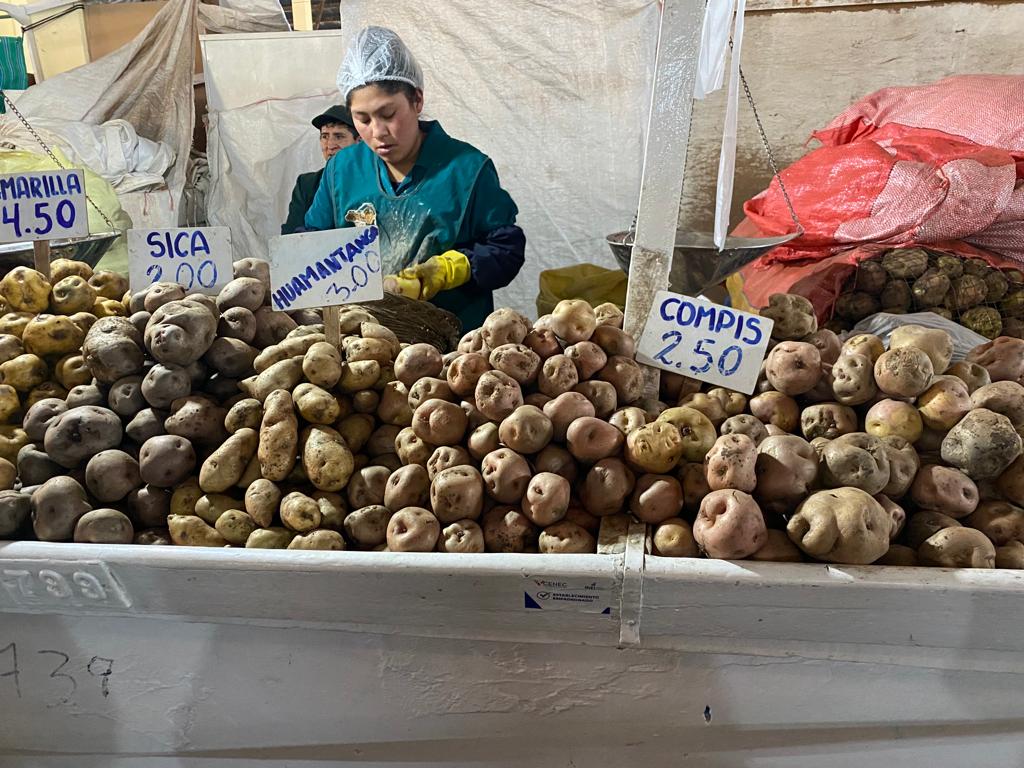
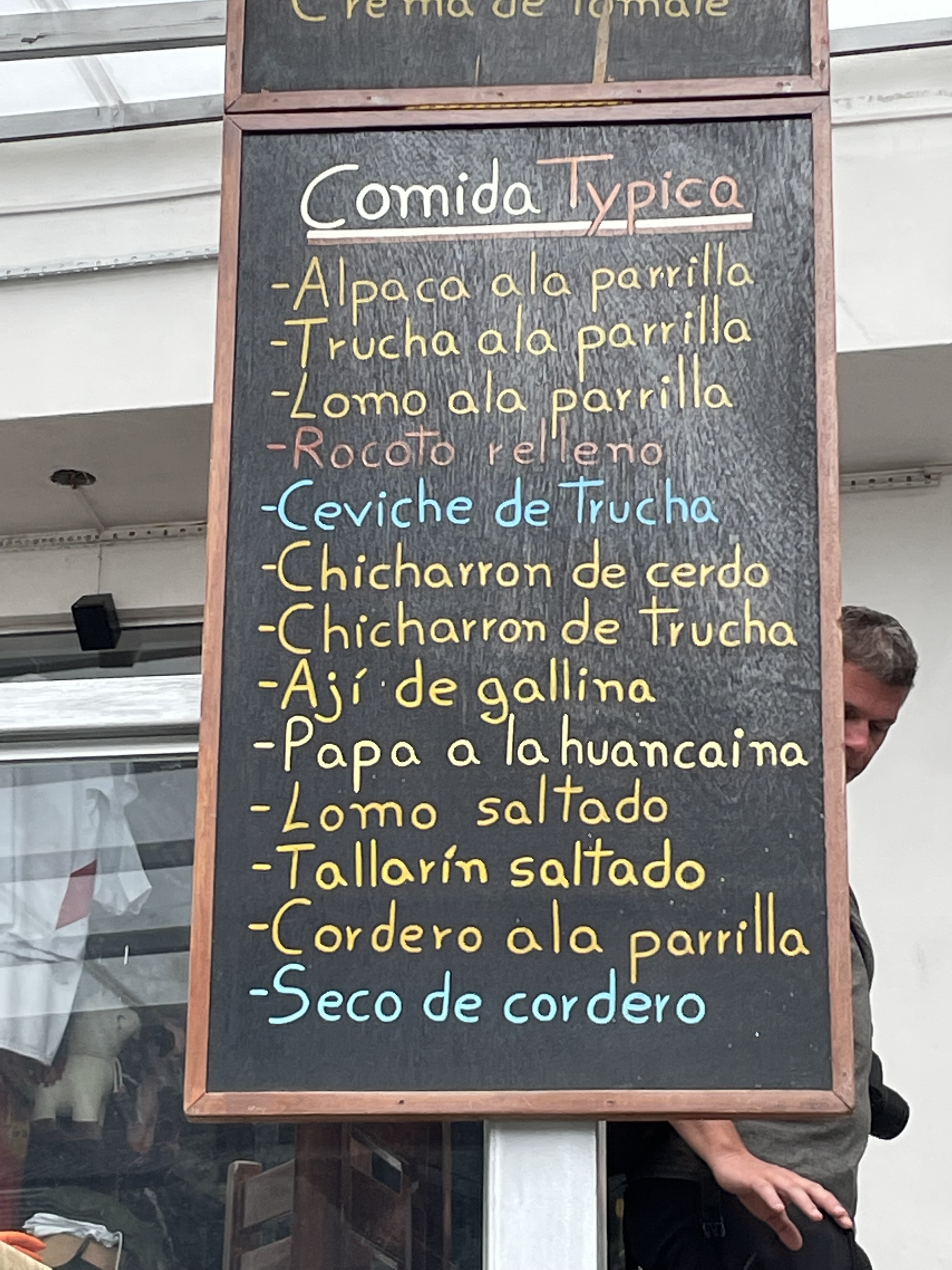
The other half explored the food markets. See below for the culinary treasures! (We also bought silly hats to wear when we reached the Salkantay Trail peak).
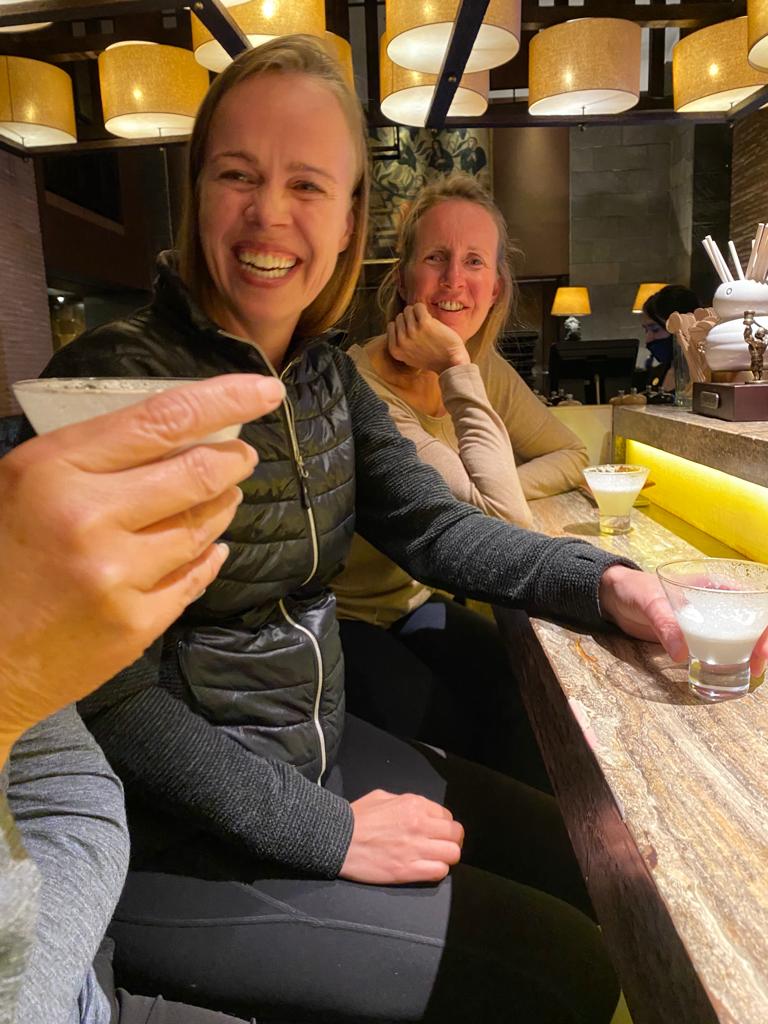
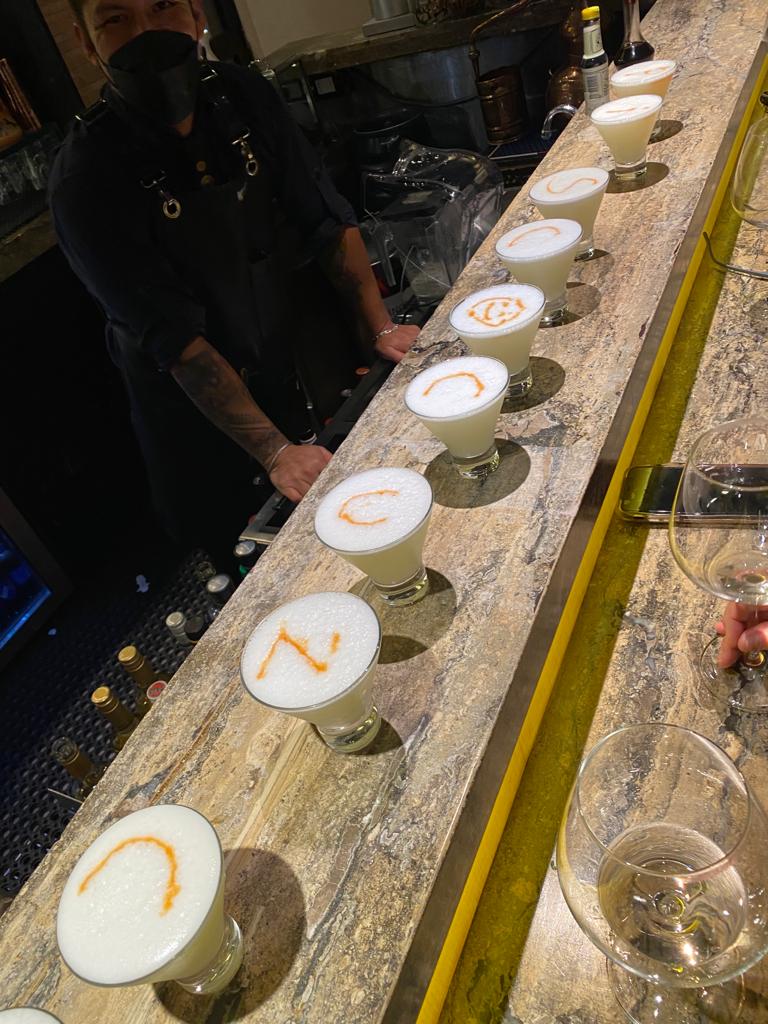
Pre-dinner, there was a row Canadians at the bar for a Pisco Sour mixology demonstration and tasting. You are not supposed to drink at altitude but our ladies have strong constitutions.
DAY 6: MARAS SALT MINES


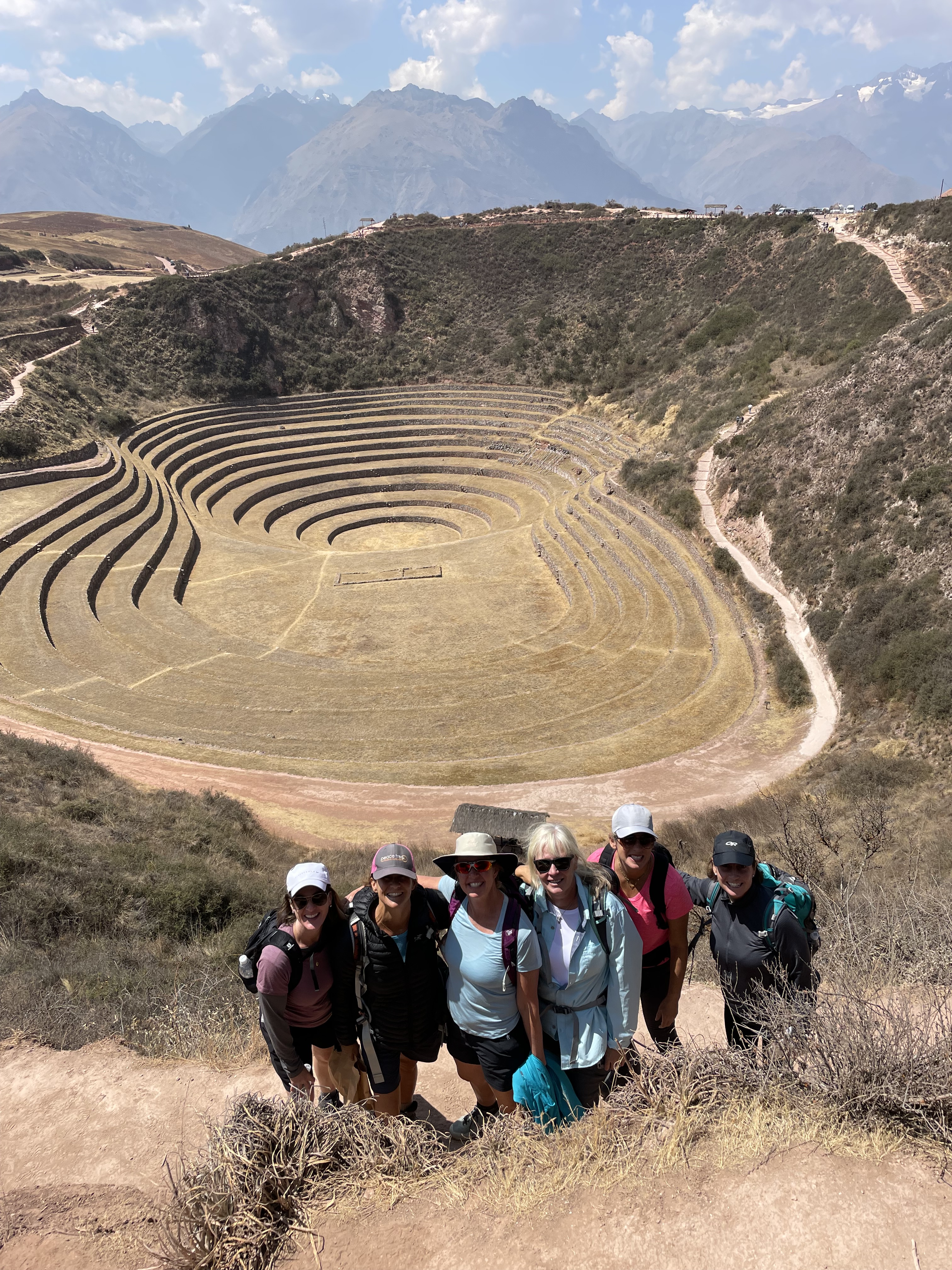


In the early morning, we visited a town and hiked part of the Camino Inka trail.
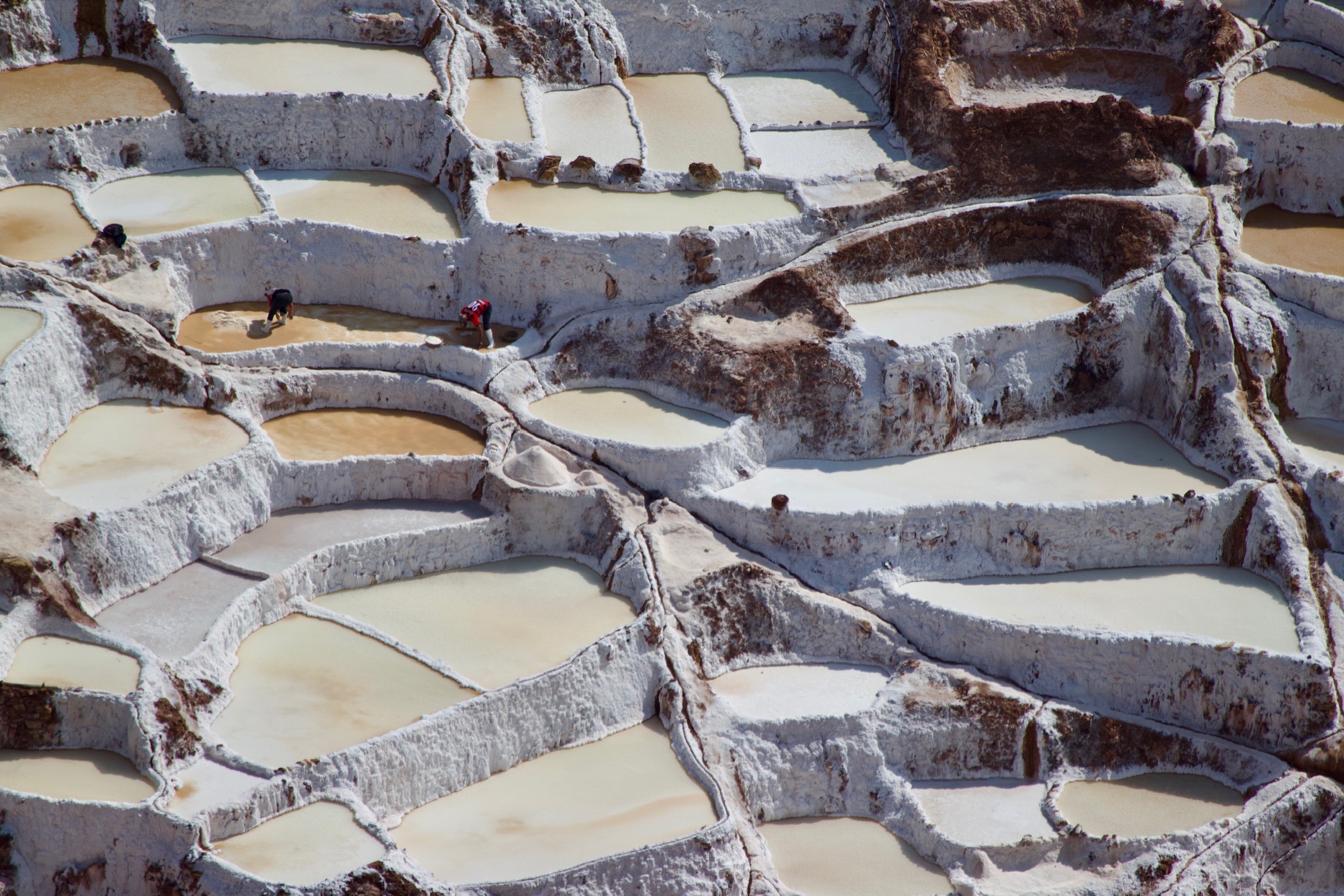
Then, on perhaps the scariest drive we had (no guard rails, high hair-pin curves in a van, 1000s of feet up), we visited the surreal salt ponds of the Sacred Valley called the Maras Salt Mines. The Salineras de Maras are over 3,000 ponds, locally owned by 600 families, are interconnected through an underground network of canals that fill the pools with salt water. The sun evaporates the water, leaving behind salt which is extracted through ancestral techniques.
Historians believe the mines were built somewhere between 500 to 1100 AD by the Wari civilization. The Incans then gained control and began overseeing production, as salt was a highly valued mineral for the empire. Not only was it used for human consumption, livestock and food storage, but it was also employed for human mummification.
THE BIG HIKE BEGINS…
DAY 7: ON THE WAY TO SORAYPAMPA
ACCOMMODATION: Salkantay Lodge (12,690’ / 3,869m)
DIFFICULTY: EASY TO MODERATE
TIME: 3 HOURS
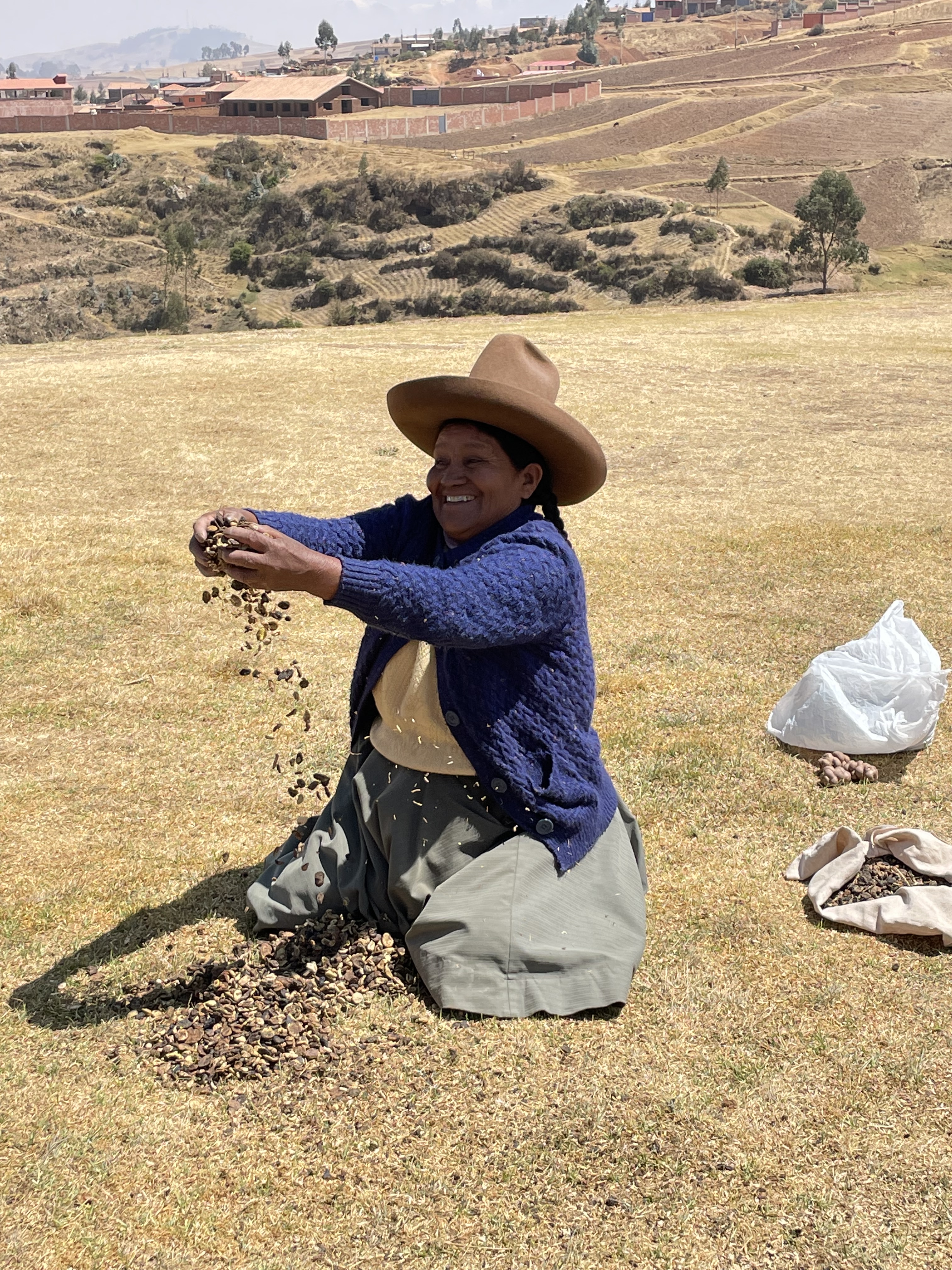
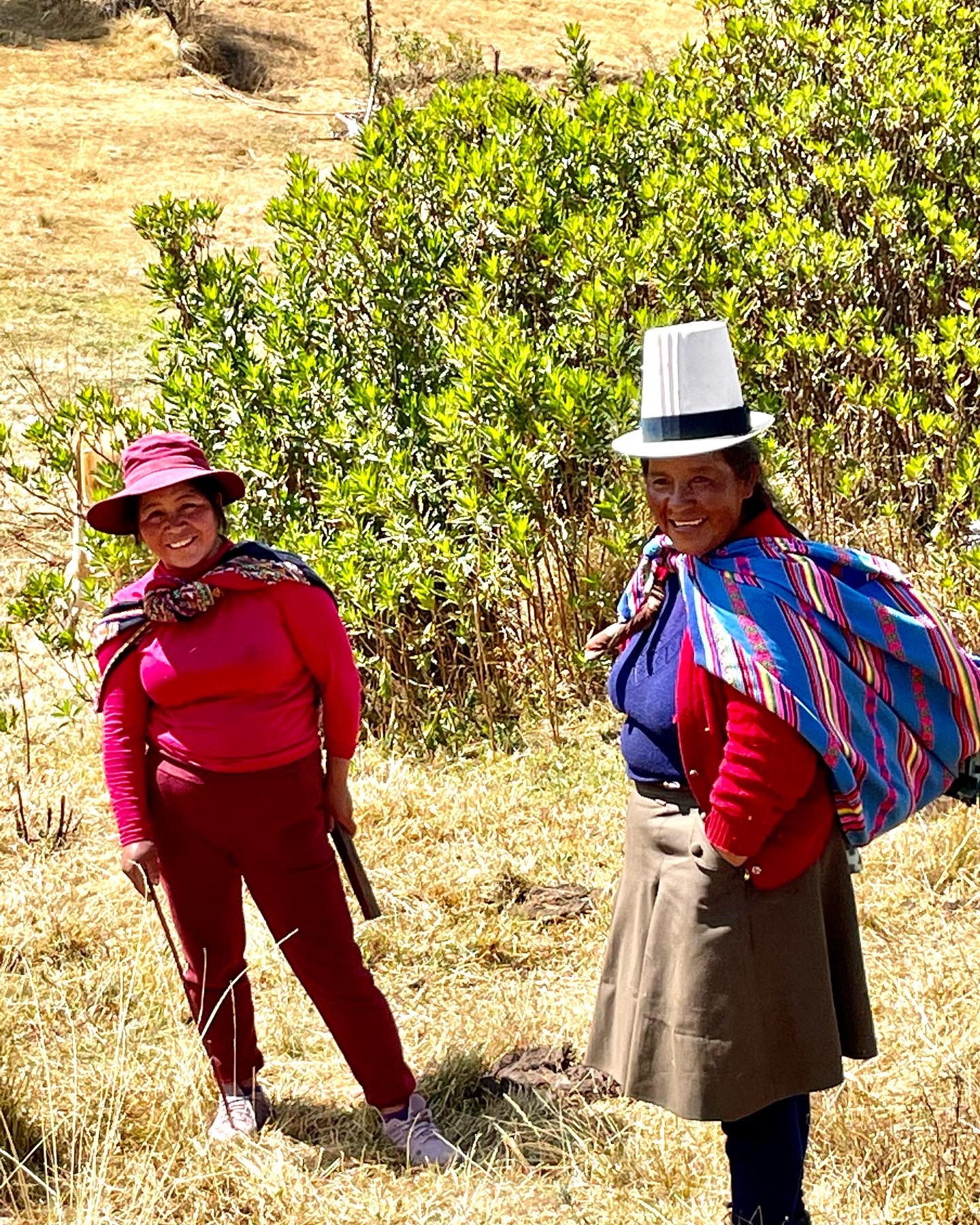
After packing up, we left early and visited the Quillarumiyoc archaeological site on the way to the town of Mollepata. We met some locals and bought beautiful alpaca blankets and other woven goods from their stalls.
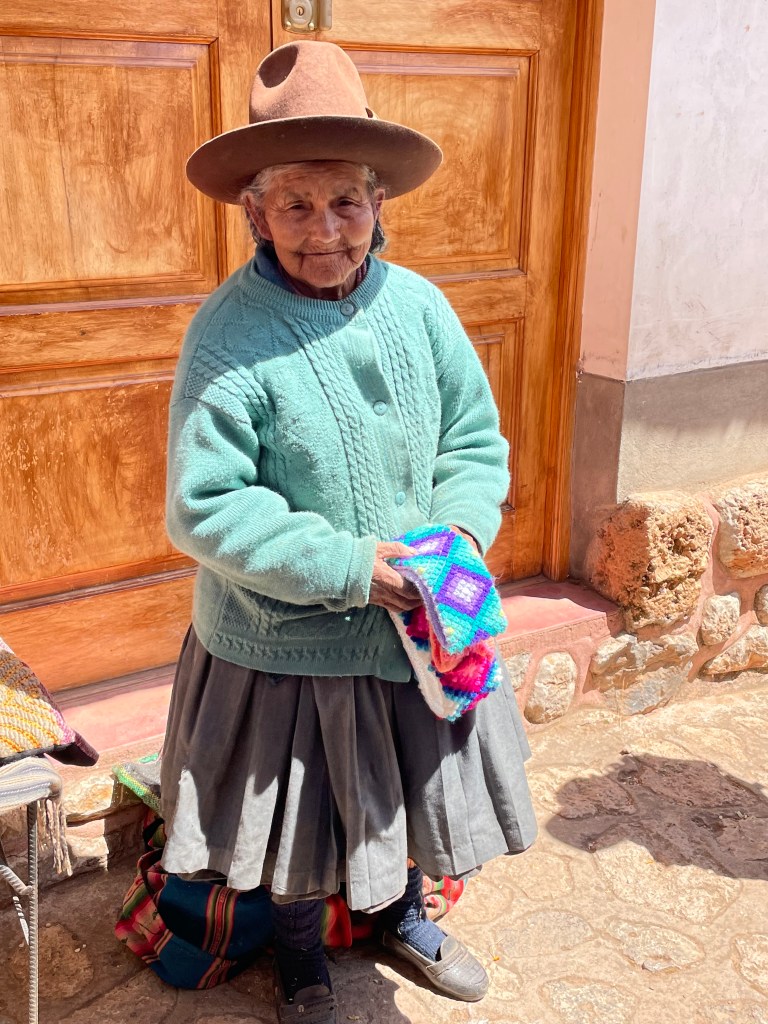
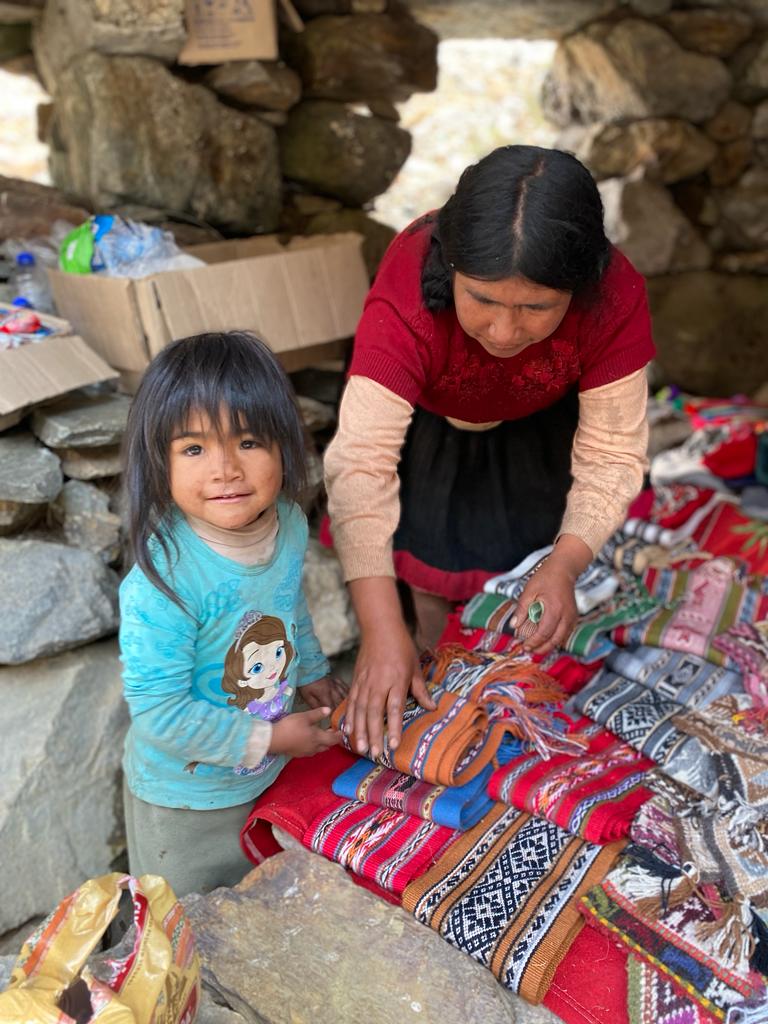
We lunch at El Pedregal, and then began our trek to the wonderful Salkantay Lodge. We got a taste of the magnificent views to come.
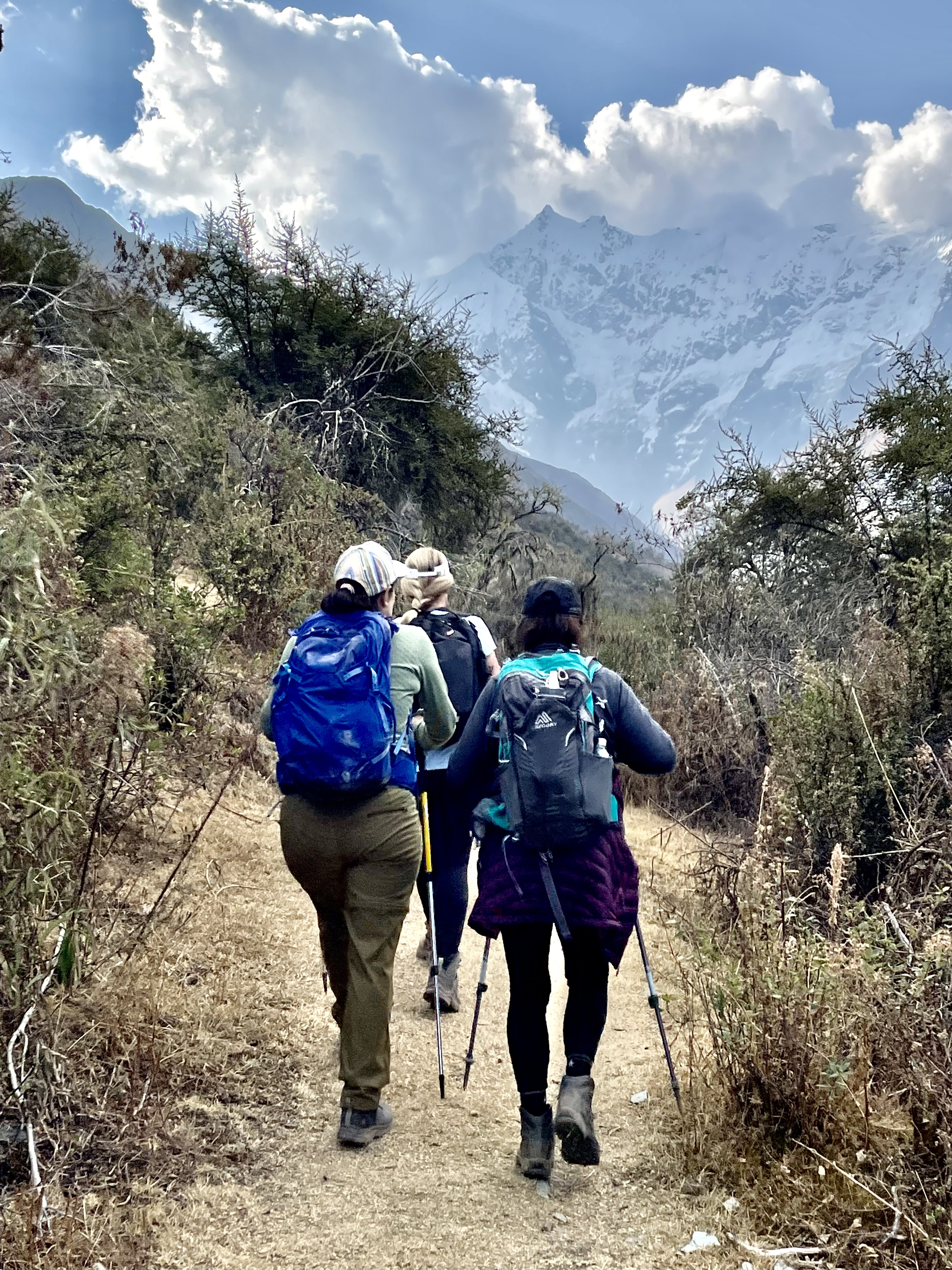
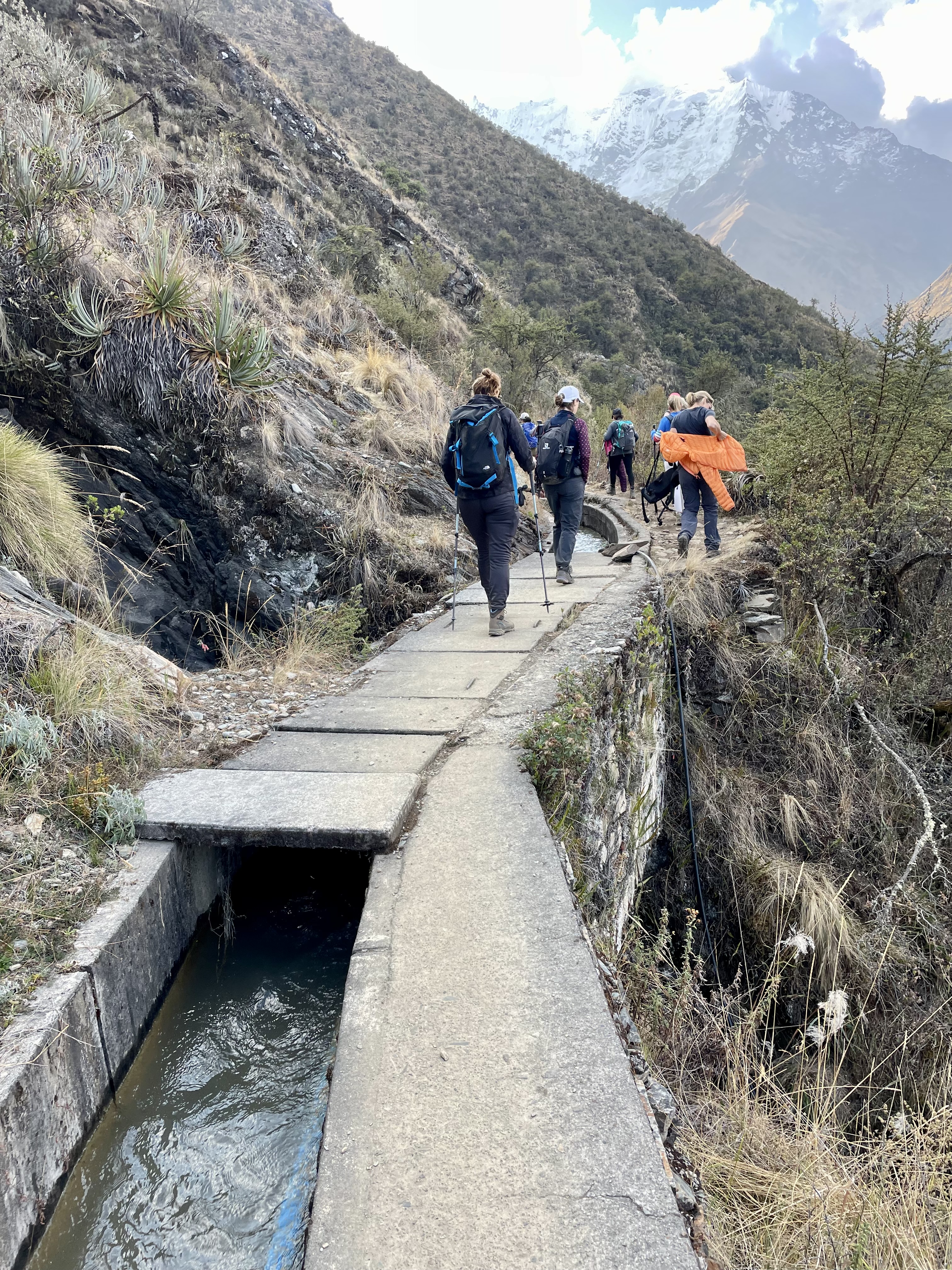
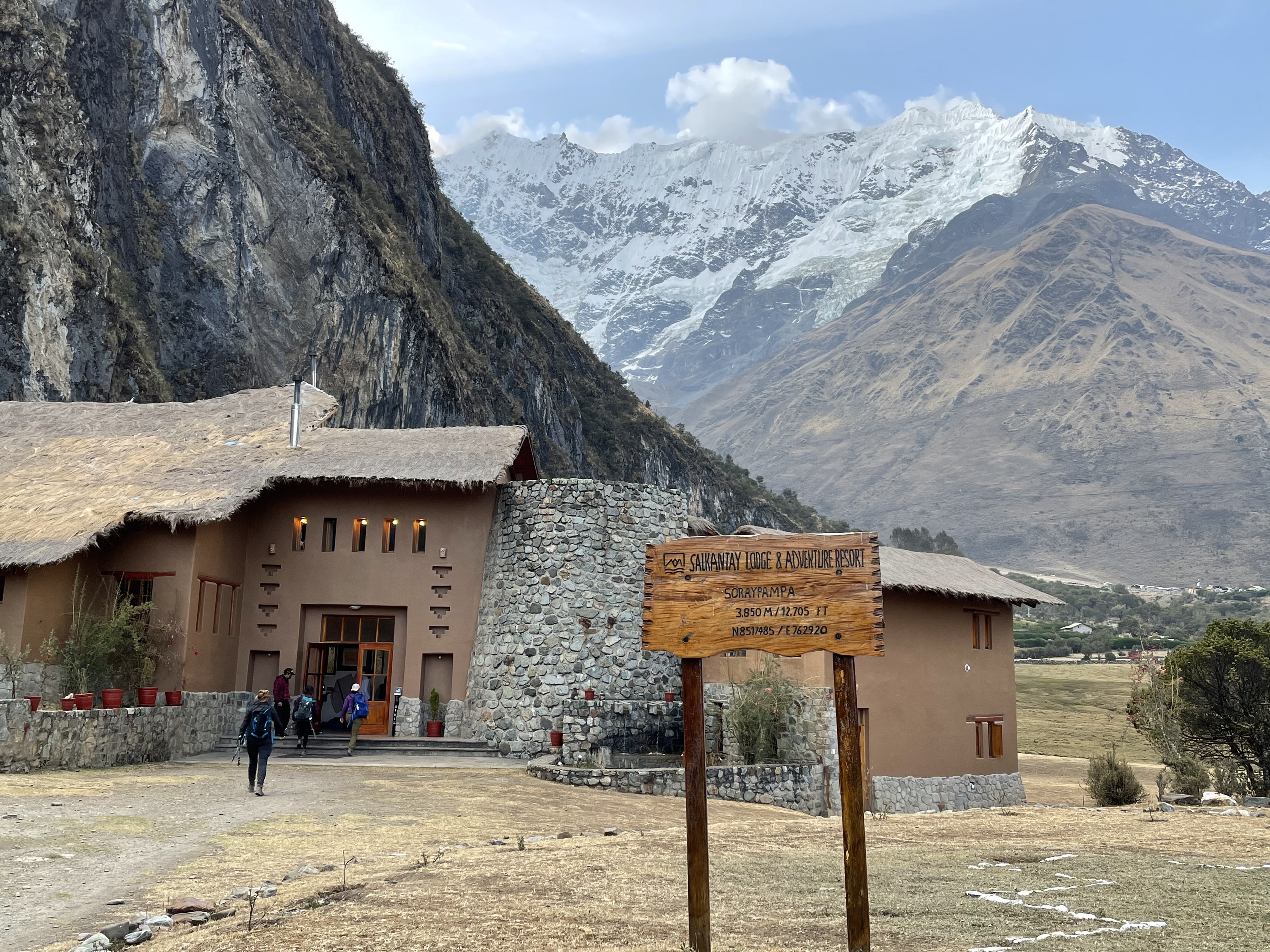
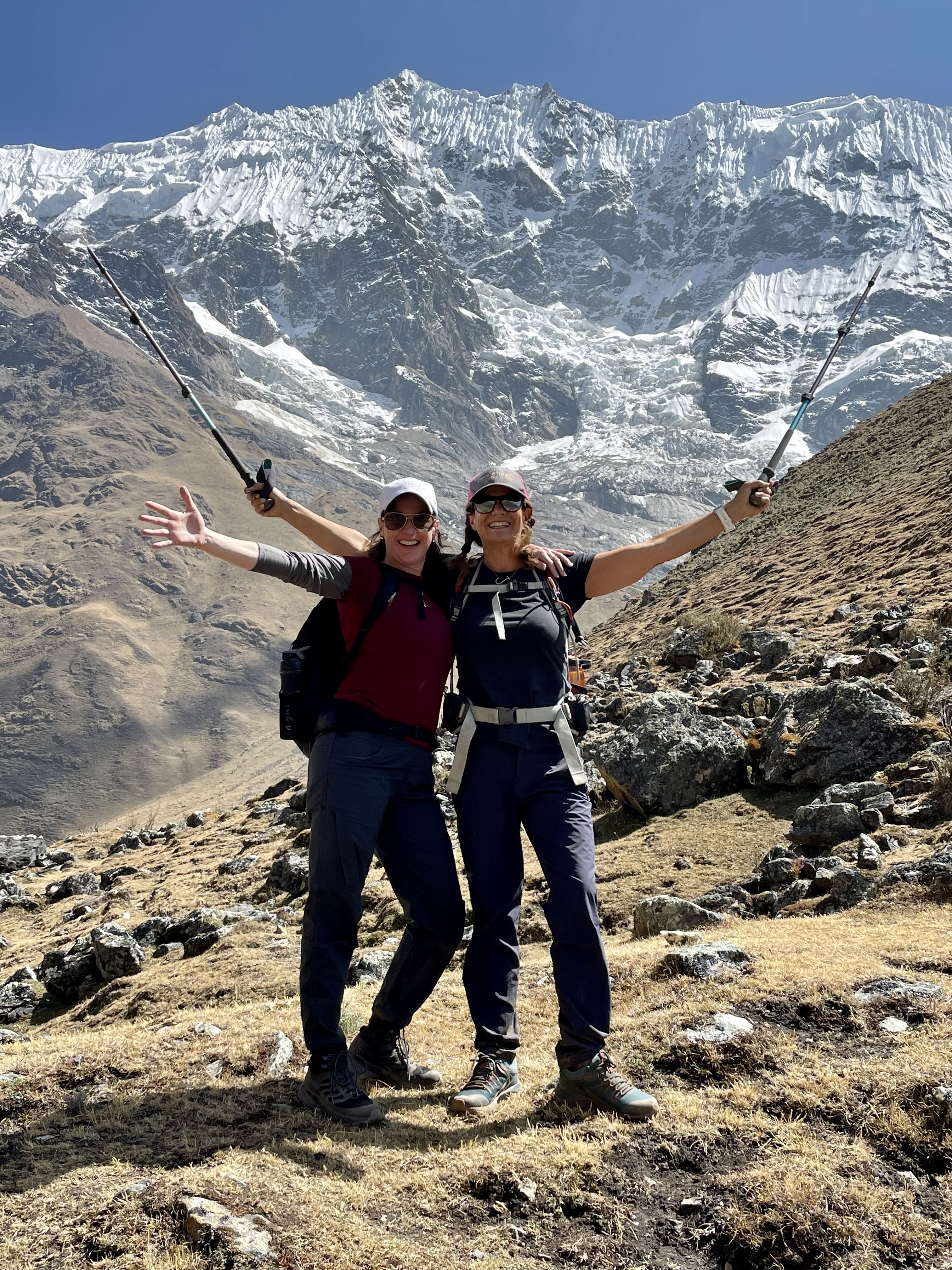

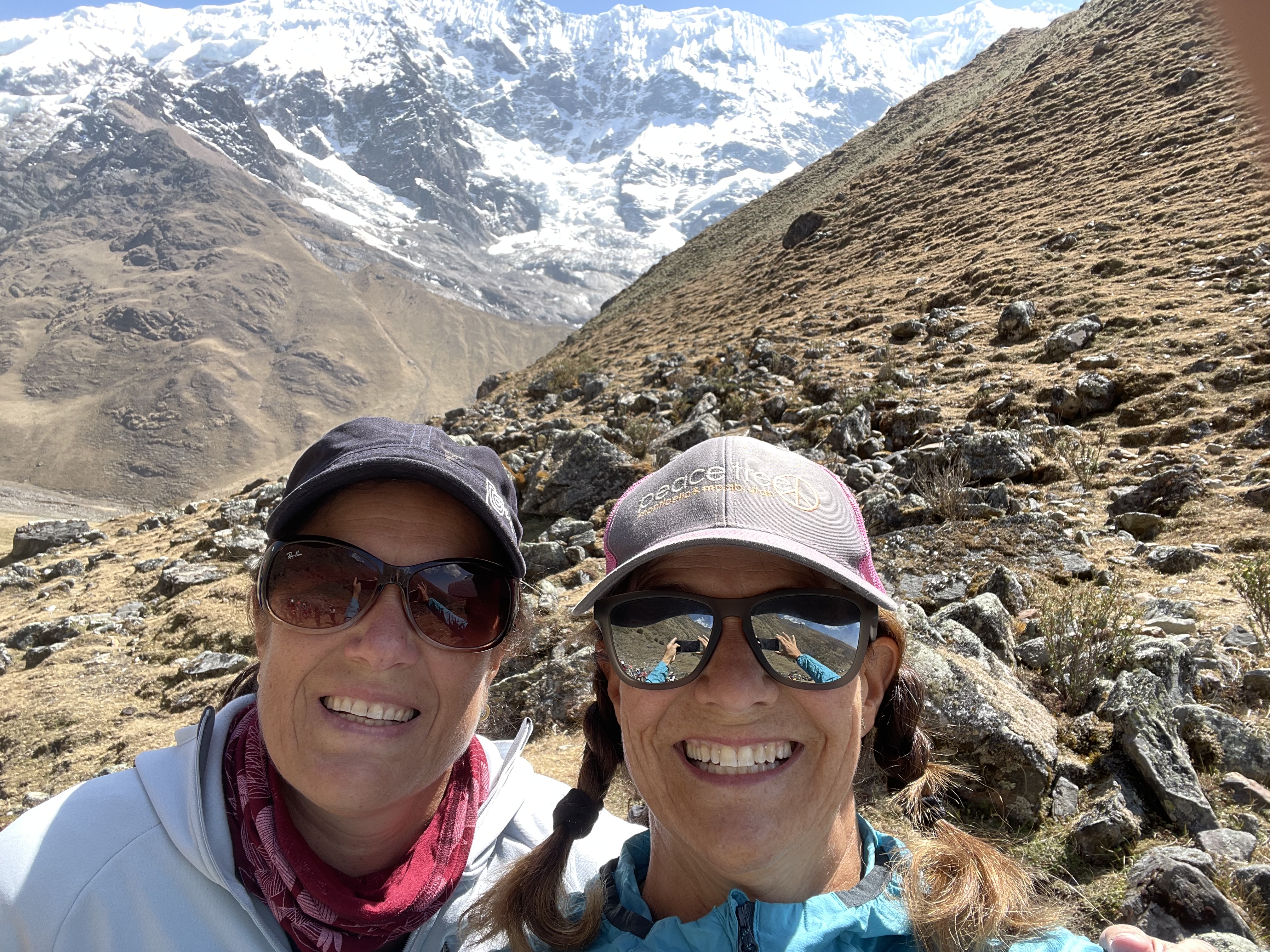
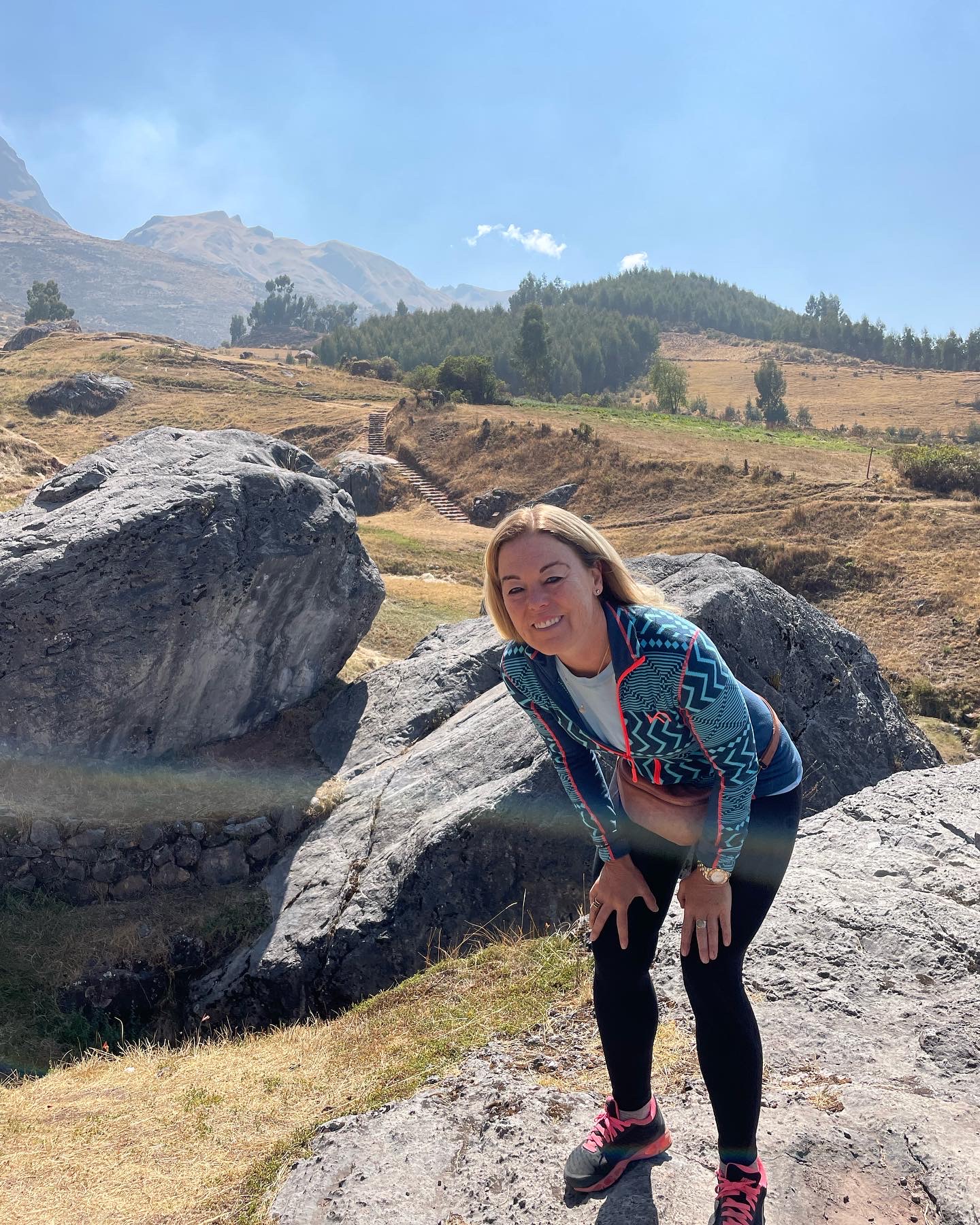
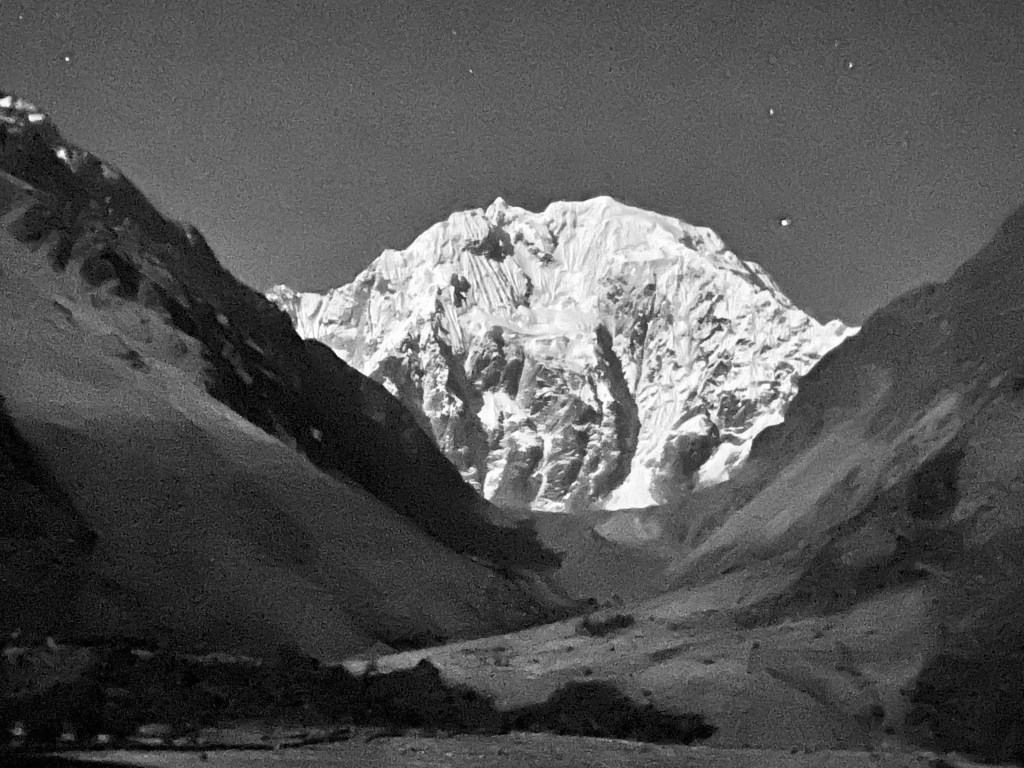
To be honest, at this height, I was not sleeping well. Because of my serious allergies, I didn’t want to risk taking altitude medication (like the rest of the group), so breathing at night was challenging. I felt like I had a Sacsayhuamán rock on my chest. So, at 2 am, I went out on our balcony and captured this mountain in its moonlit glory. (Pretty proud of this pic!)
DAY 8: HIKE TO LAKE HUMANTAY
ACCOMMODATION: Salkantay Lodge
DIFFICULTY: MODERATE TO DIFFICULT
TIME: 5 HOURS INCLUDING LUNCH AND CEREMONY
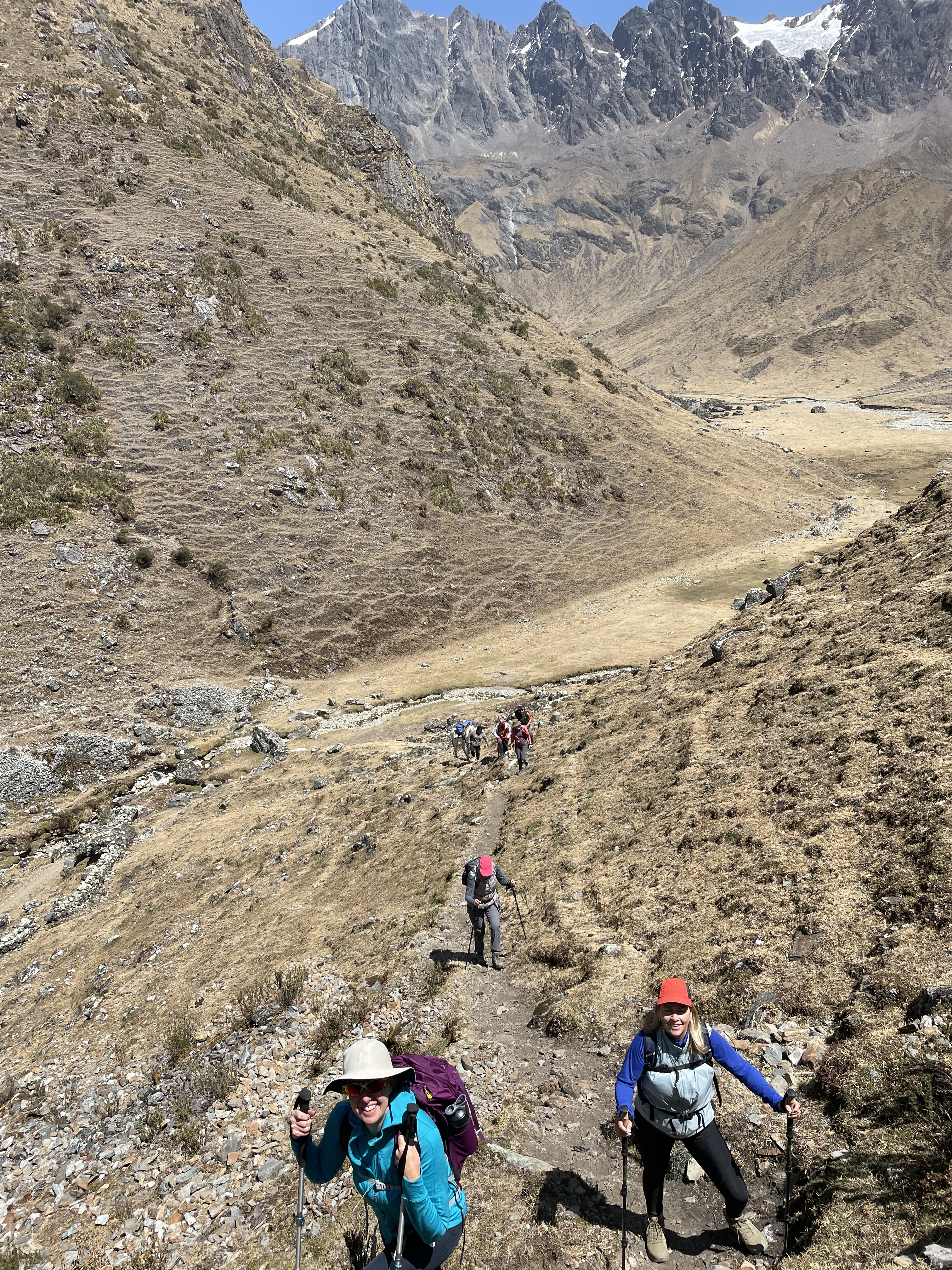
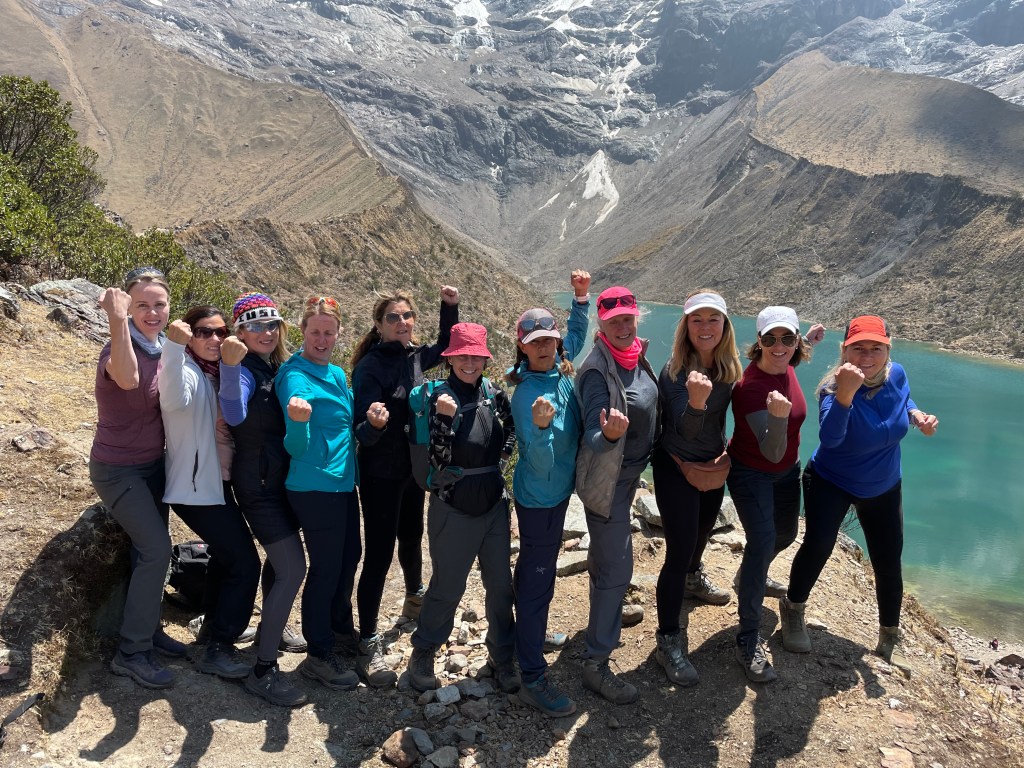
Early to rise, early to hike… We hoofed very slowly up to Lake Humantay in the morning. There were quite a few tourists who were dropped off by vehicles and then taken by horseback, but this strong group of 11 women went by foot. Because we were acclimating, every step up the mountain felt like it was on leaden legs. But the pay off was the turquoise waters of the lake with a snowy mountain backdrop: so stunning.
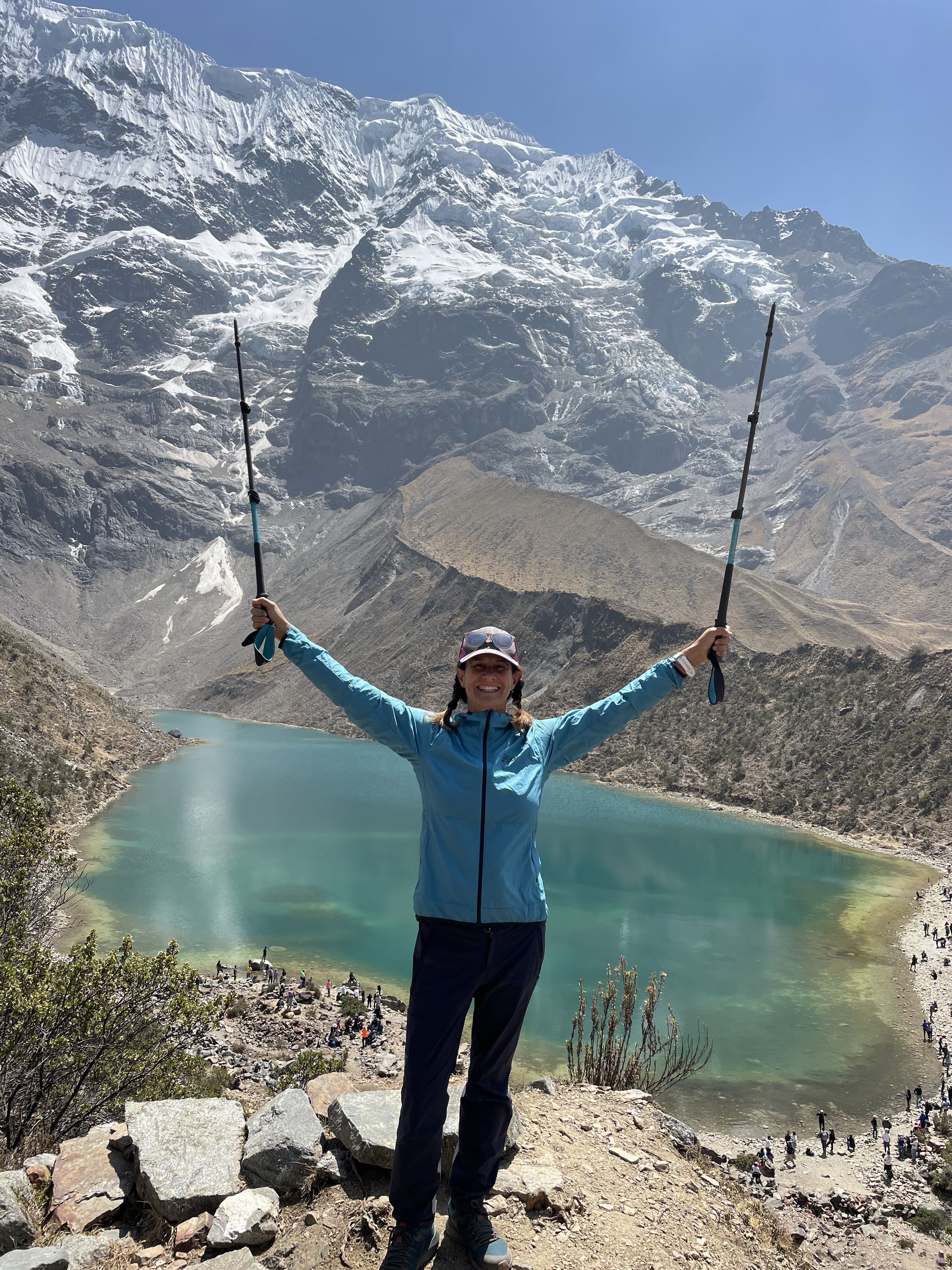

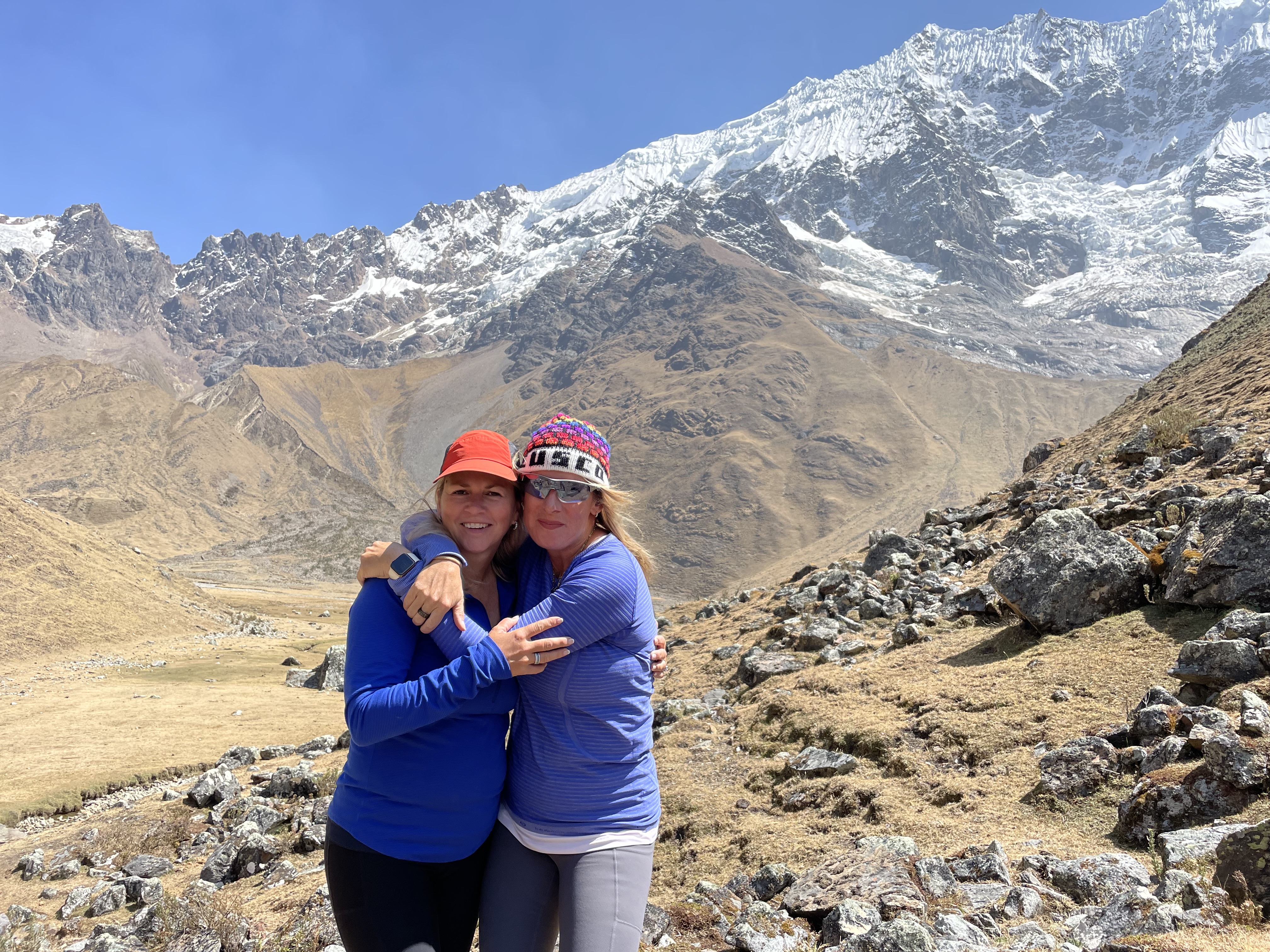
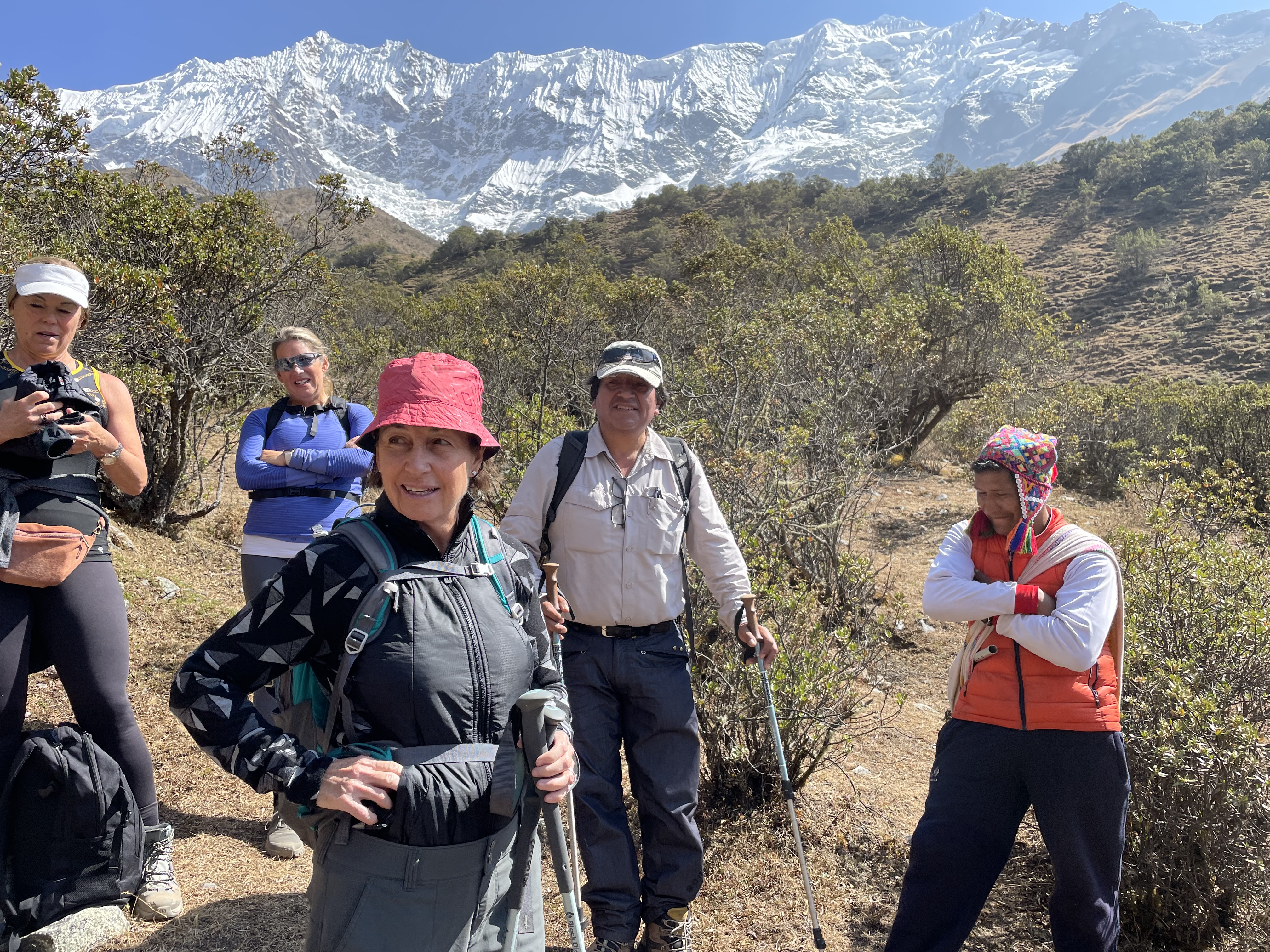
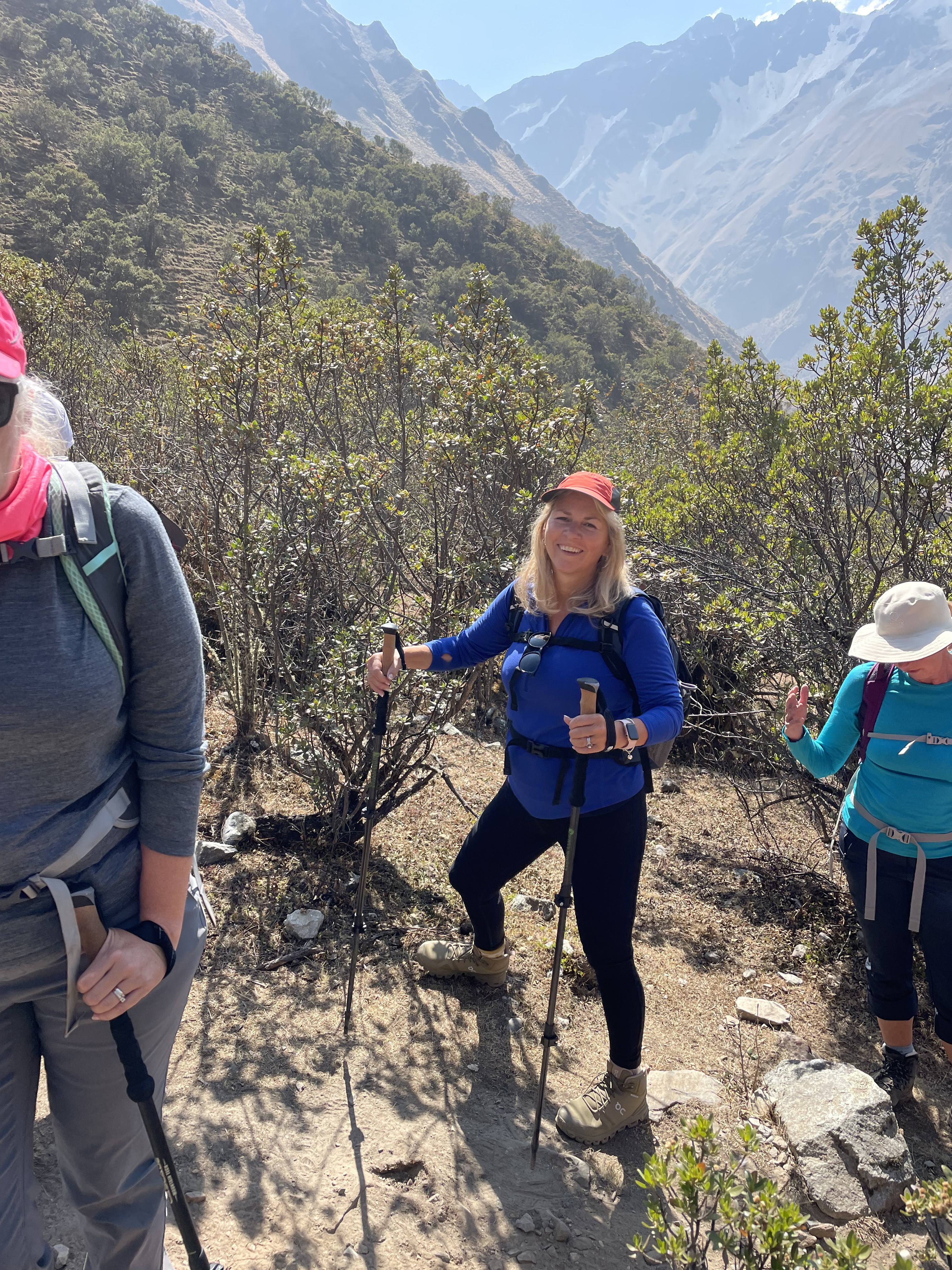
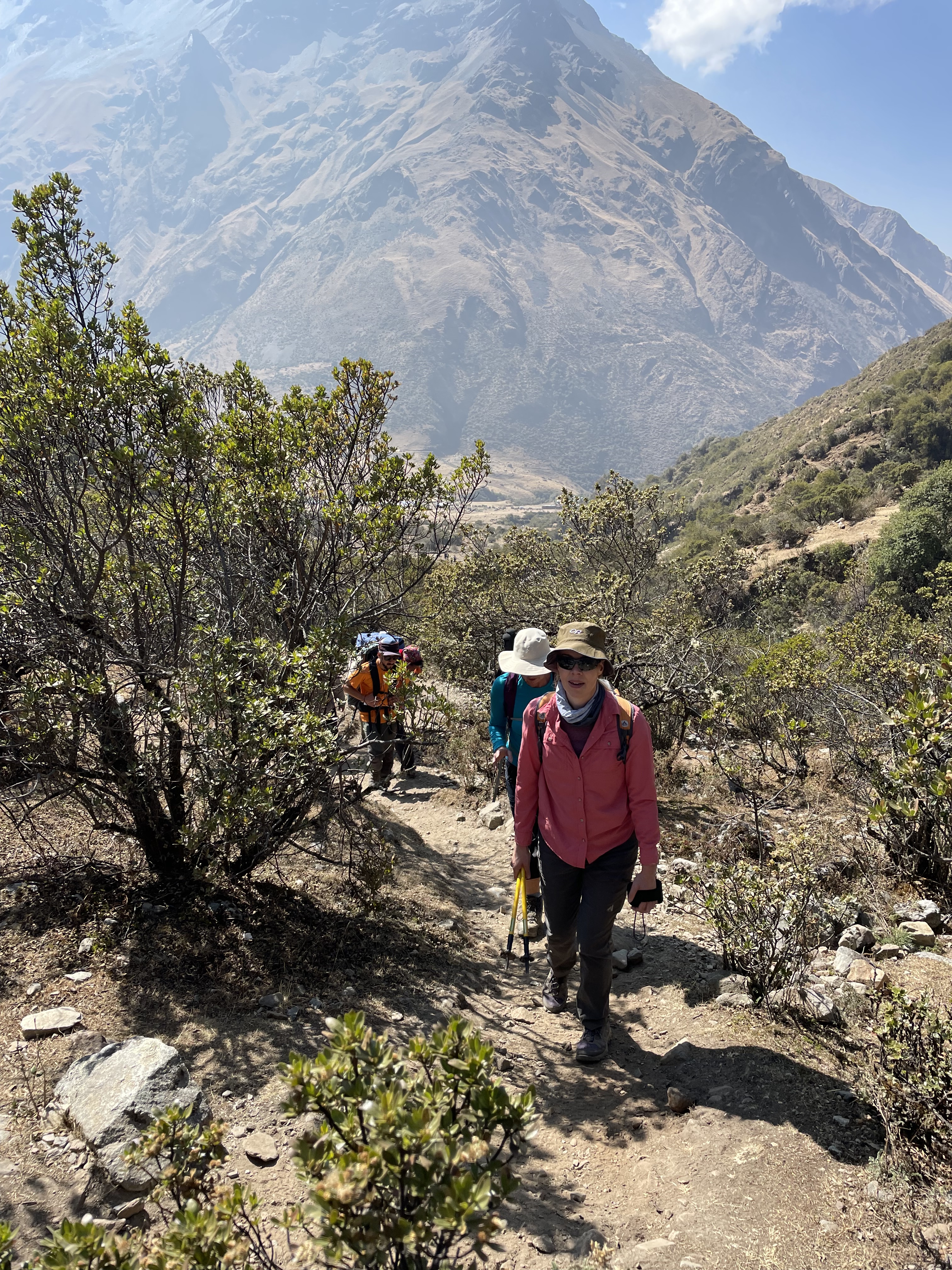
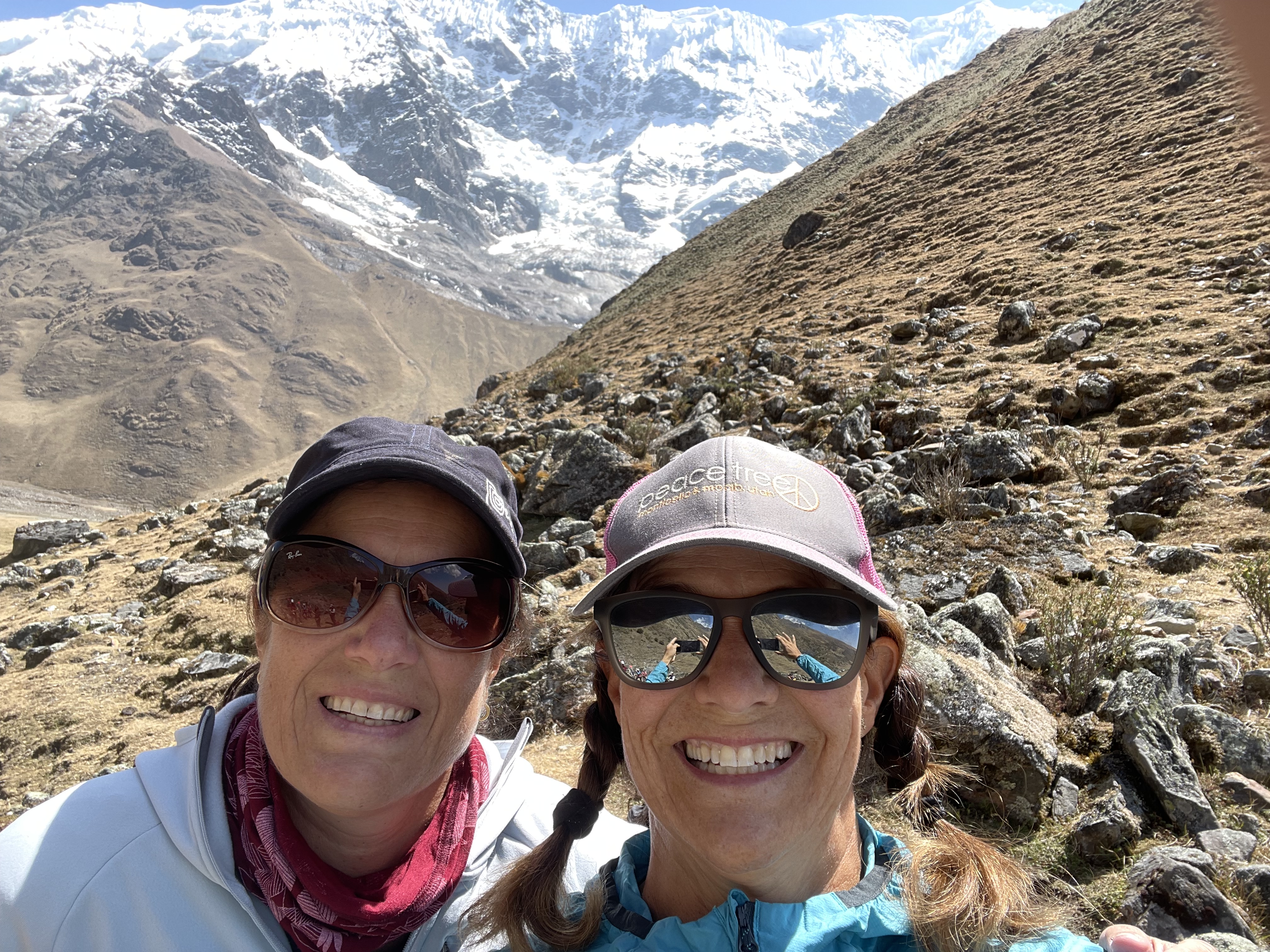
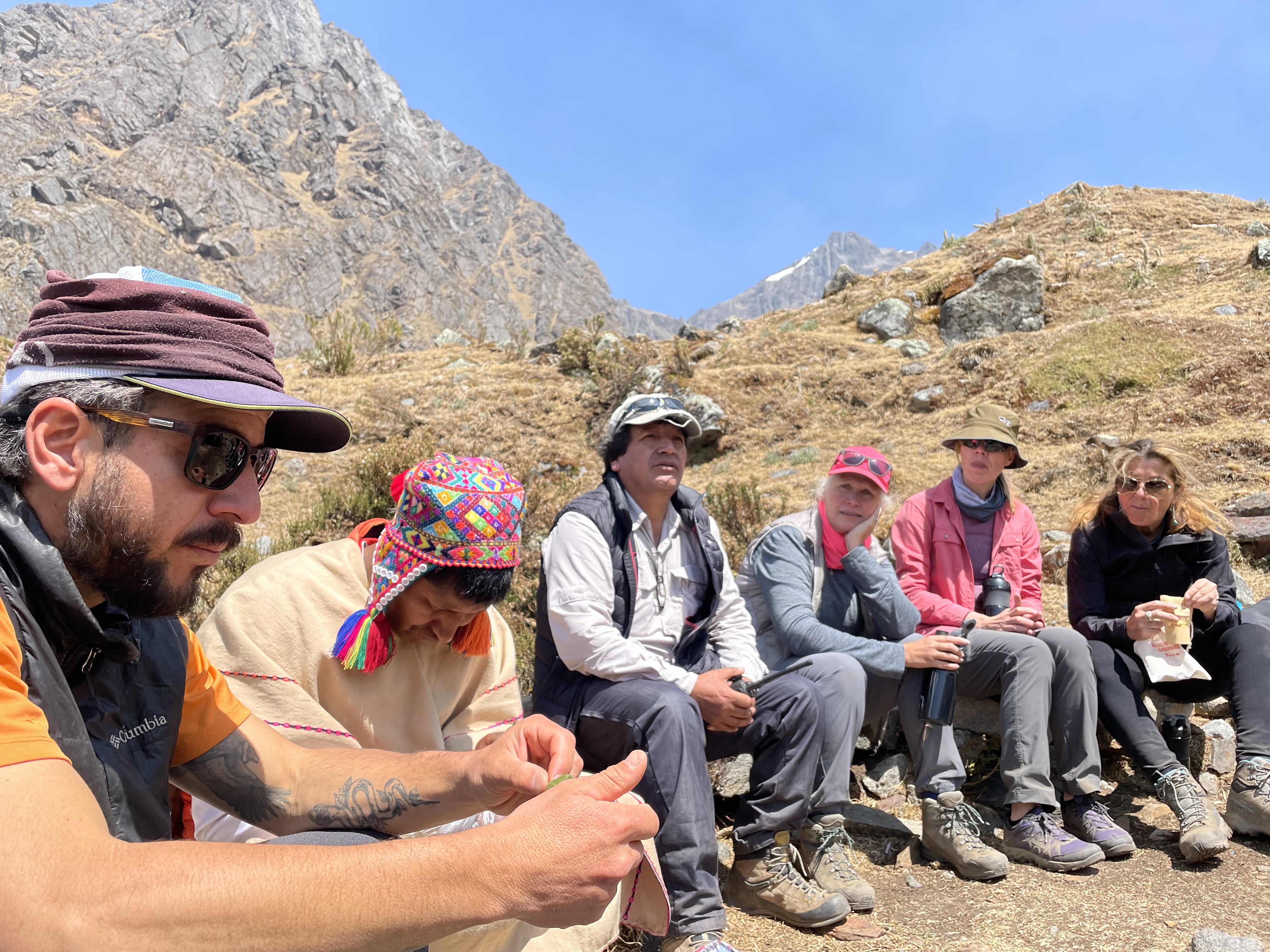


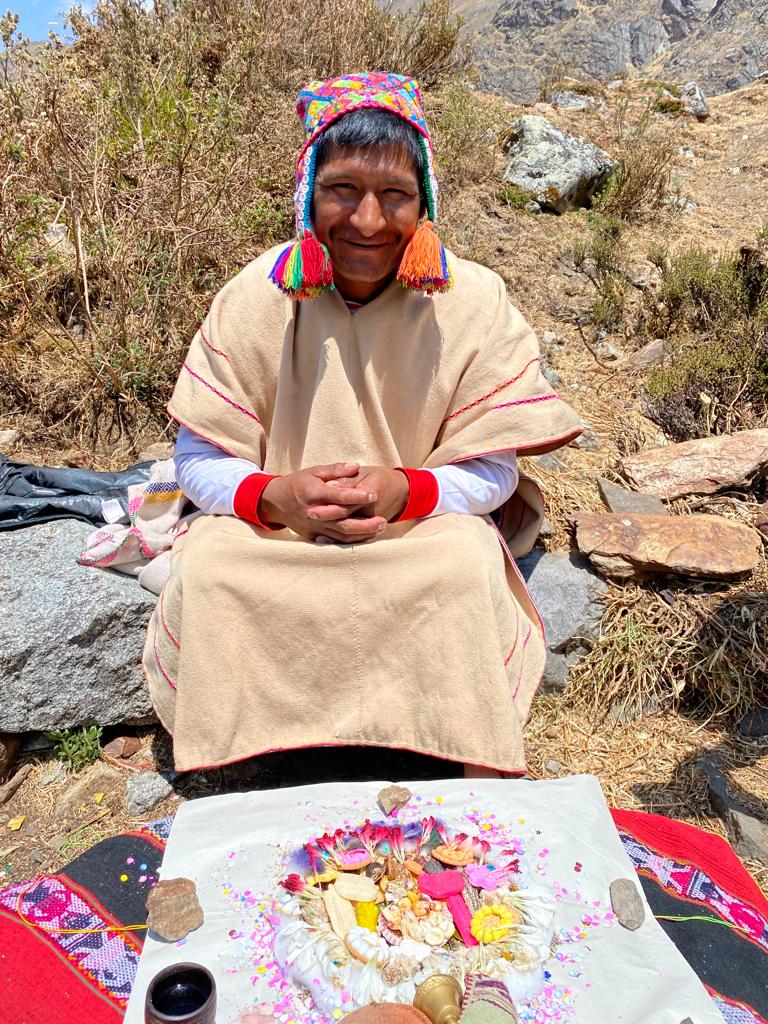
Wilfredo brought a local shaman who conducted a ceremony for us and blessed our trip. It was very emotional for the group and a beautiful bonding experience.
DAY 9: CROSSING THE SALKANTAY PASS
ACCOMMODATION: Wayra Lodge (12,812’ / 3,906 m)
DIFFICULTY: VERY CHALLENGING
TIME: 7 HOURS
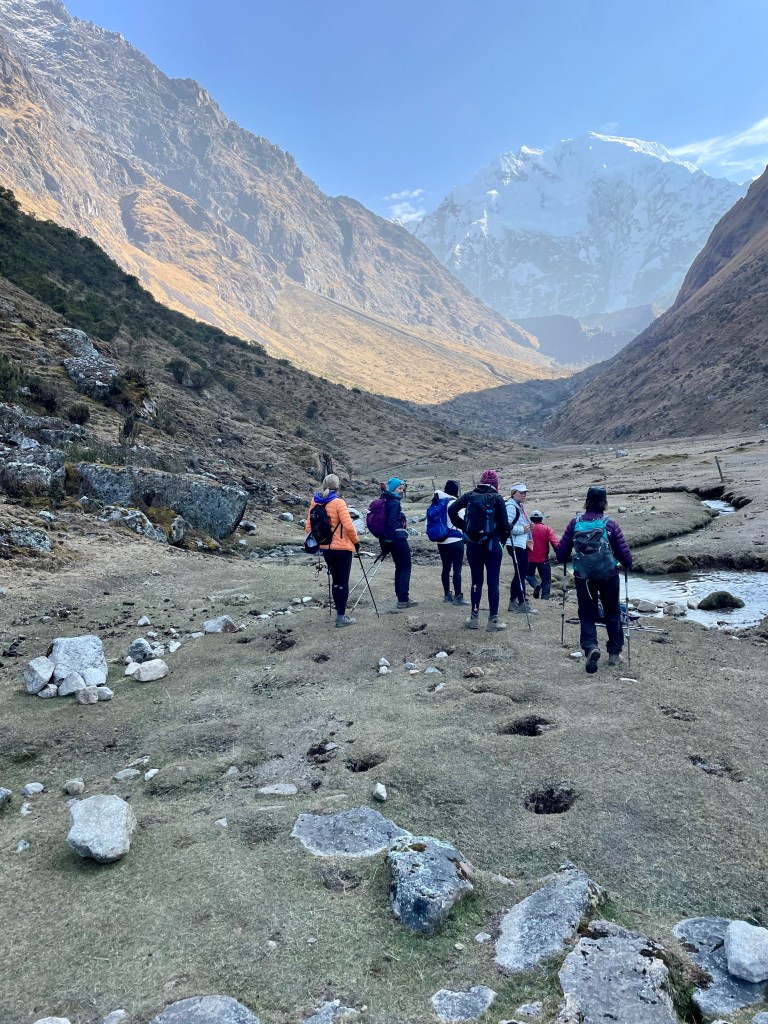
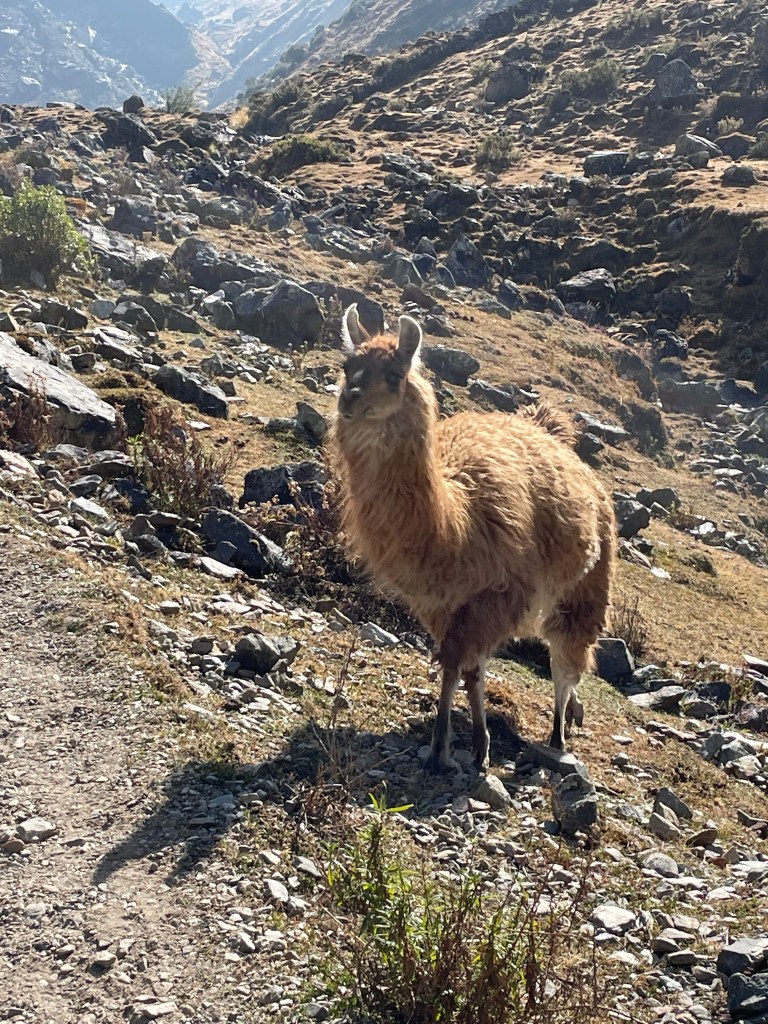
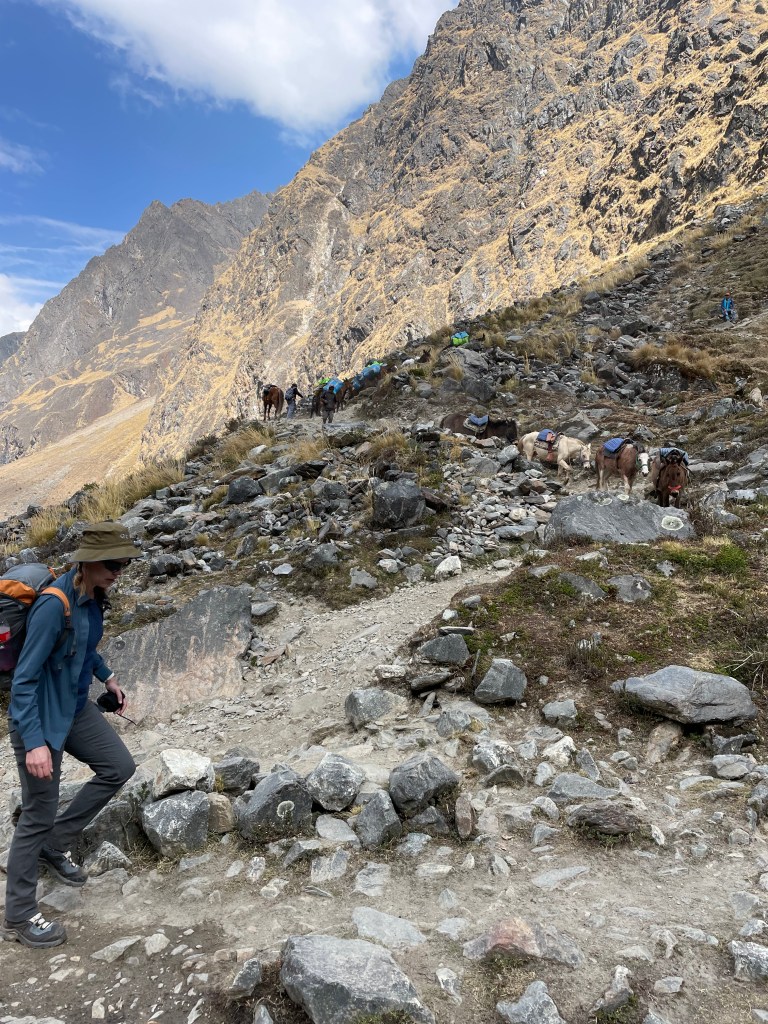
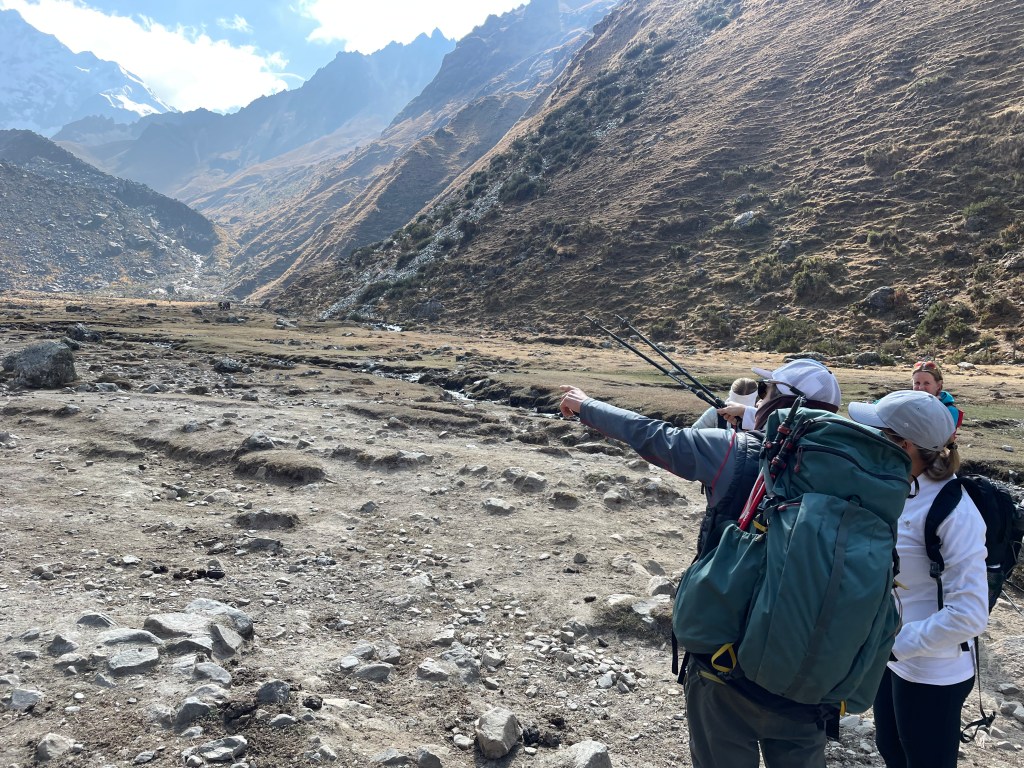
Today was the tough “Daniel Train” day. As we hiked through the Salkantay River Valley and then up the Salkantay Pass, the majority of us were physically challenged. As it naturally does, the group was like an accordion, stretching and then coming together. Daniel helped the tail end put one sure foot in front of the other up the steep slopes at high altitude. So, the women called it the “Daniel Train.”

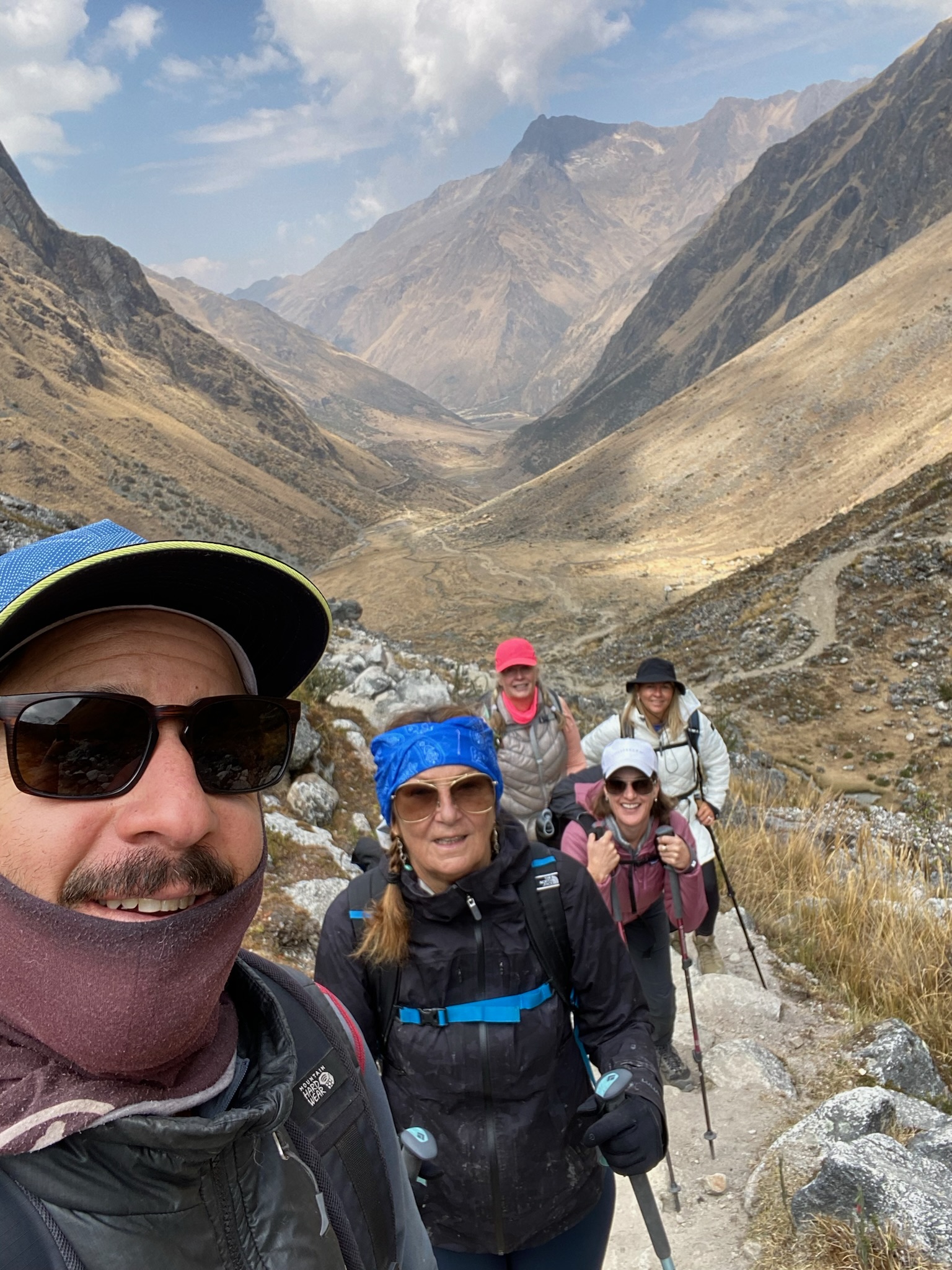
Nearly to the top, I was really struggling with altitude sickness. My brain was foggy, I had a headache, was exhausted, and I was having trouble planting my poles. I was wearing my Garmin watch with a pulse oximeter and my oxygen saturation read 86%: not good. If untreated, this can lead to severe manifestations: high–altitude pulmonary edema and high-altitude cerebral edema.
Wilfredo and Daniel didn’t mess around; they immediately administered oxygen and plopped me on the back of a donkey for the final 1/2 km ascent. Inauspicious and disappointing as it was for me, I was so grateful as I felt so much better.
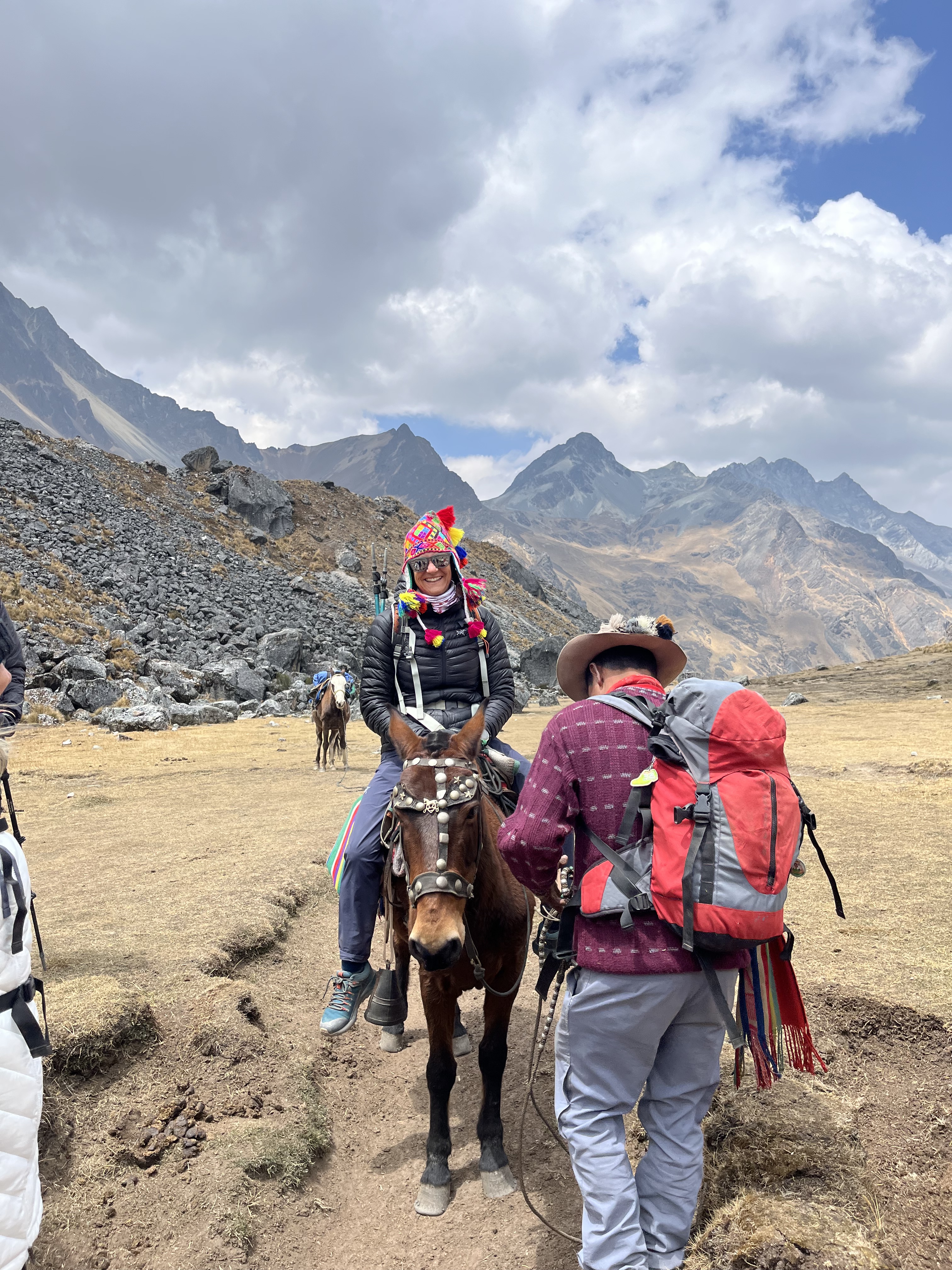
En route, we witnessed a thunderous avalanche on the next mountain. In the past year, another one had resulted in a rock slide that wiped out part of the town below. Again, I was grateful that we were in good hands and on the right side of the valley.
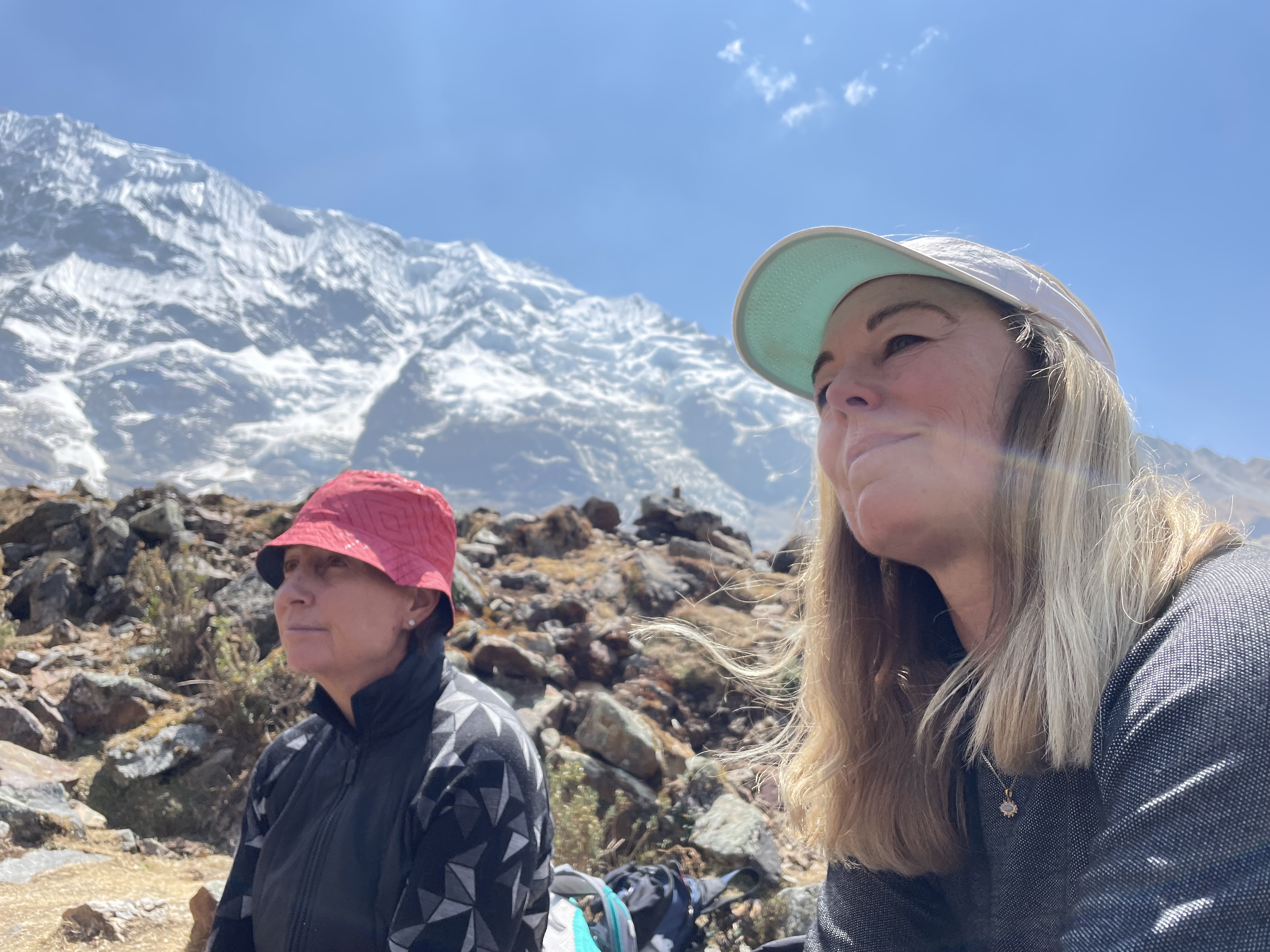
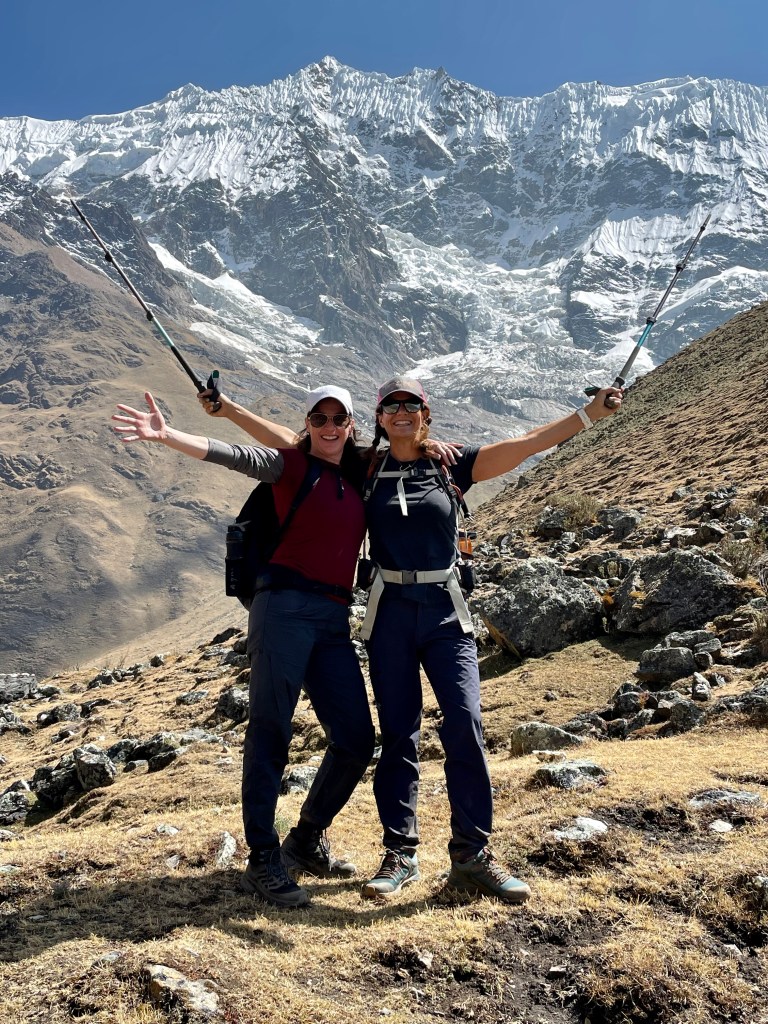
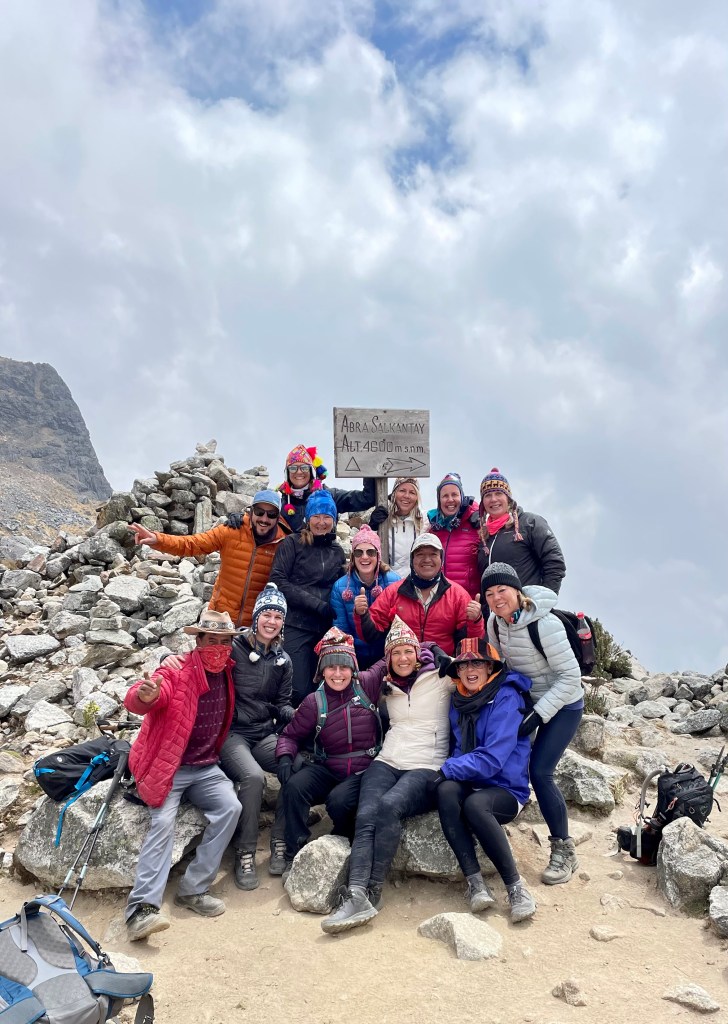
When we finally reached the summit, there were tears of joy, smiles, laughs, and an immense feeling of accomplishment. We were so proud: happy to be alive and physically able, in our 50s and 60s, to achieve this goal.
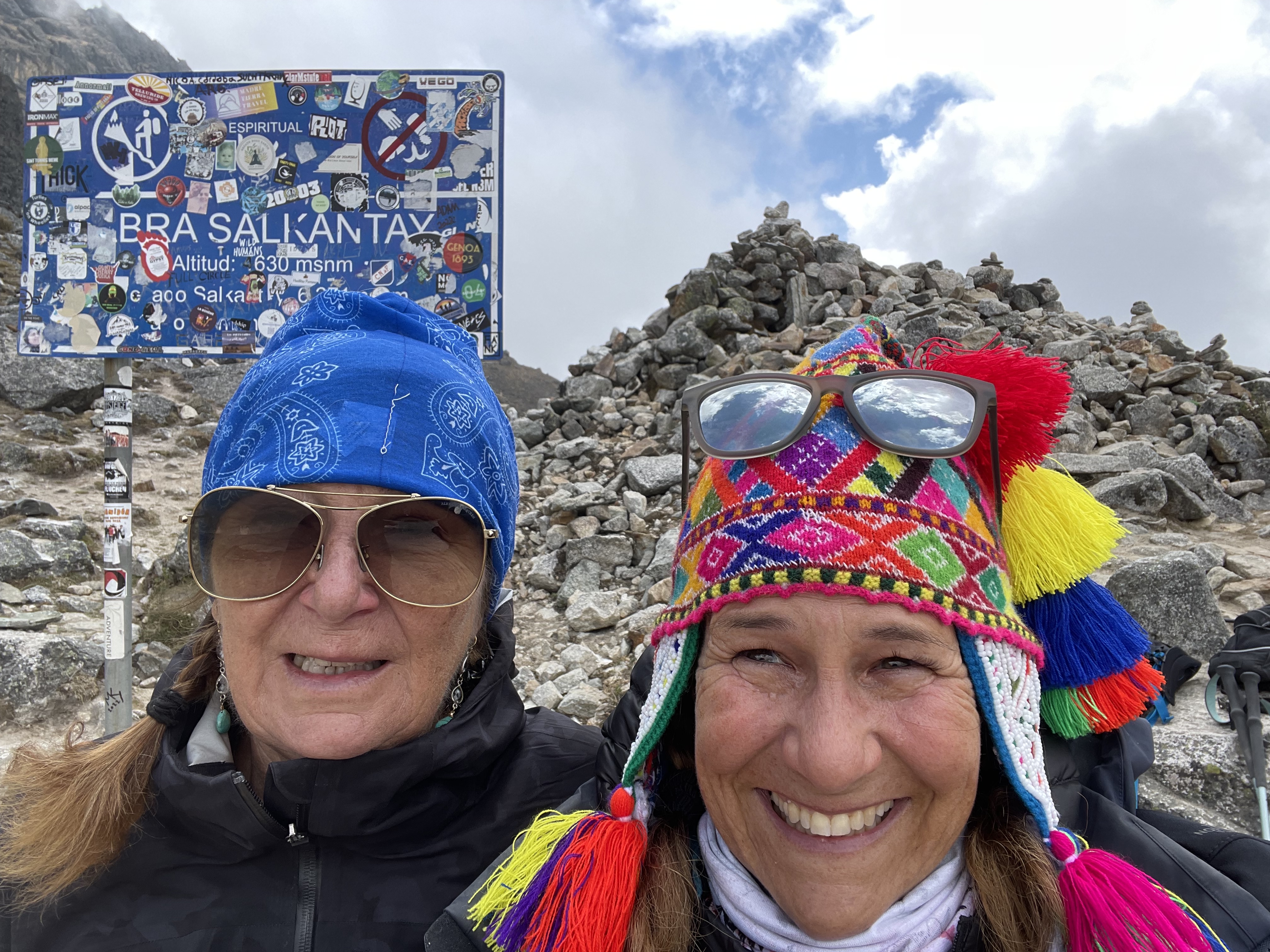
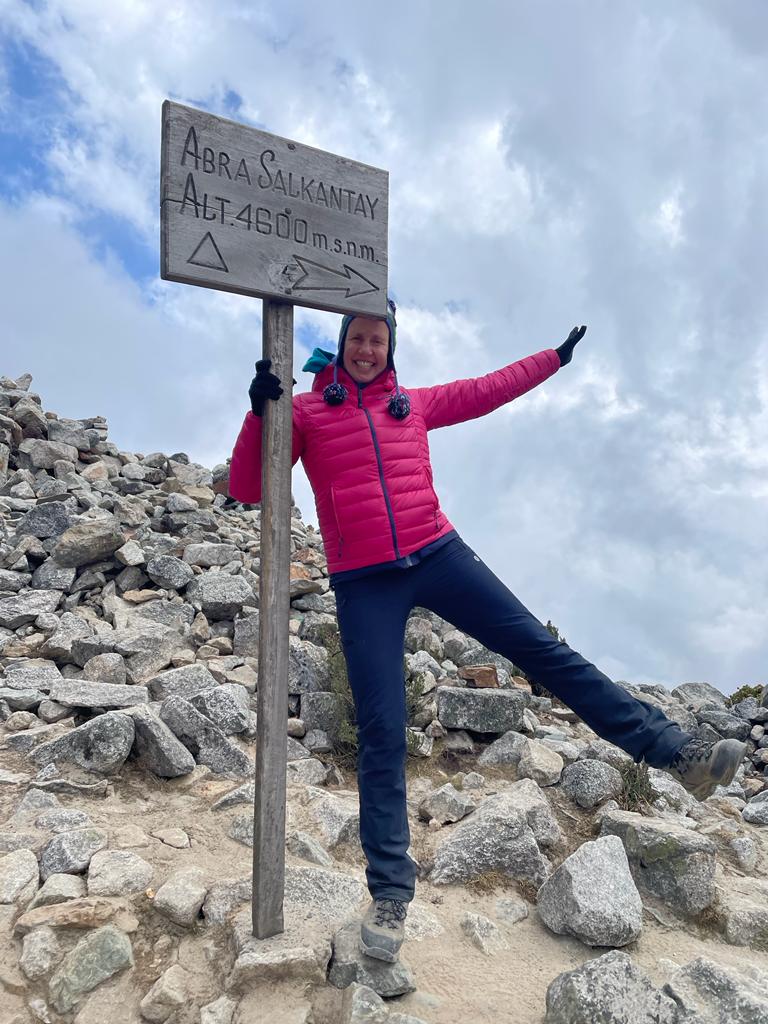


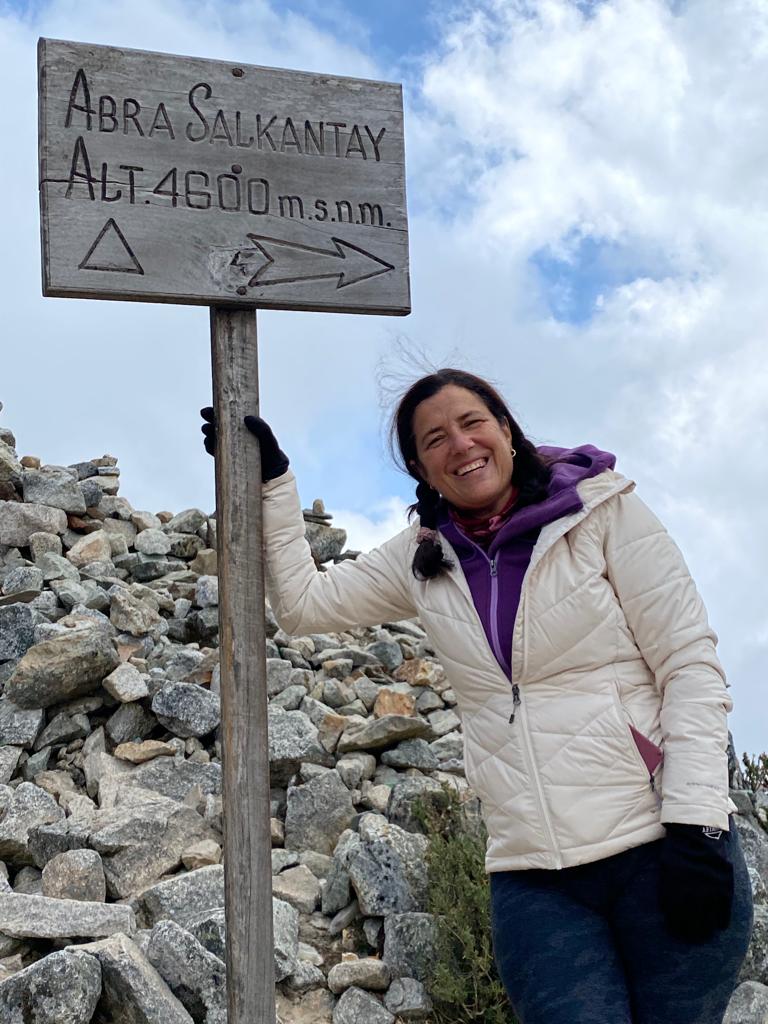
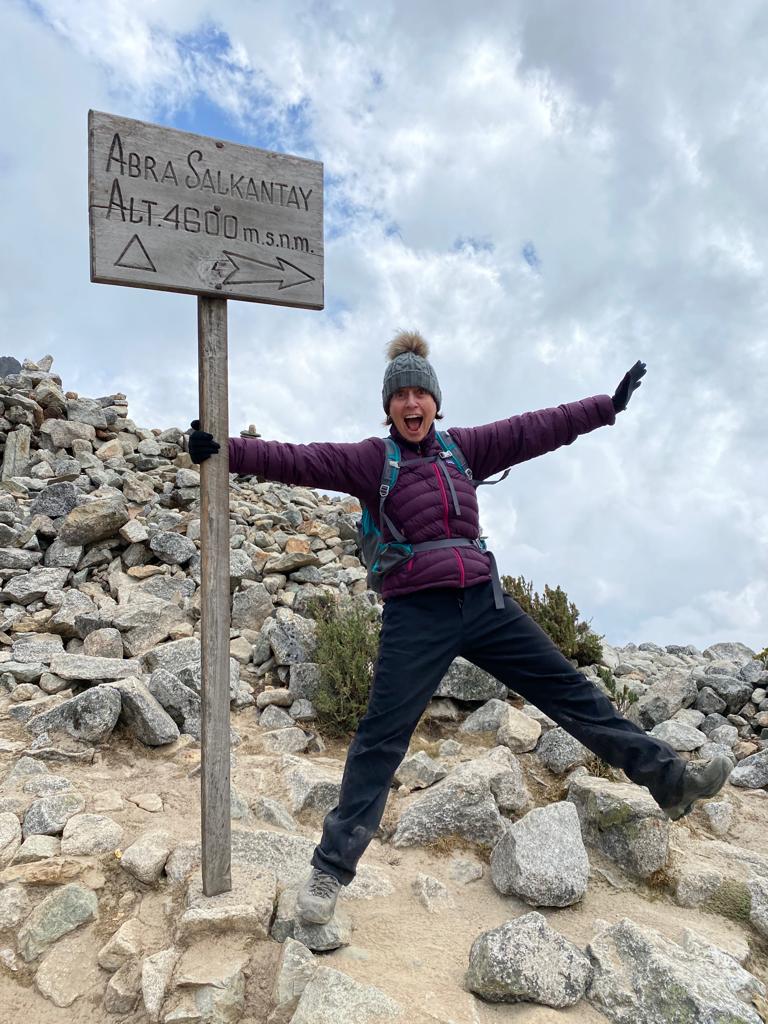
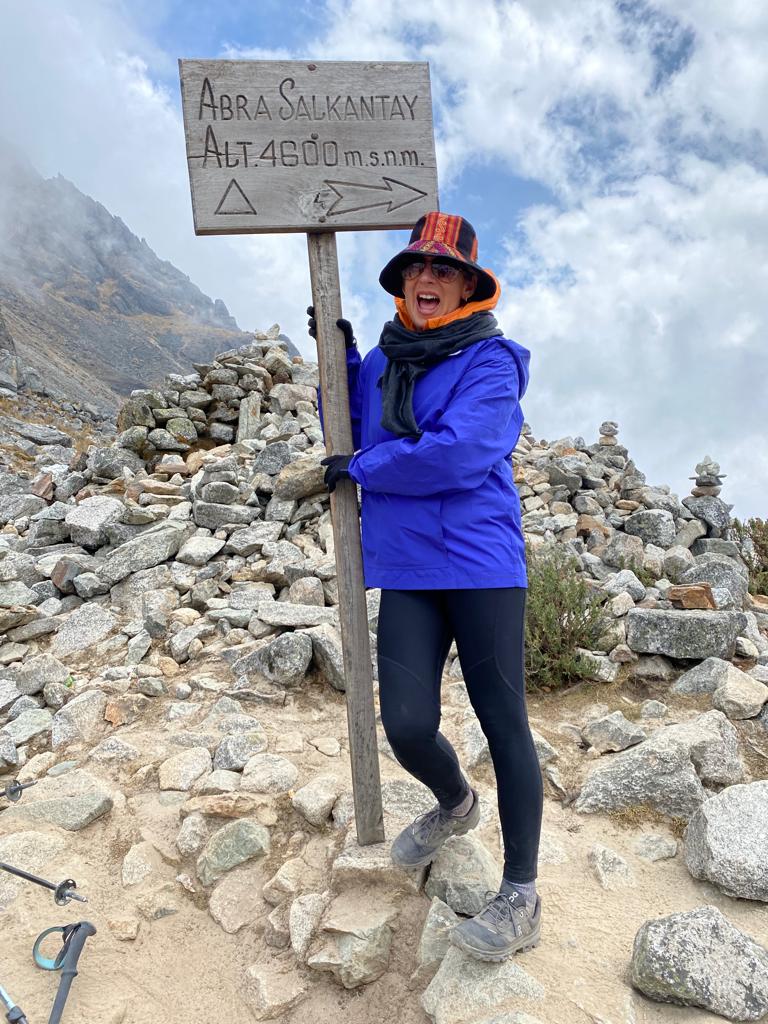
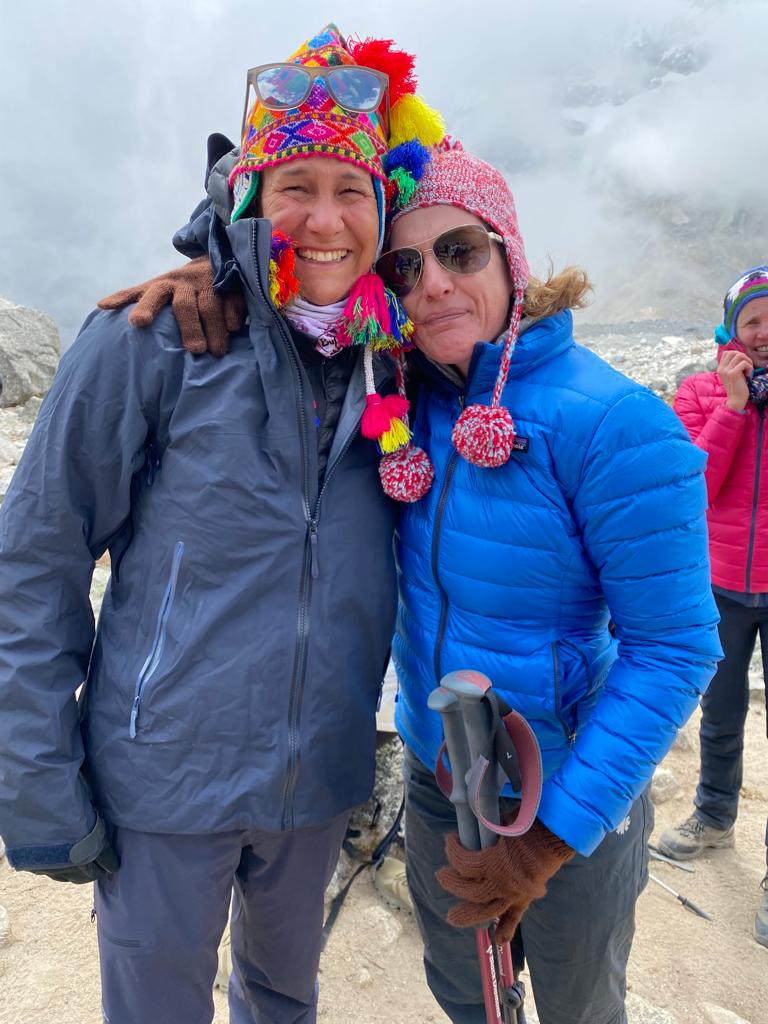
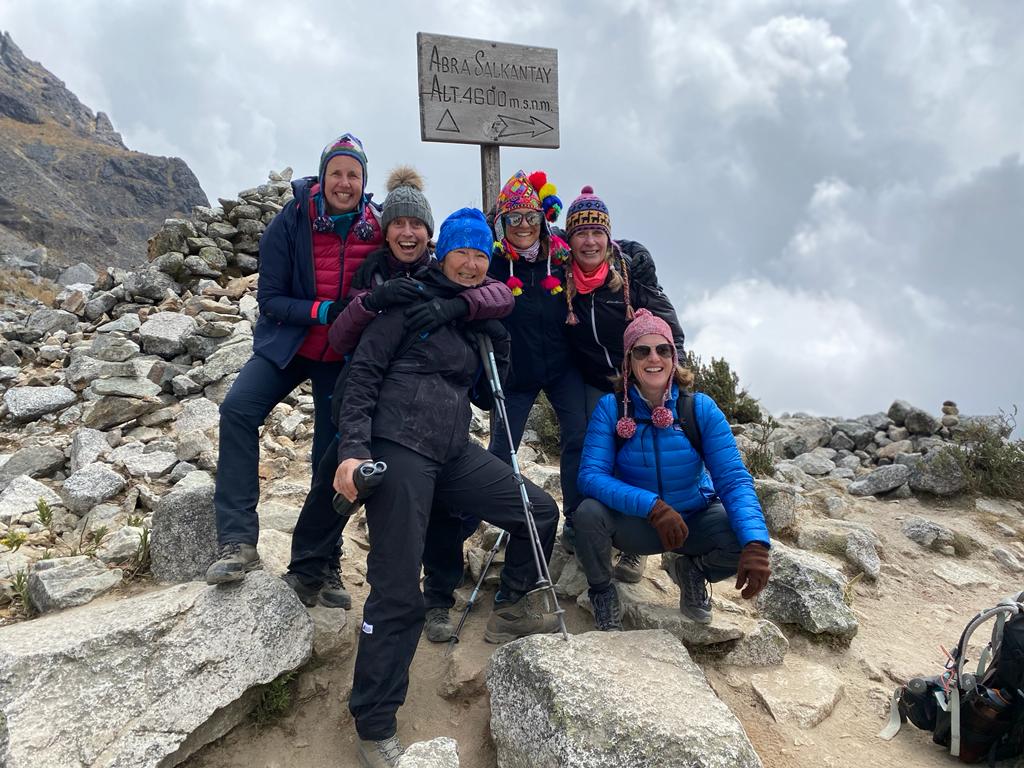
After marveling at the majesty of the Salkantay Peak and patting ourselves on the back for a job well-done, we ate lunch on the mountain and began heading down to Wayraccmachay.
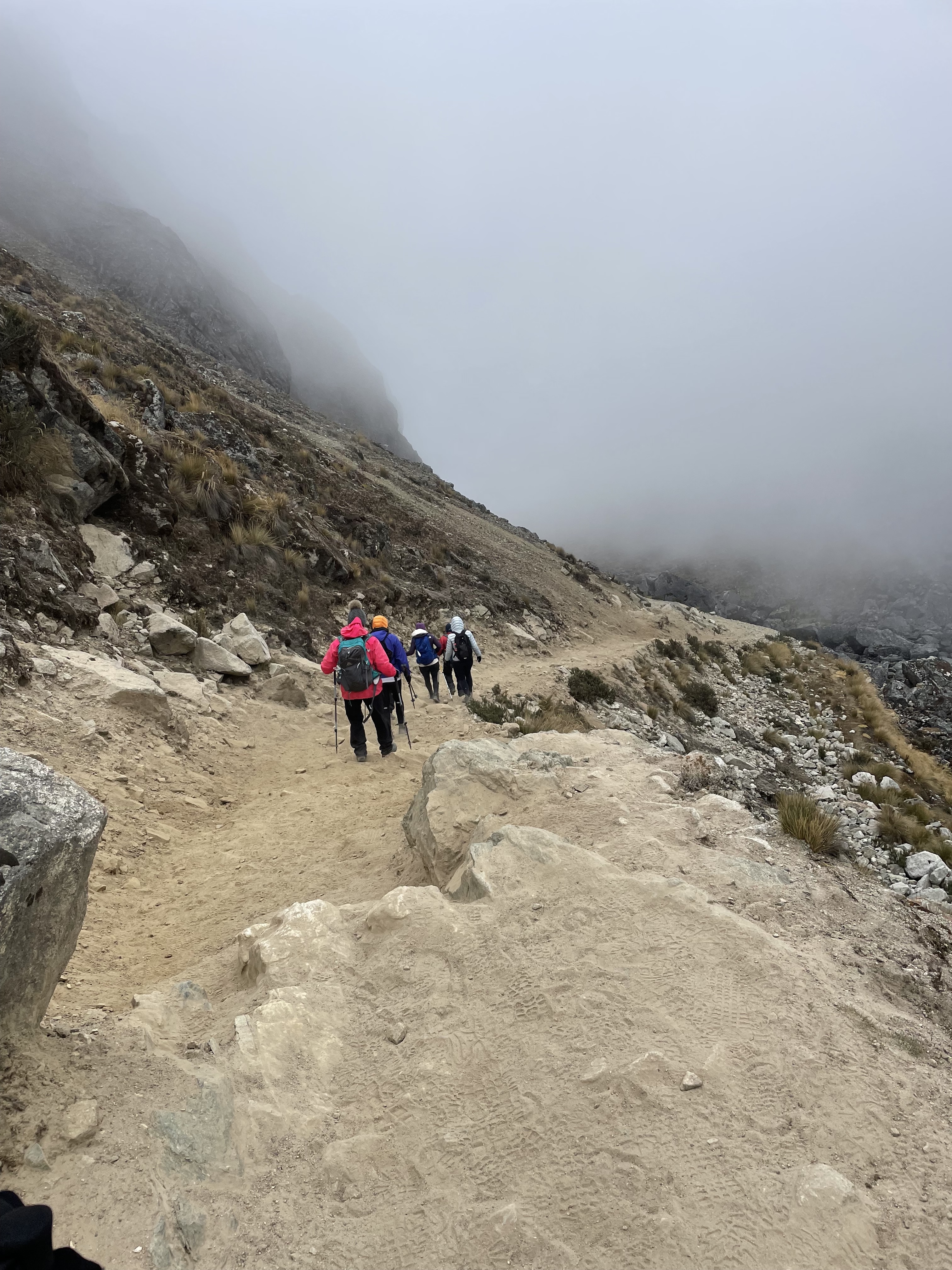
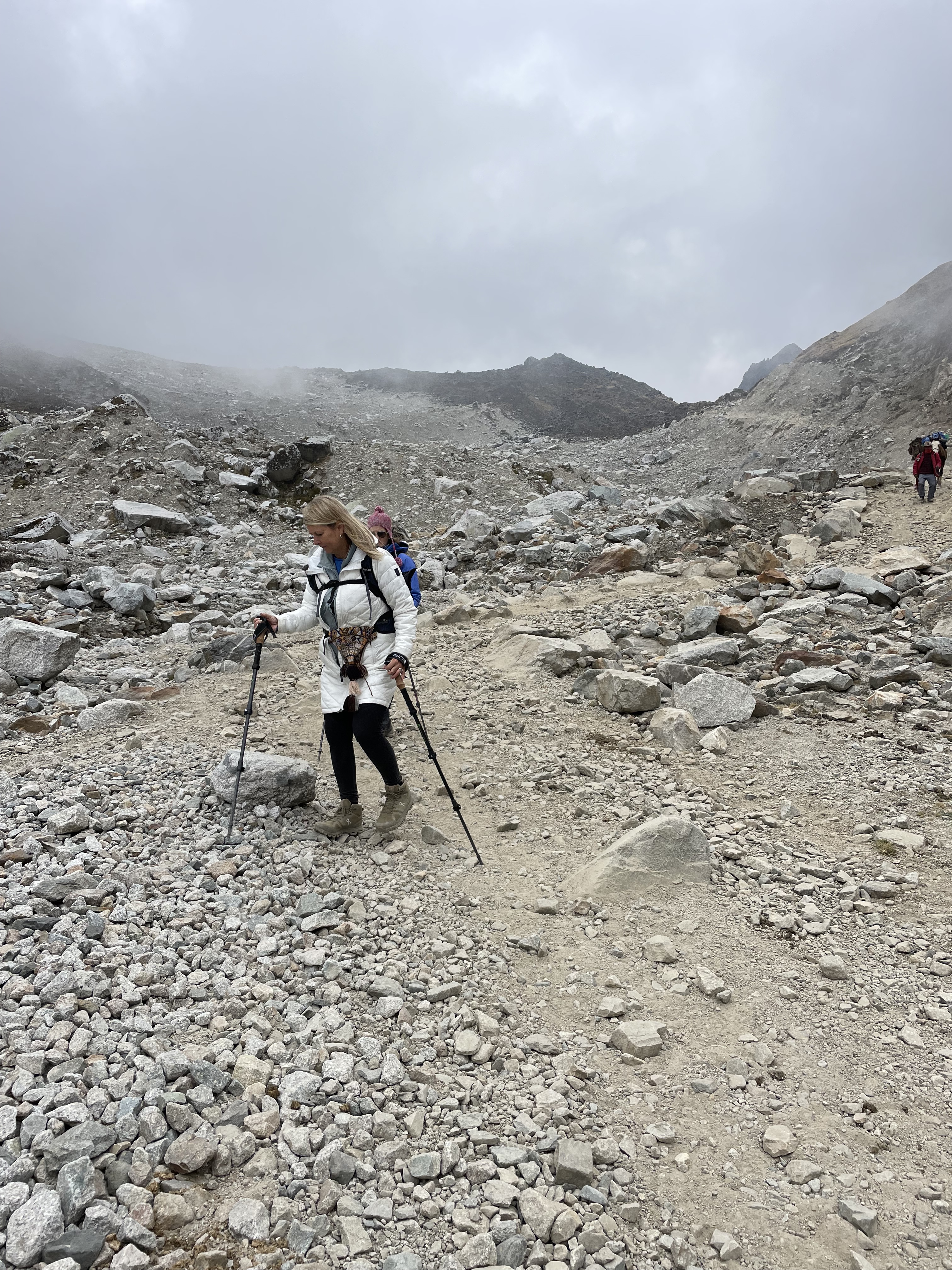
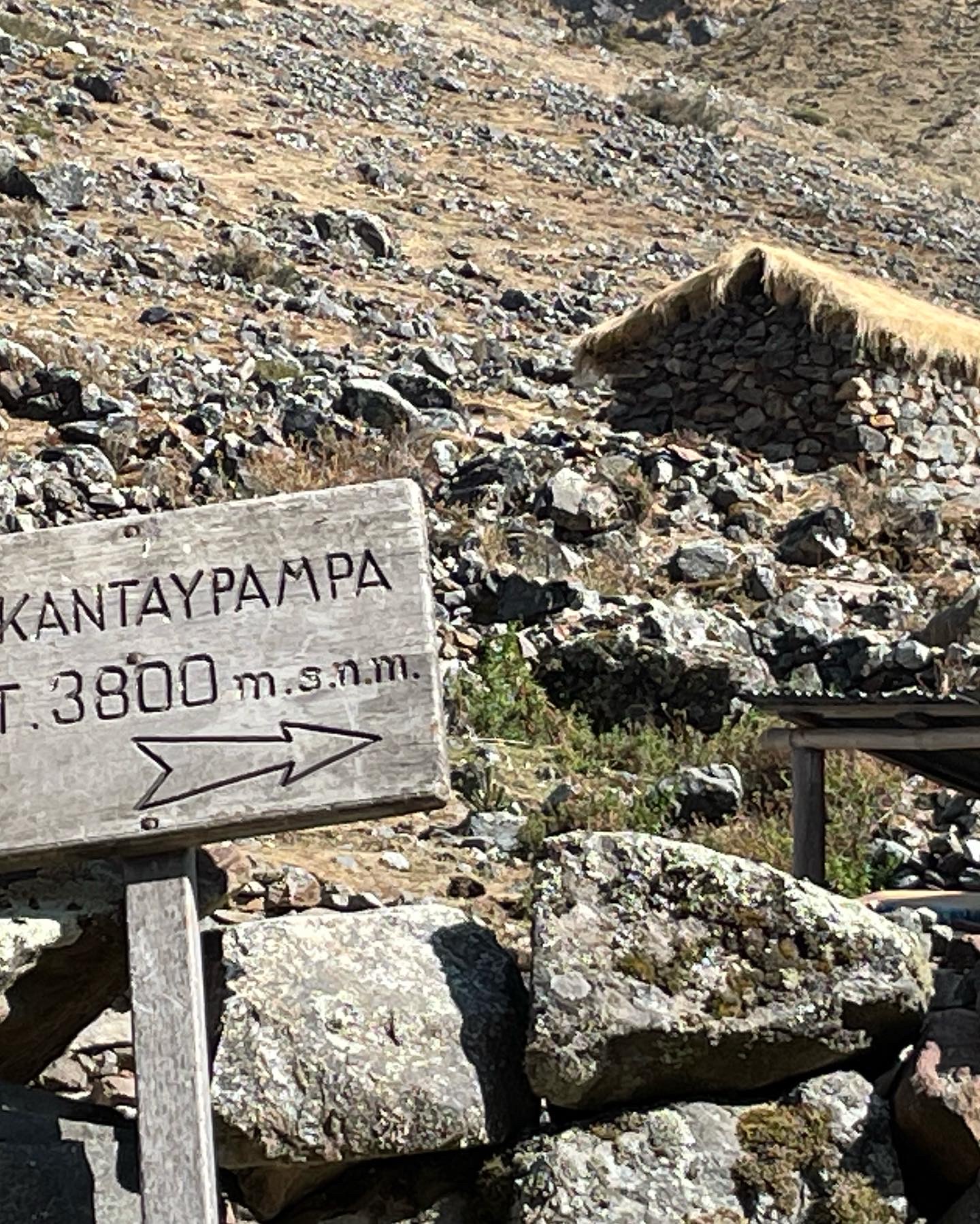
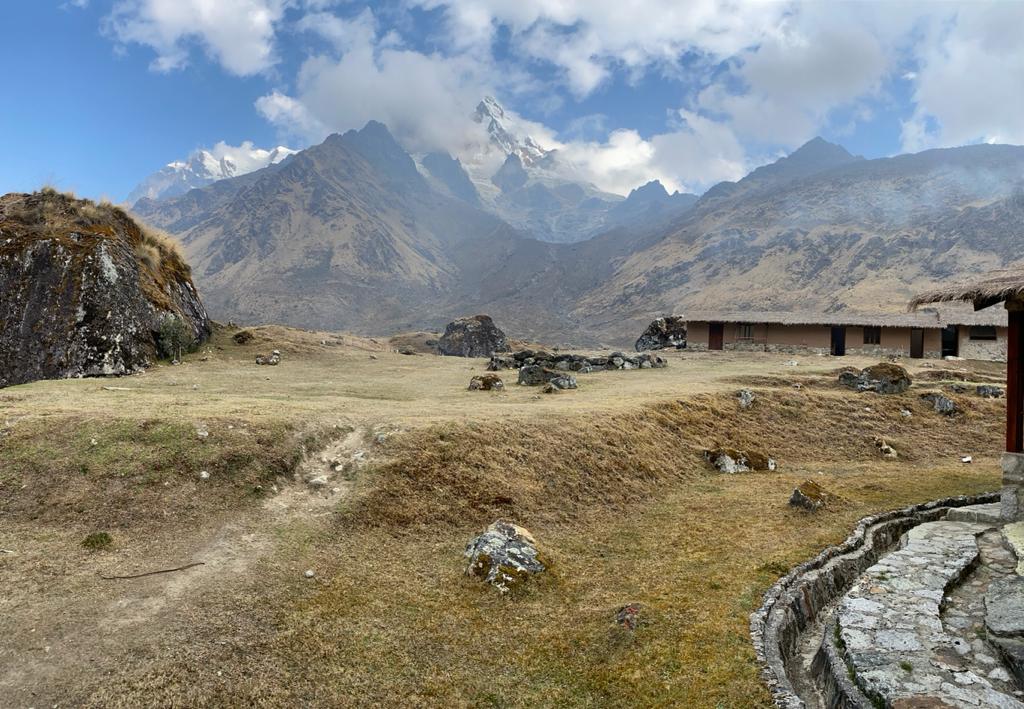
What a day.
DAY 10: DESCENDING INTO THE CLOUD FOREST
ACCOMMODATION: Culpa Lodge (9,414’ / 2,870m)
DIFFICULTY: INTERMEDIATE
TIME: 4 HOURS
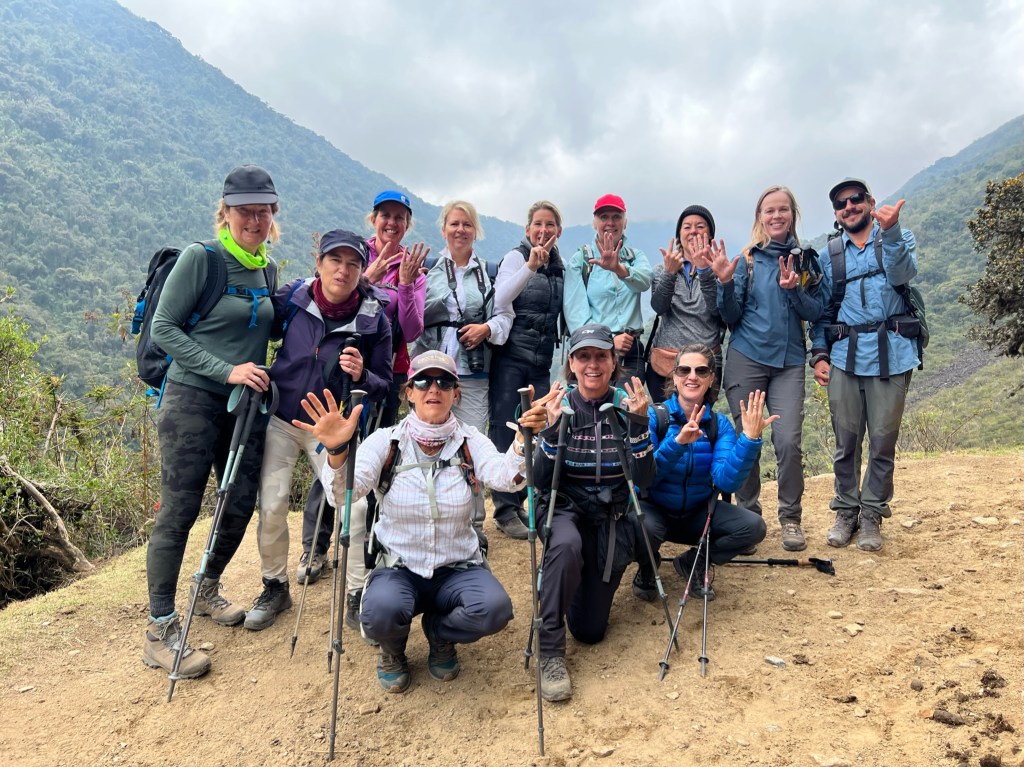
Here, I’ll state the obvious: going down is WAY easier. Today, we began our descent its the cloud forest and made our way to Colpa Lodge.
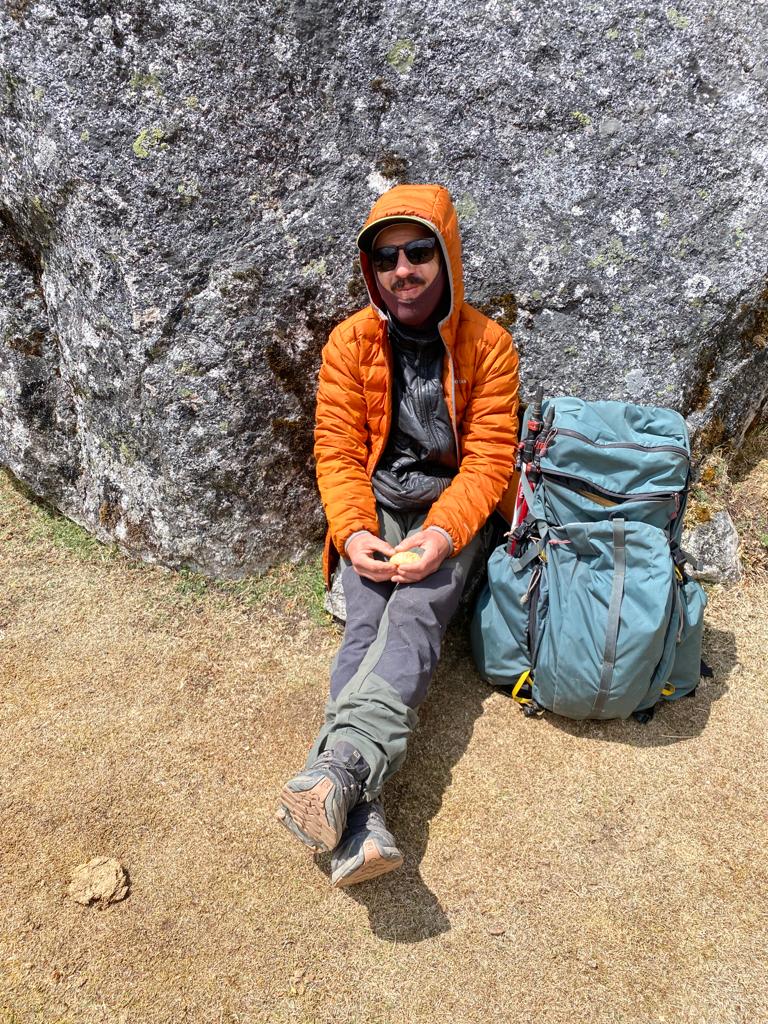
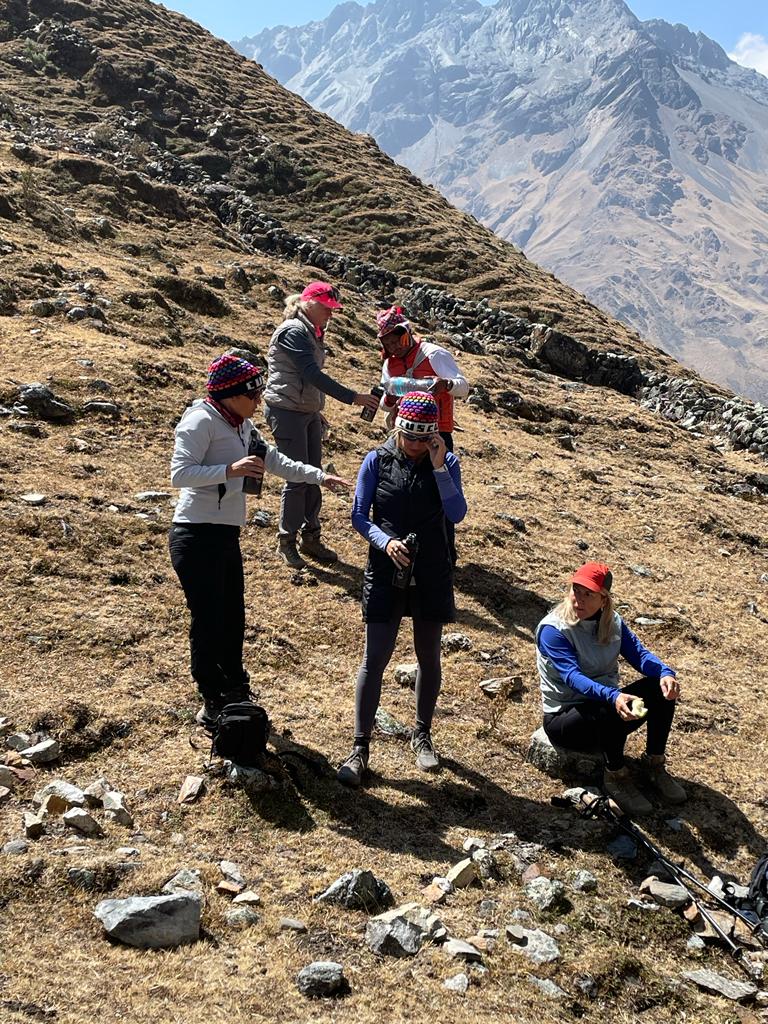
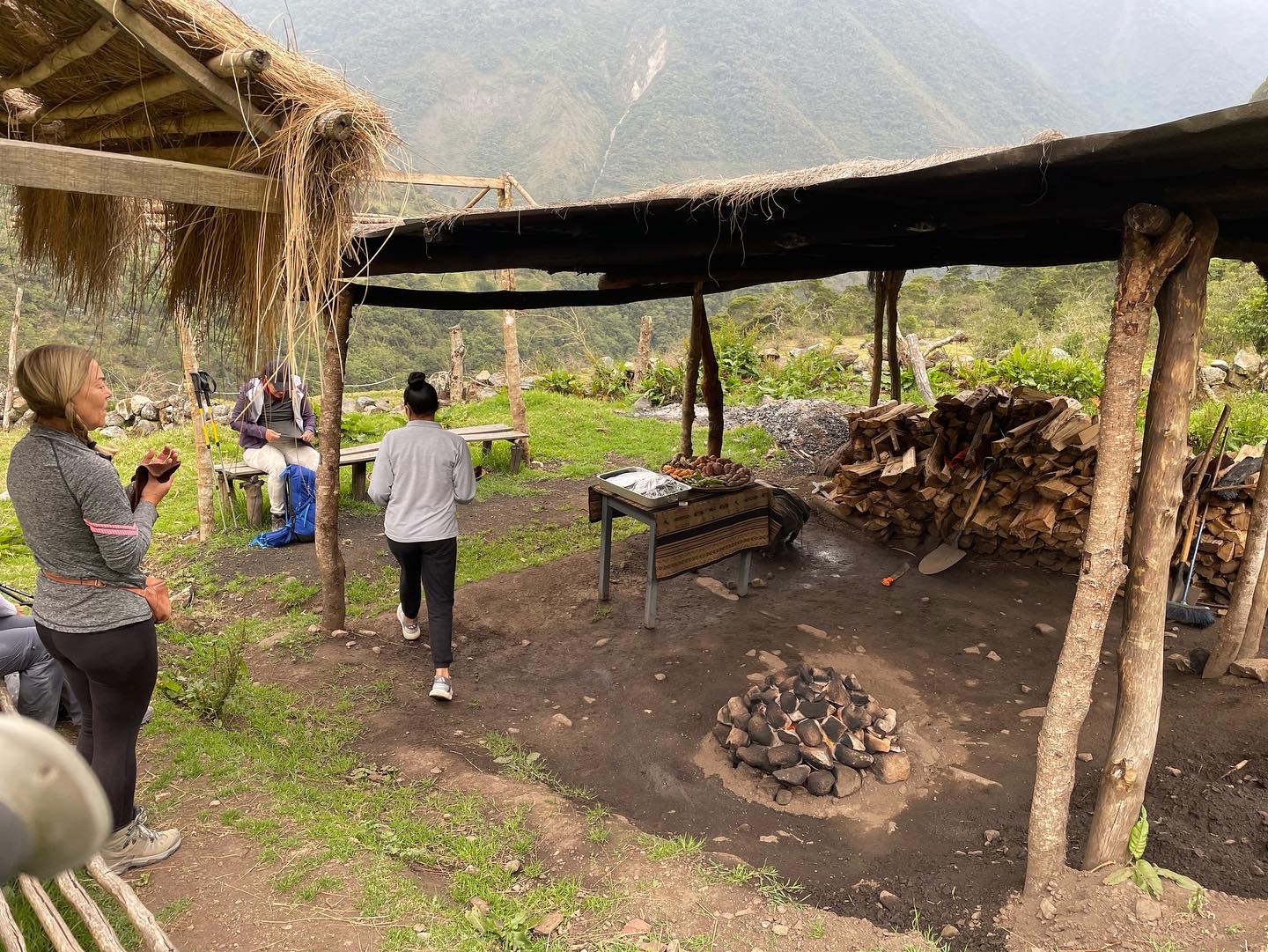
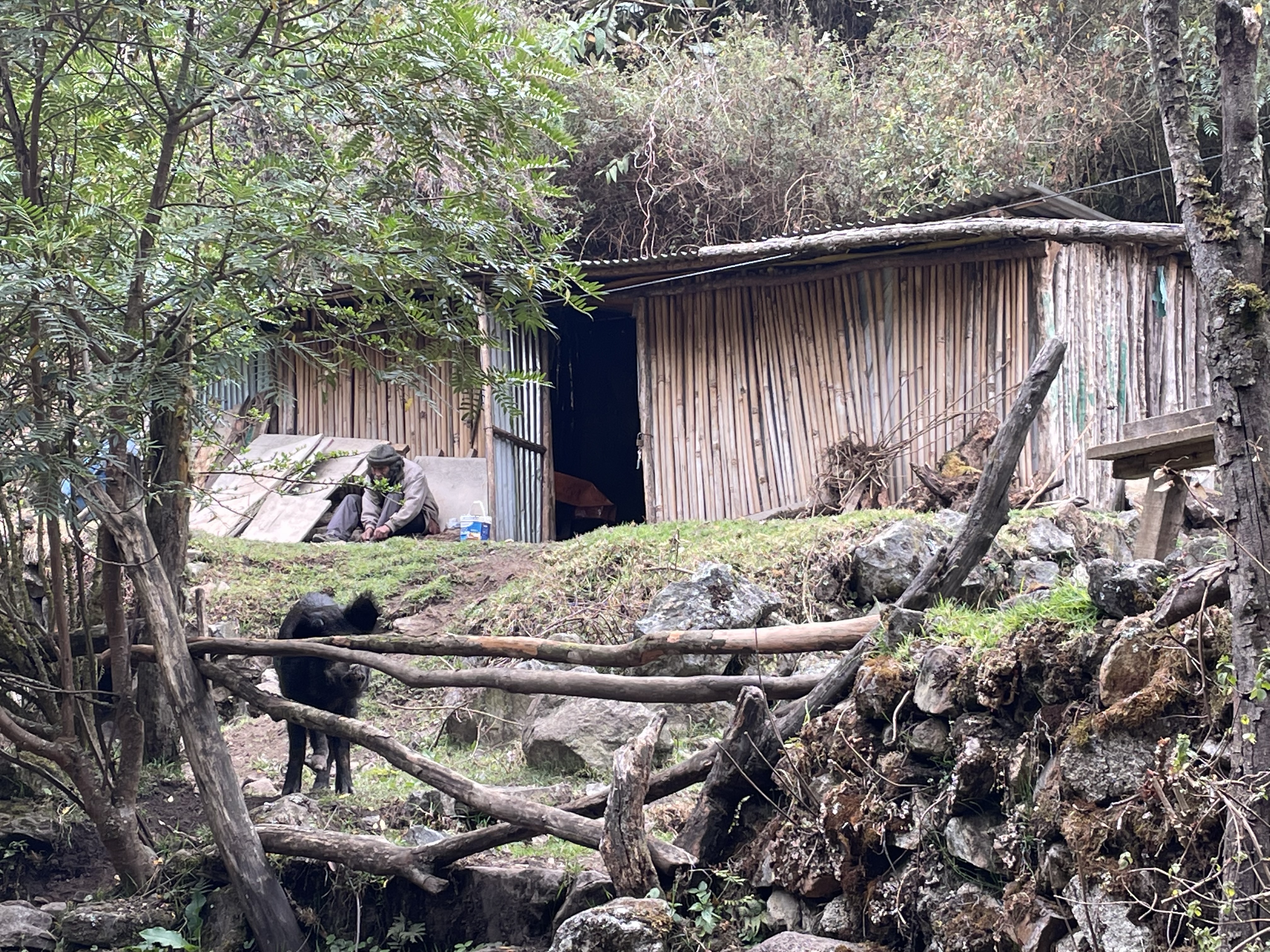
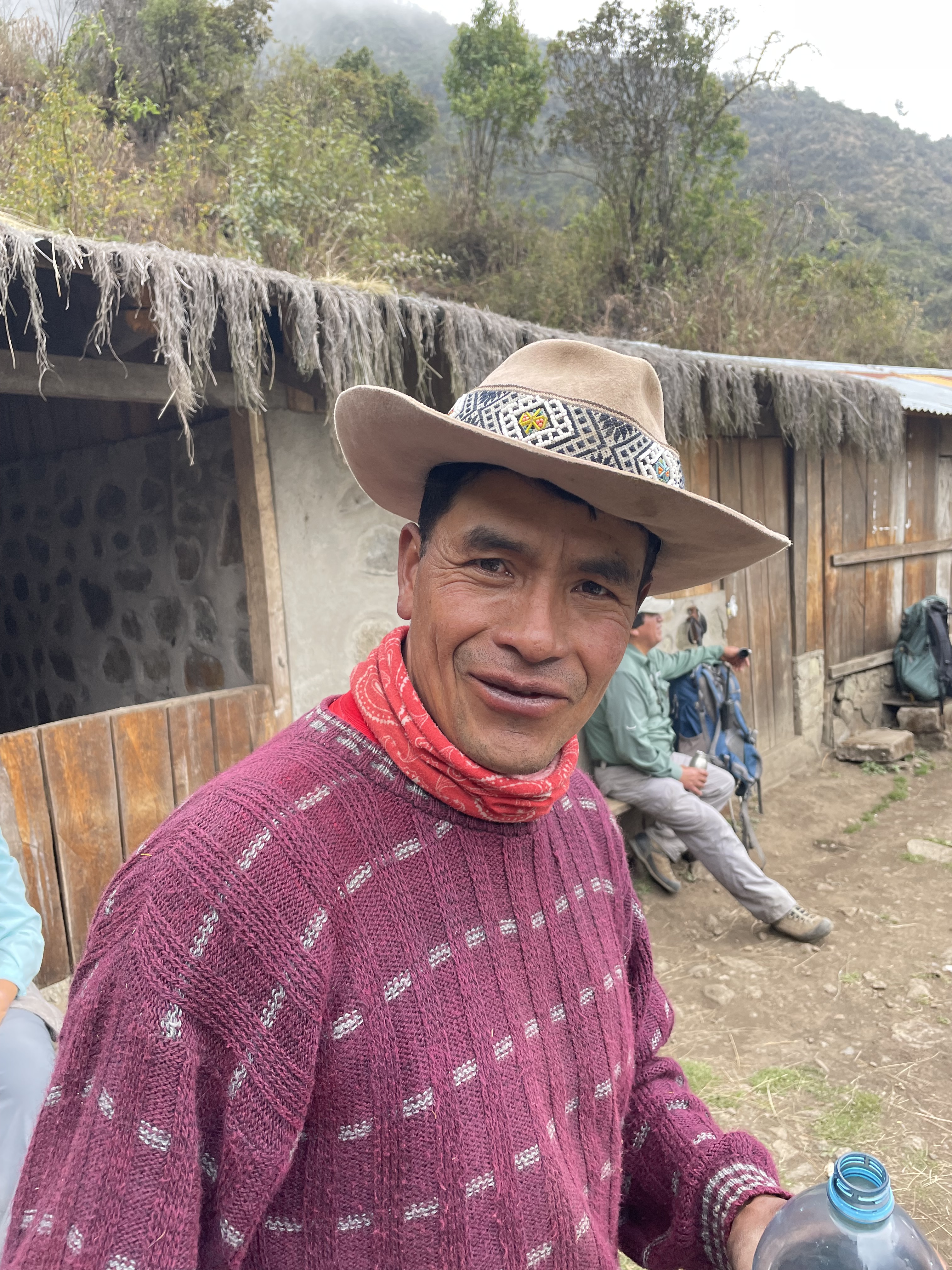

We were met by the lodge staff who prepared a Pachamanca lunch for us. The technique is to bury all the foiled food in hot coals and it is cooked subterranean-style. Very cool (or should I say hot?)
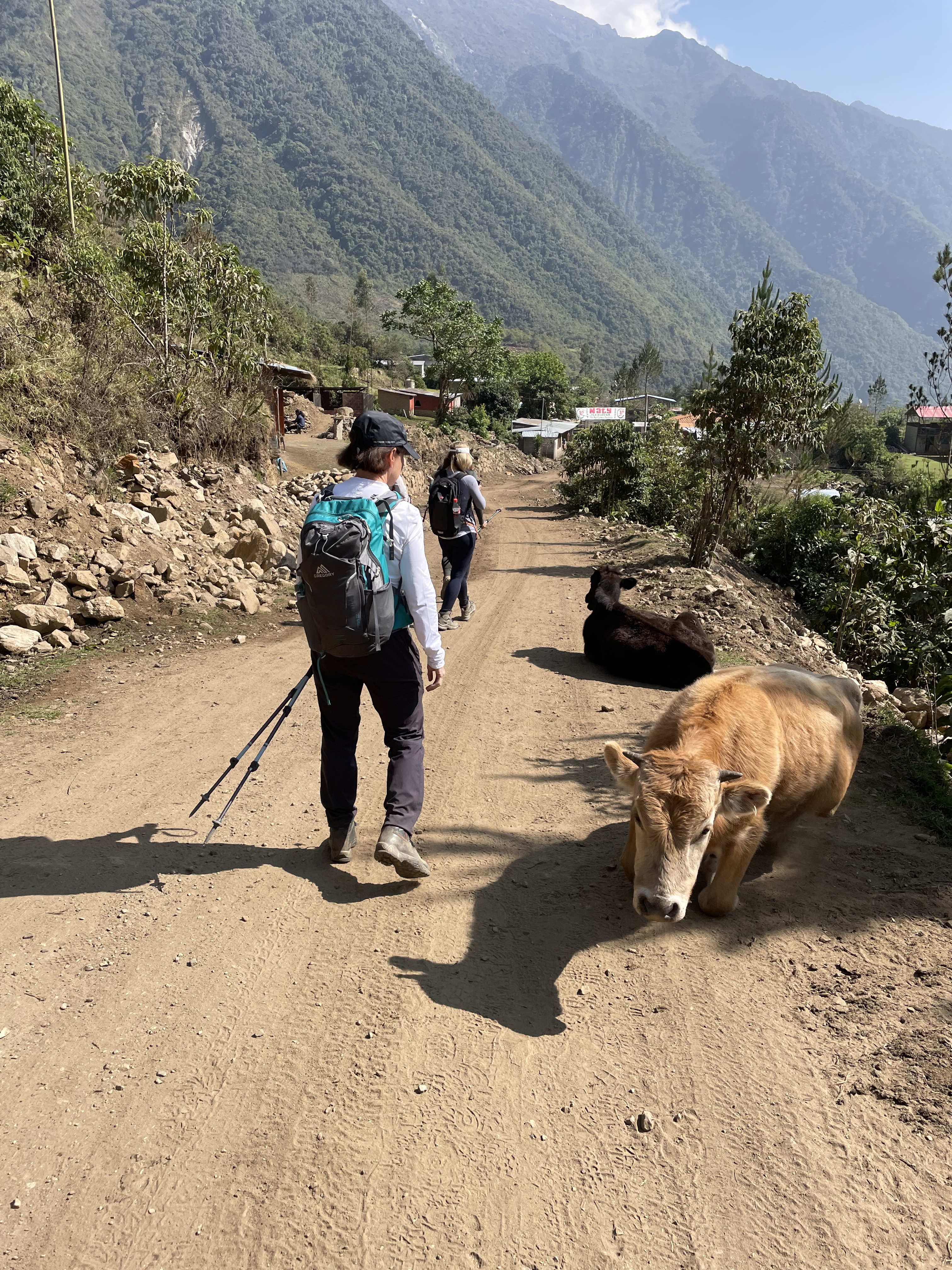
We picked up a puppy along the way to the lodge and a few wanted to adopt it. Along the route, we were also picking up huge avocados and passionfruit, which we enjoyed for lunch. Some of the group visited a local coffee plantation once we settled into the lodge. Daniel led some much-needed yoga!
DAY 11: FOLLOWING THE SANTA TERESA RIVER VALLEY
ACCOMMODATION: Lucma Lodge (7,003’ / 2,135m)
DIFFICULTY: MODERATE TO CHALLENGING
TIME: 6 HOURS
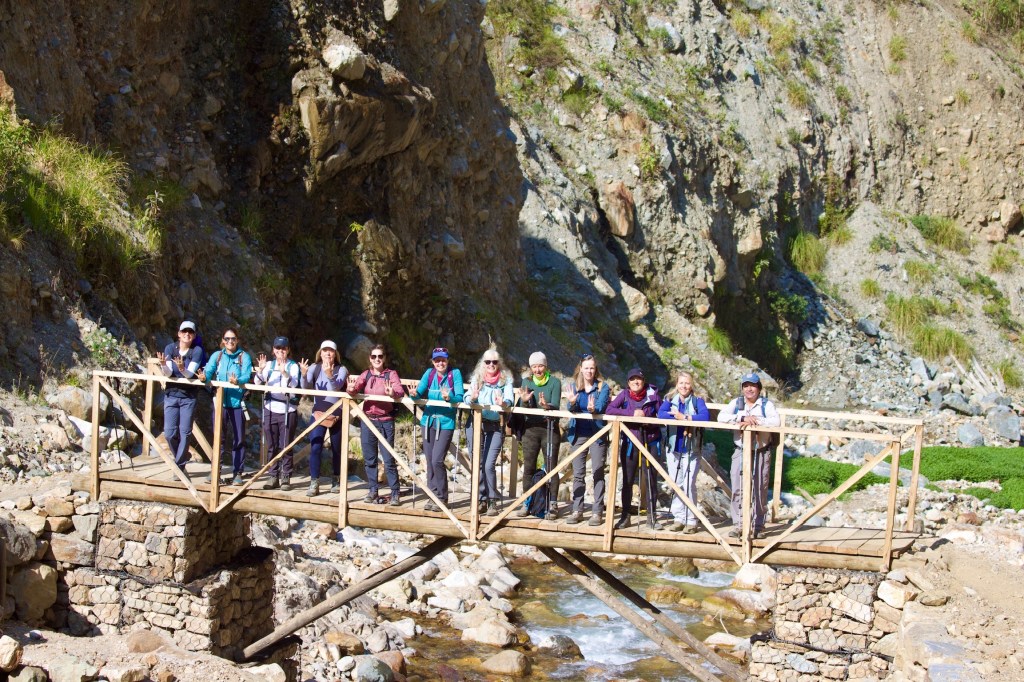
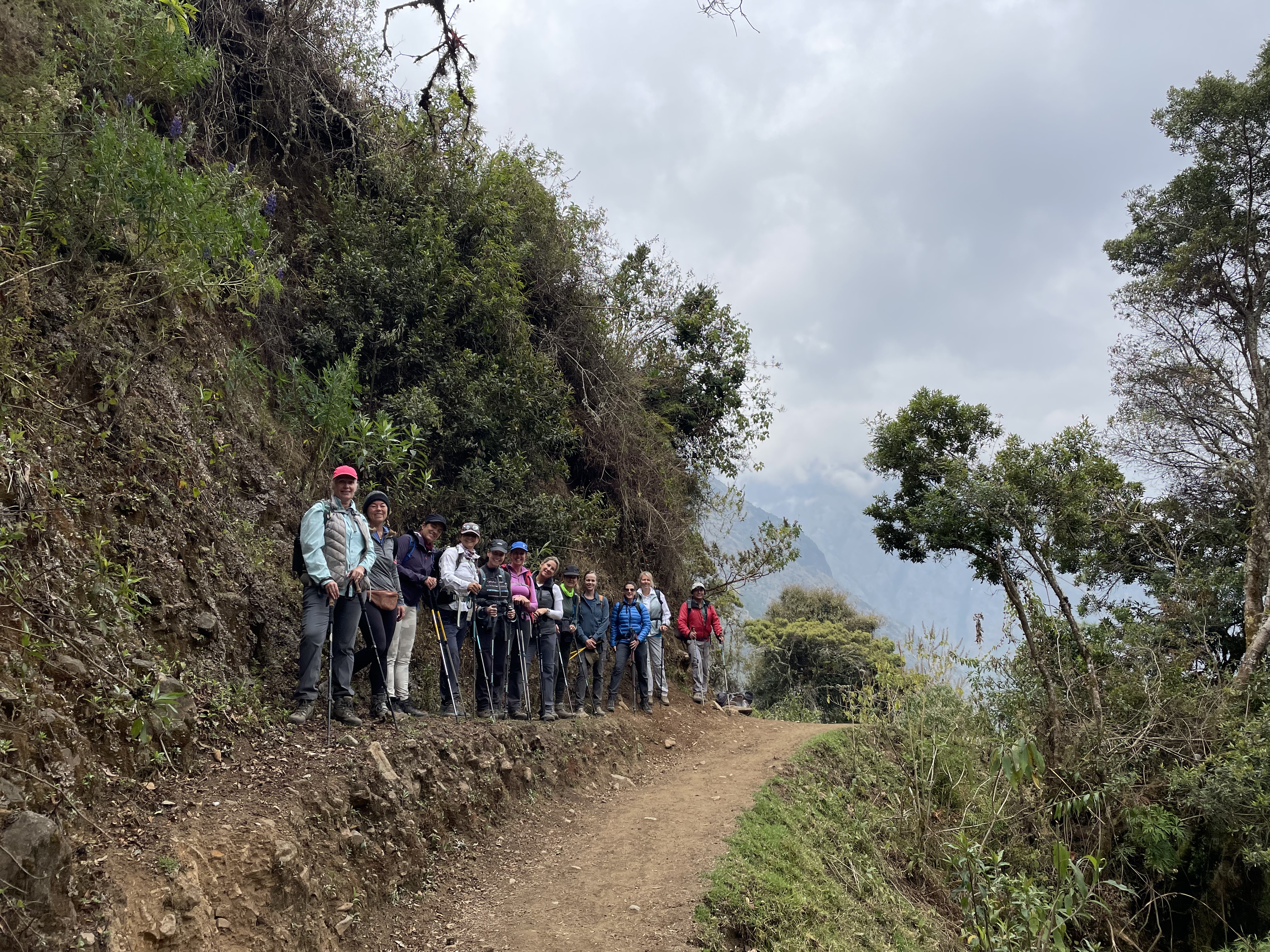
Today was a challenging day for some, as we hiked along the Santa Teresa River towards Lucmabamba. The path was high along a steep cliff wall that had experienced many rock slides.
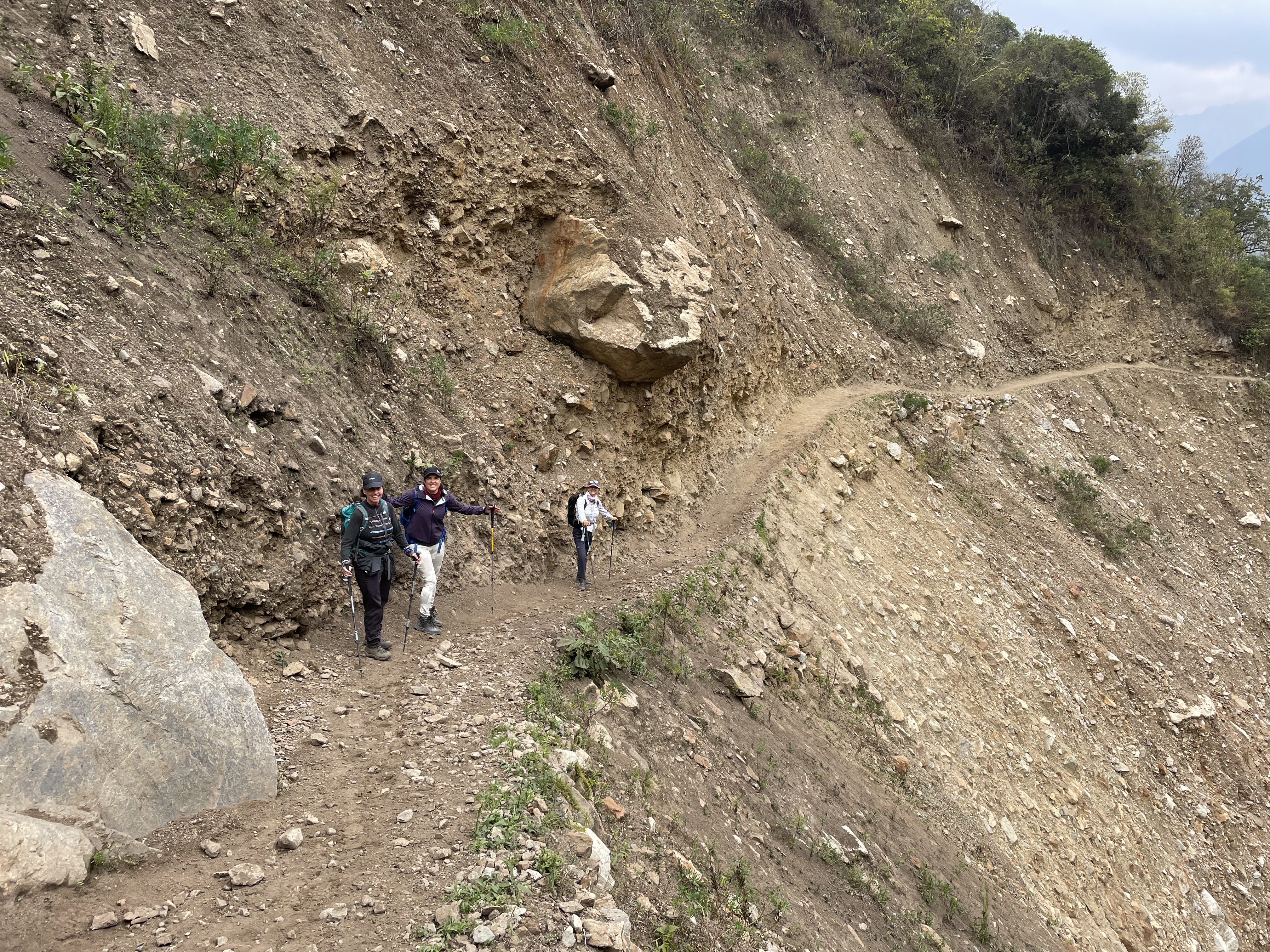
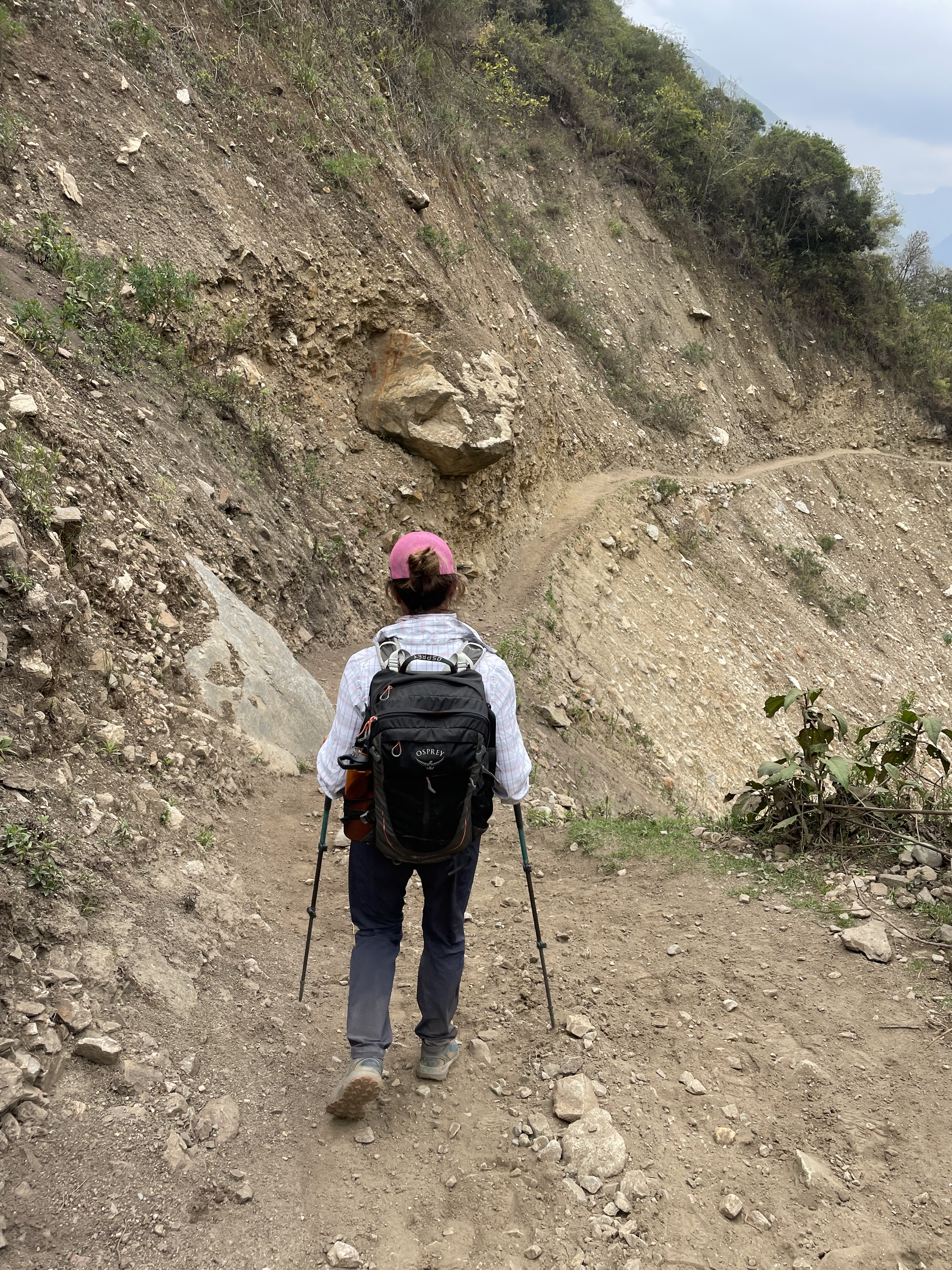
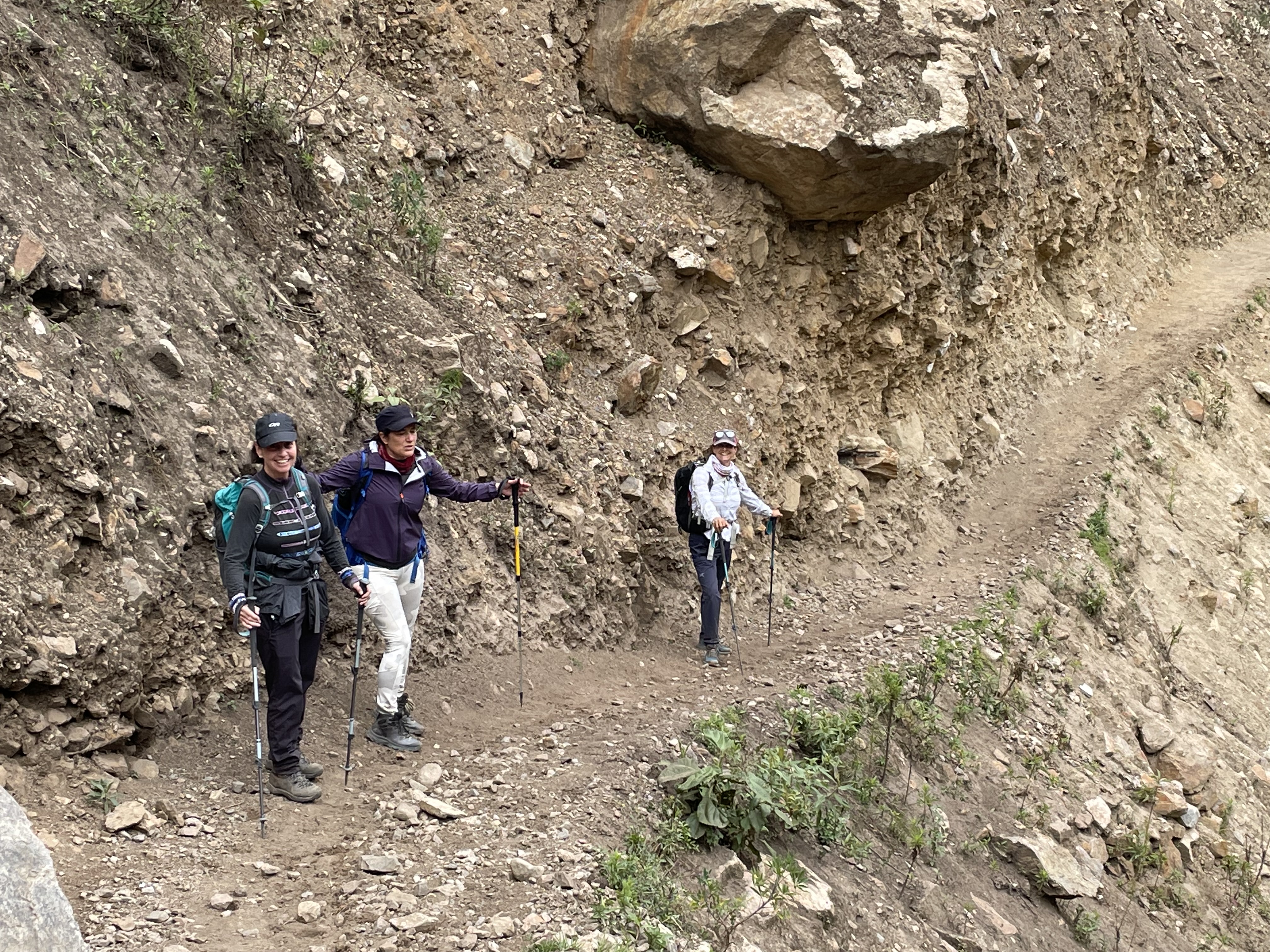
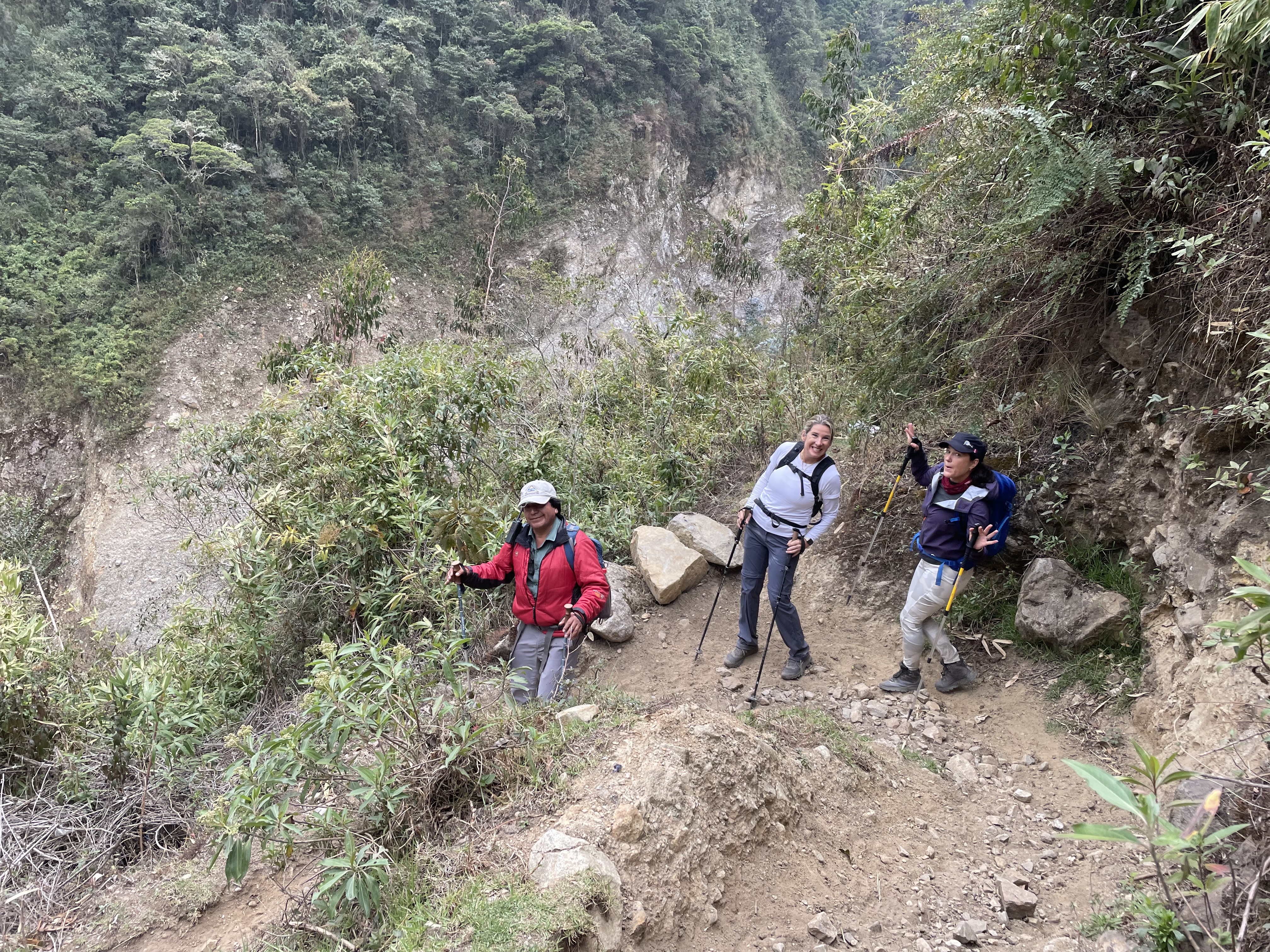
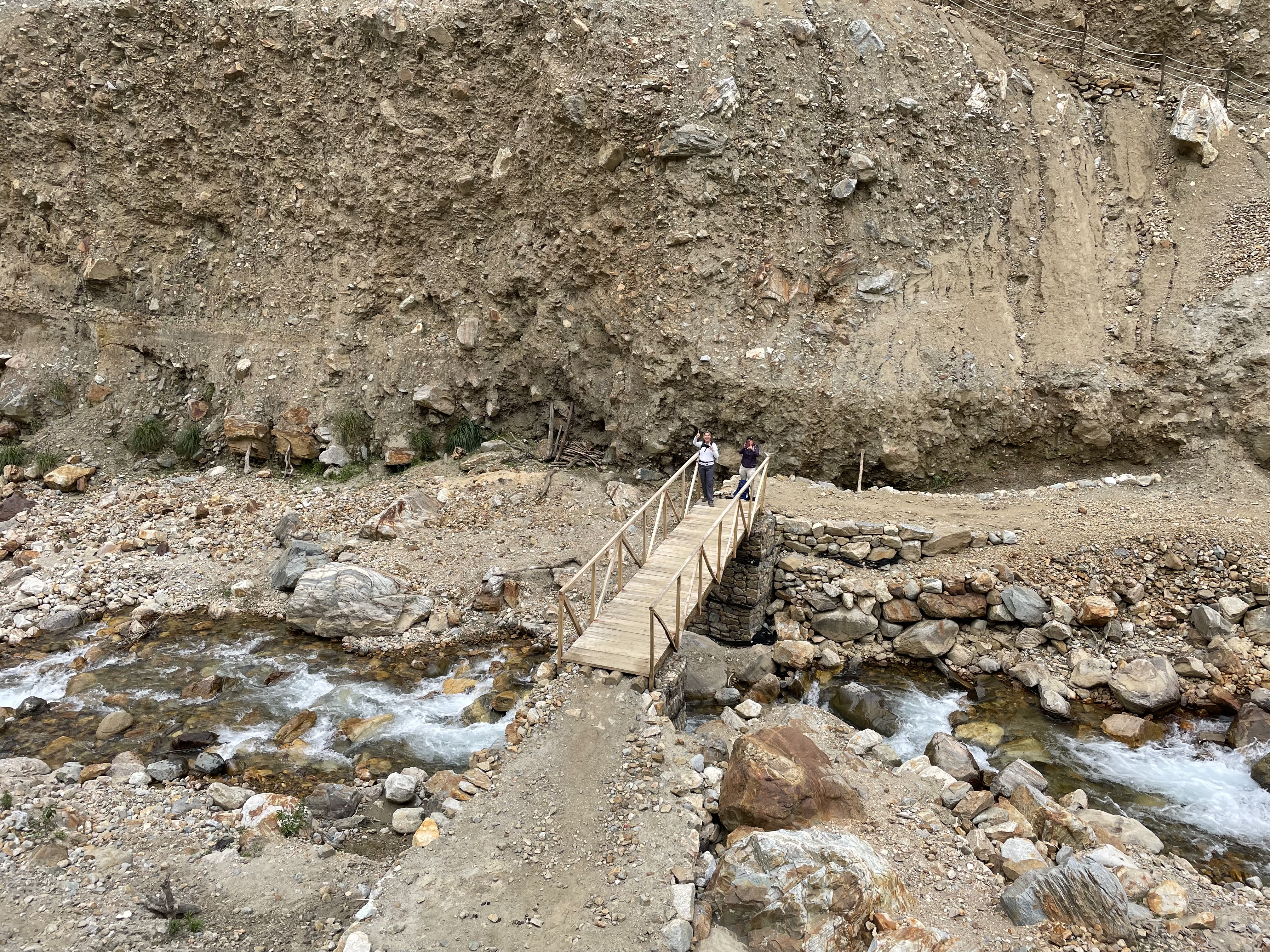
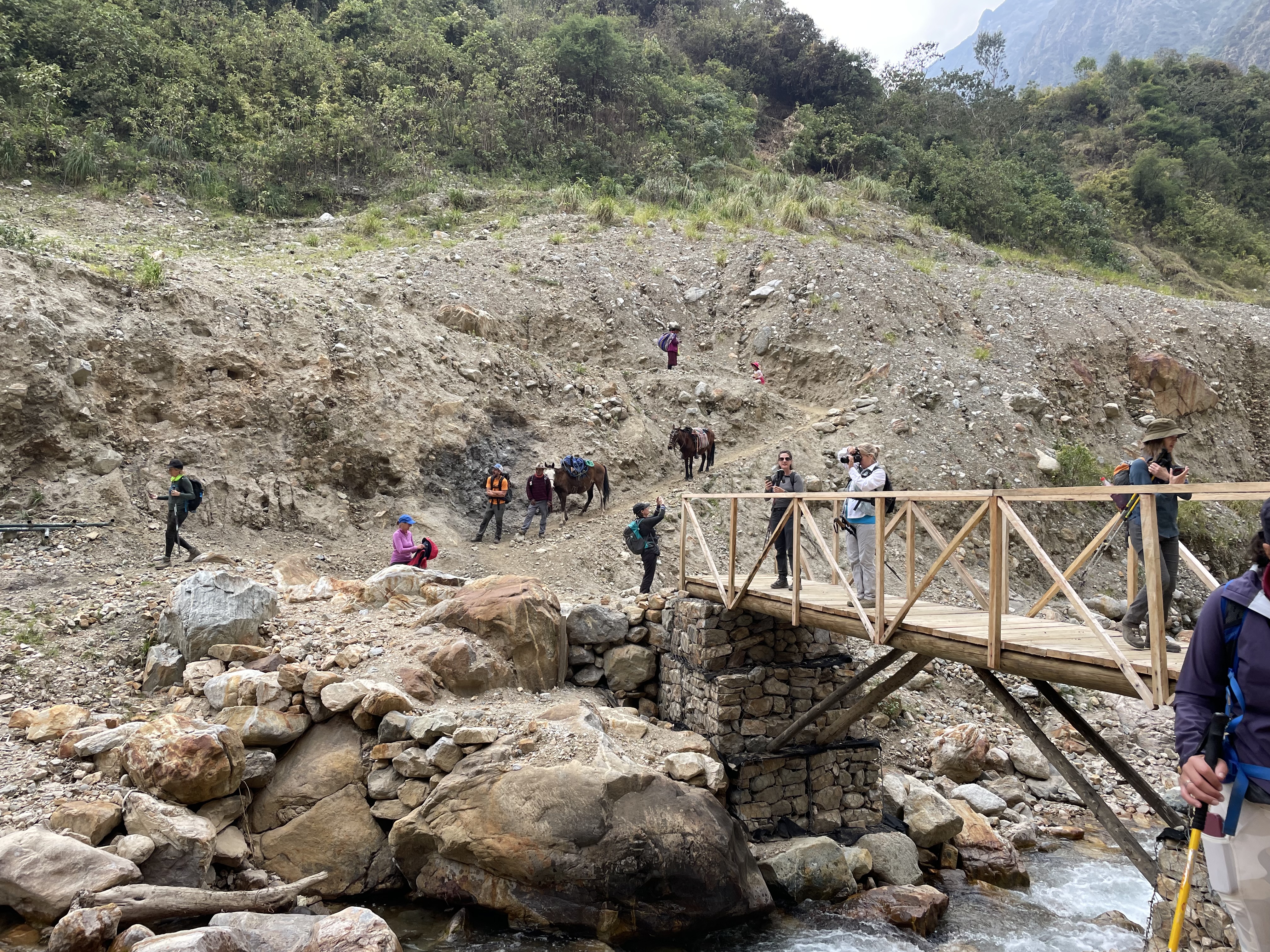
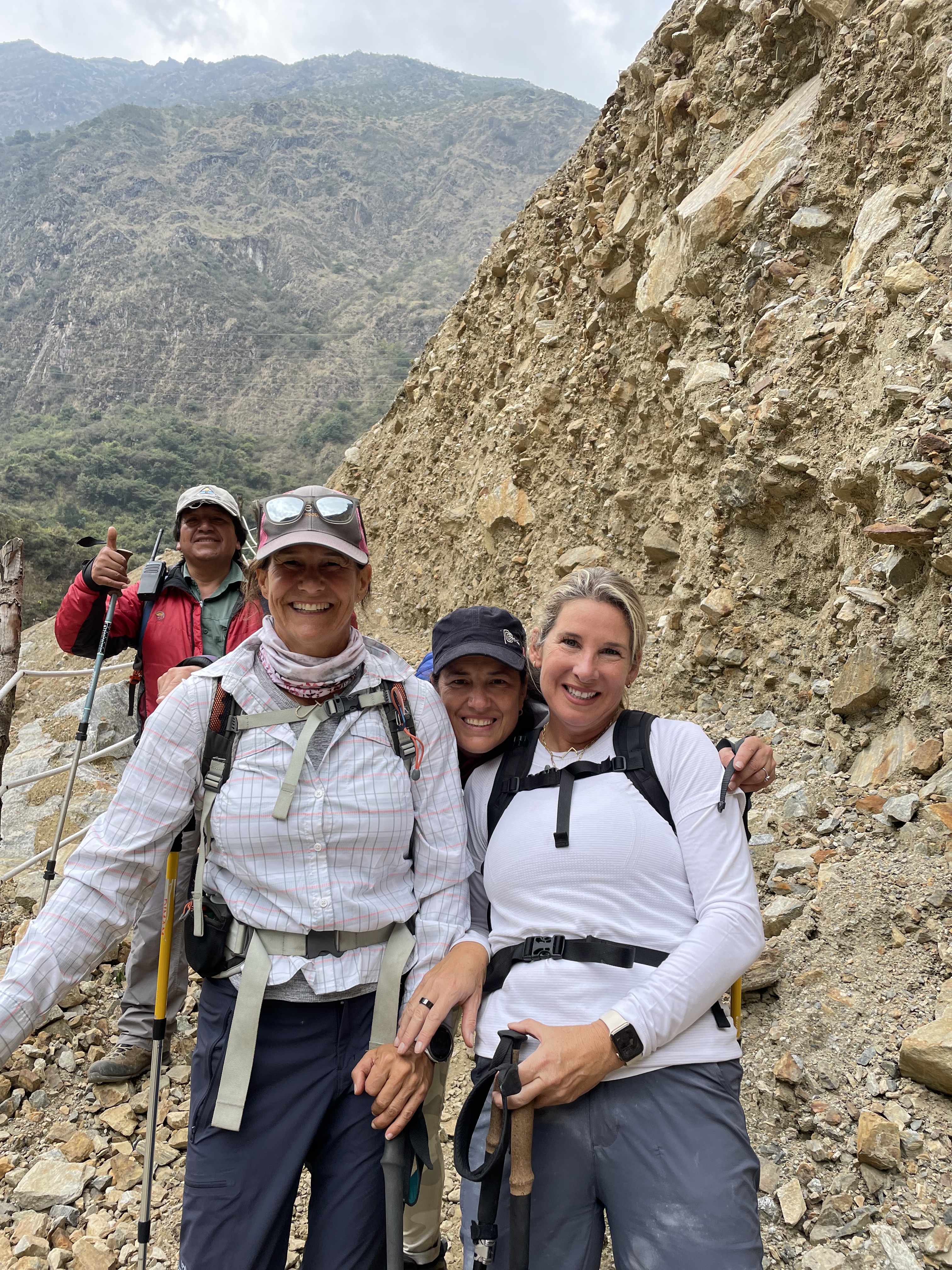
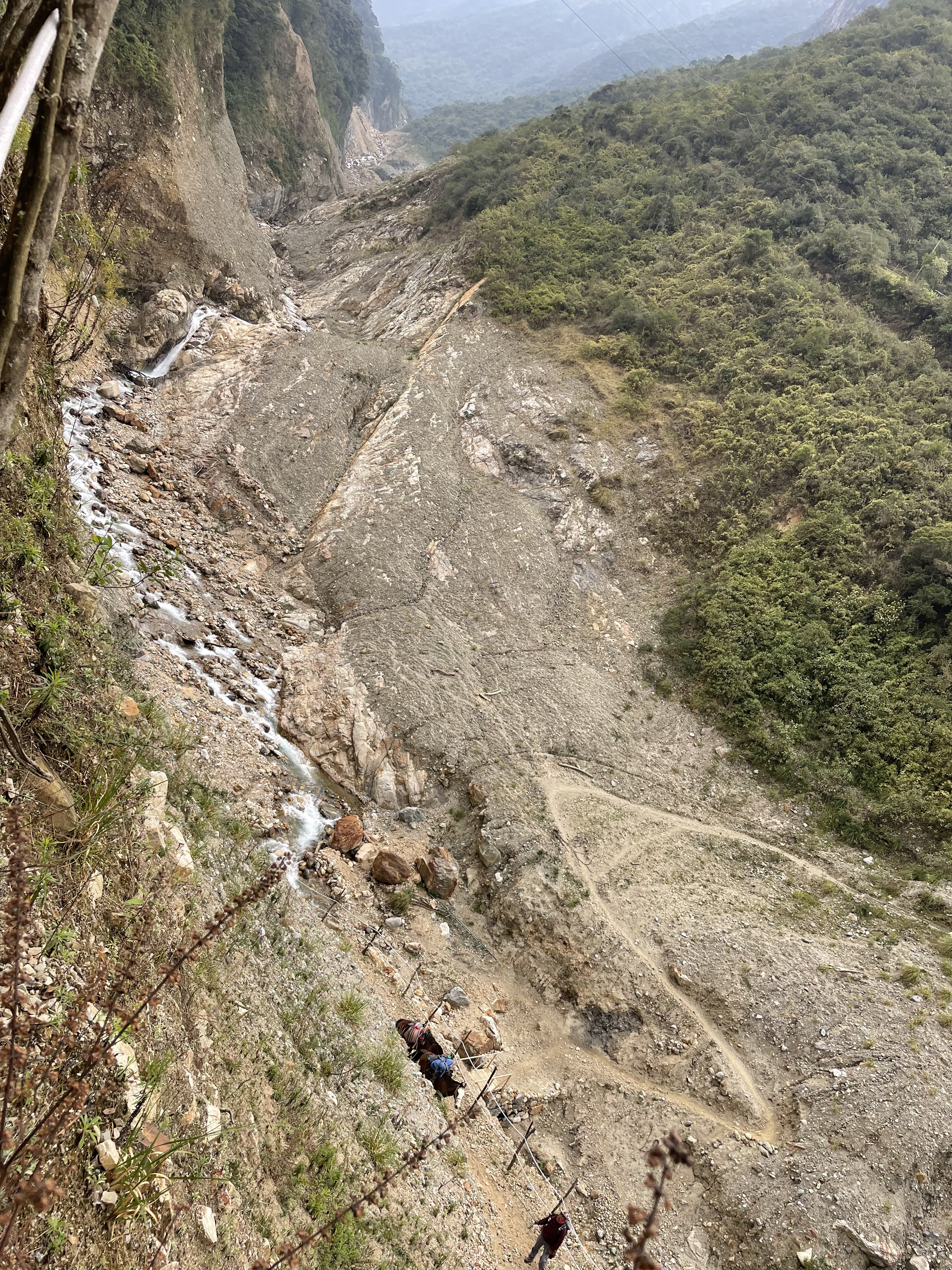
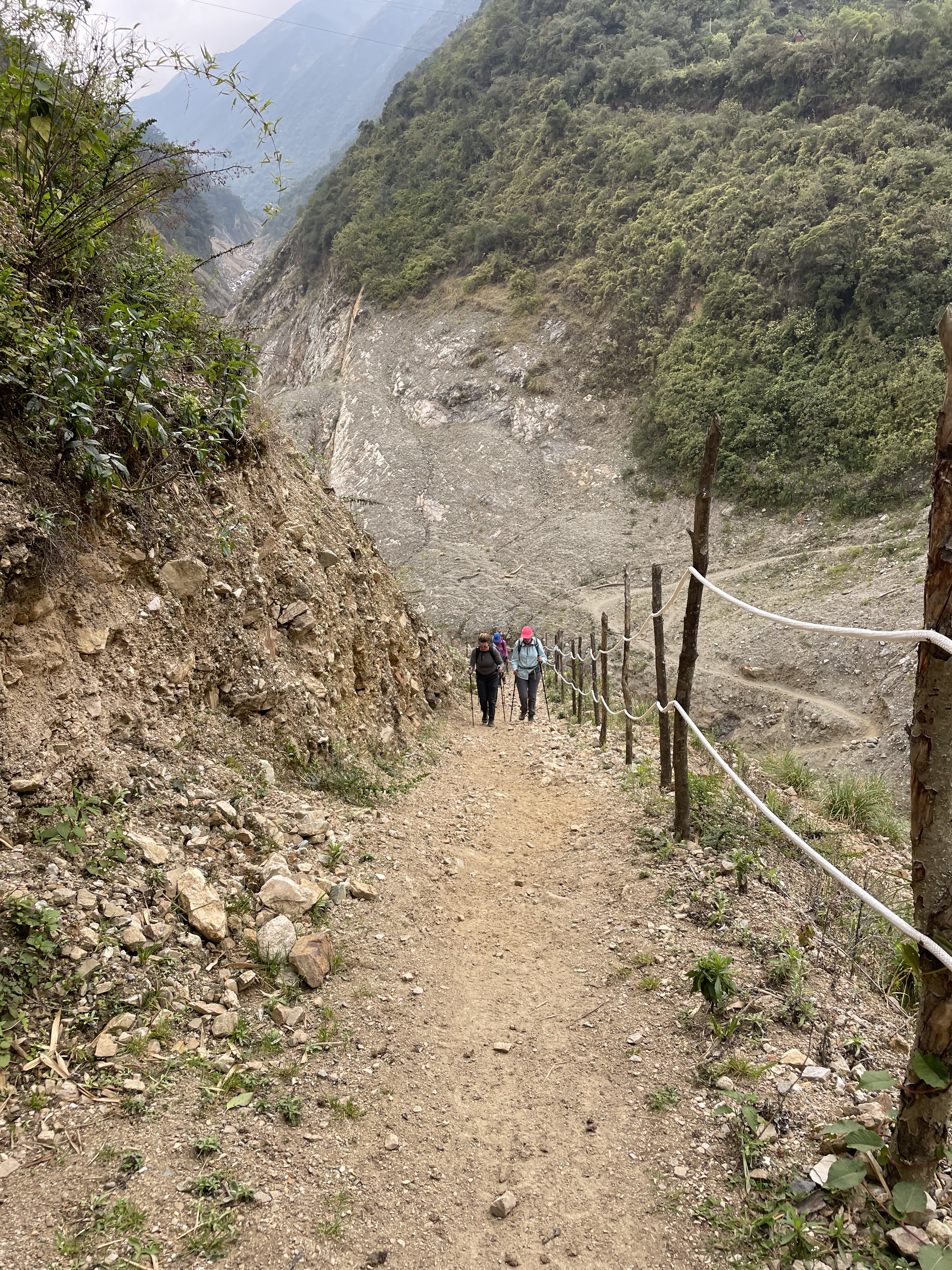
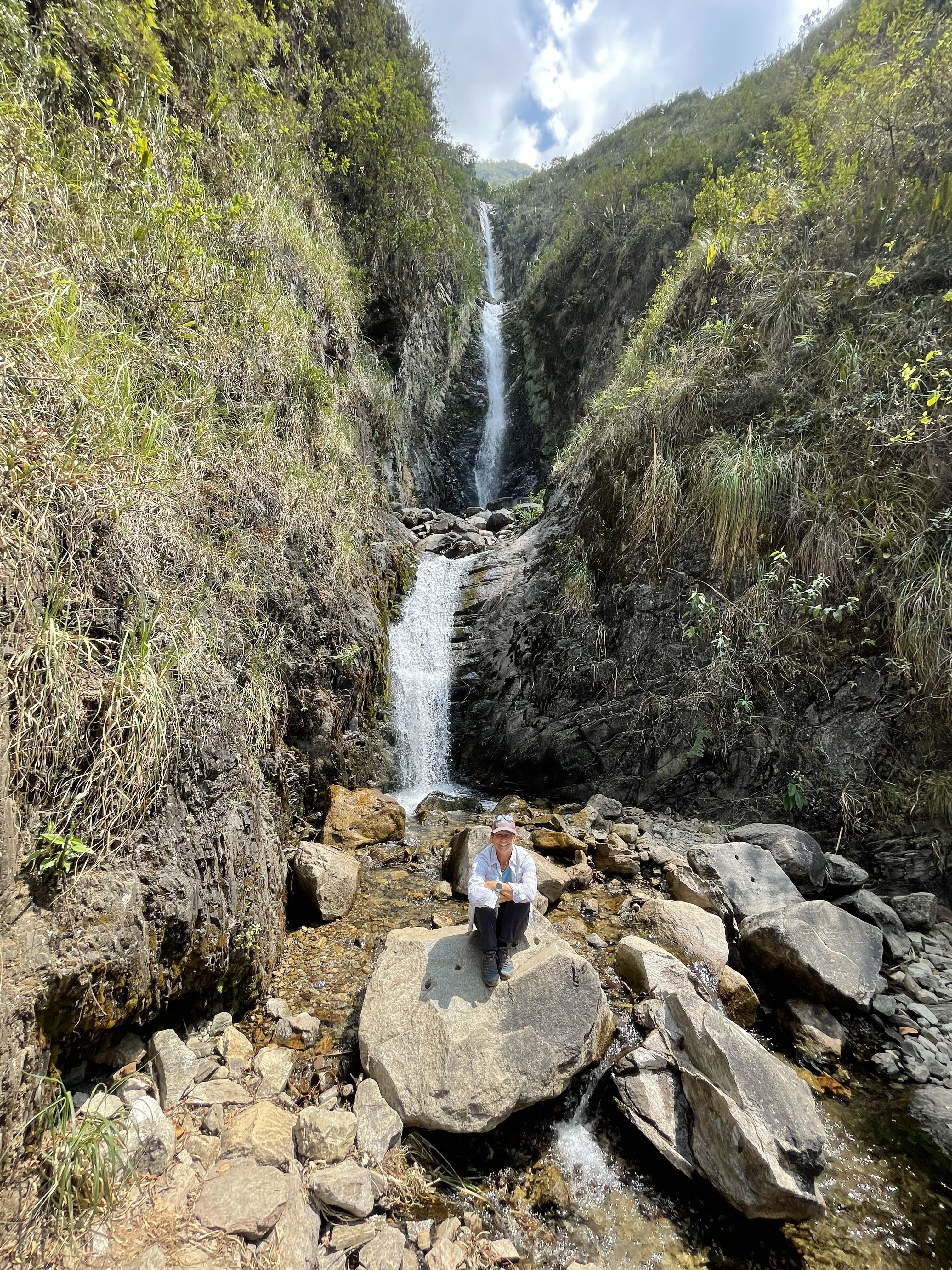
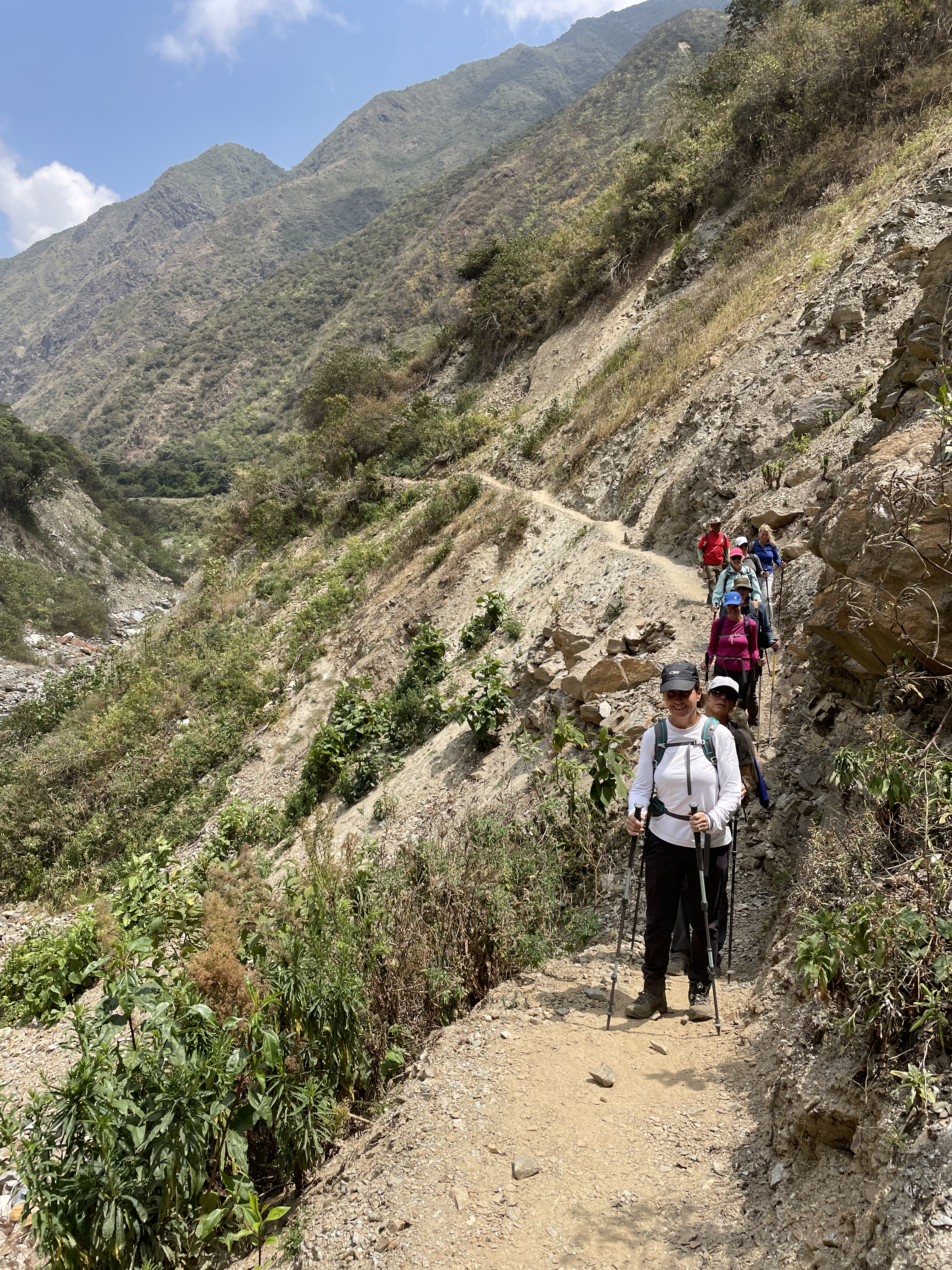

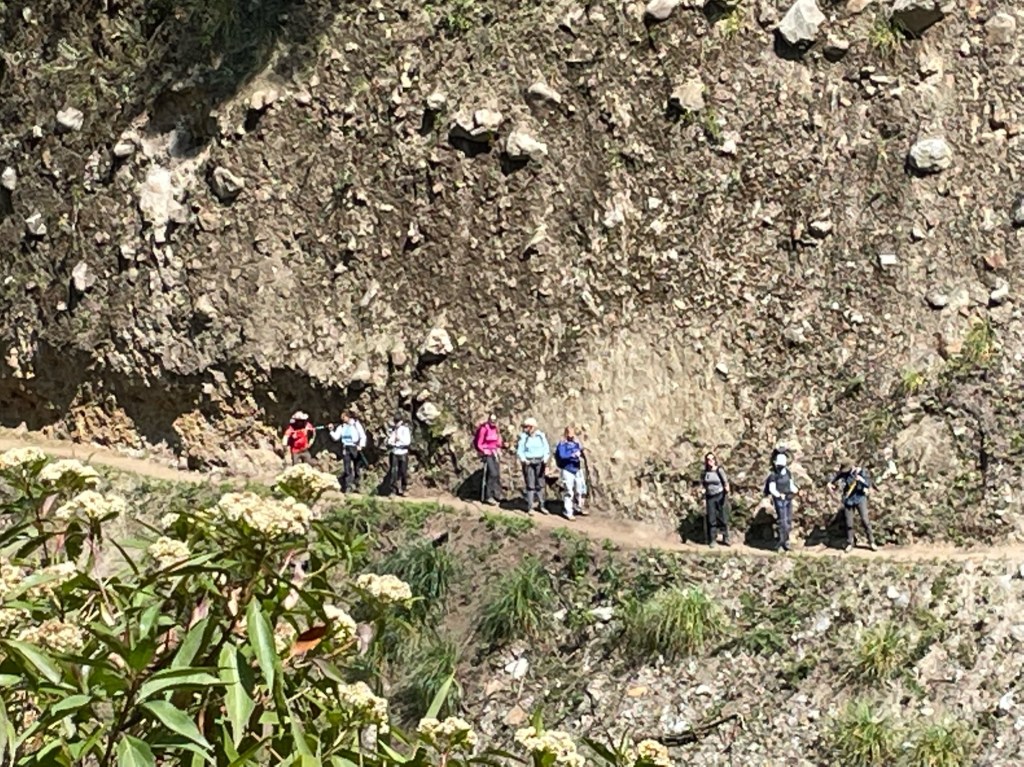
At times, you just had to put your head down and focus on the very, very narrow path and ensure each pole was planted firmly. It was a long way down to the river. I loved it all, including the waterfall and final river crossing.
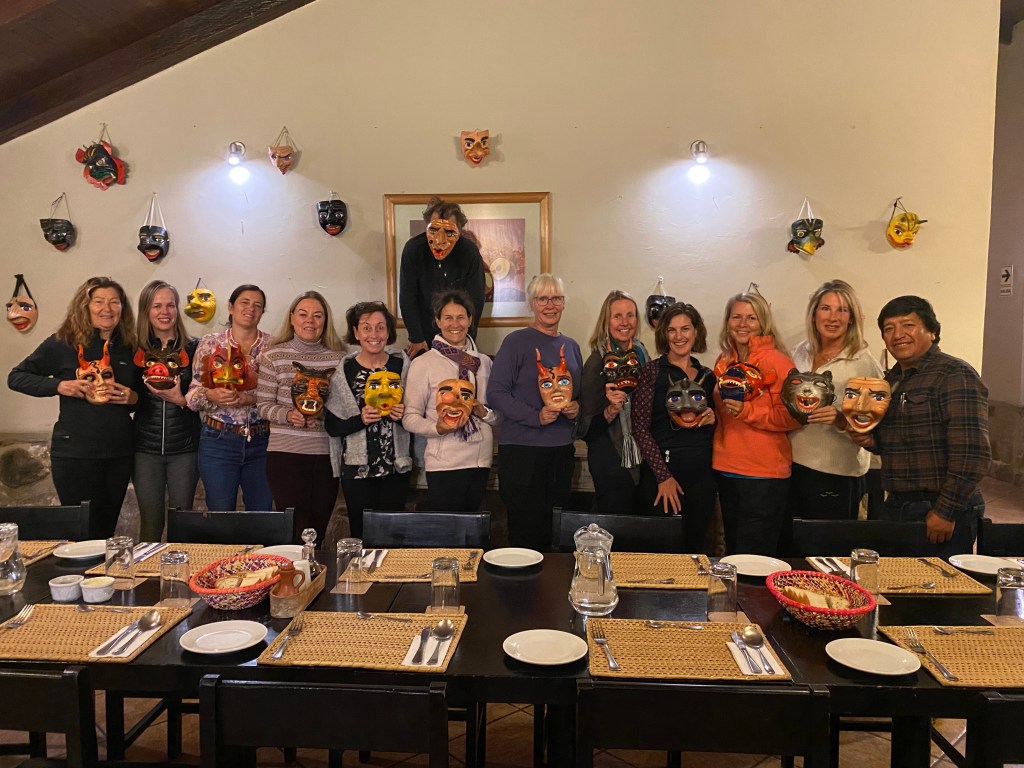
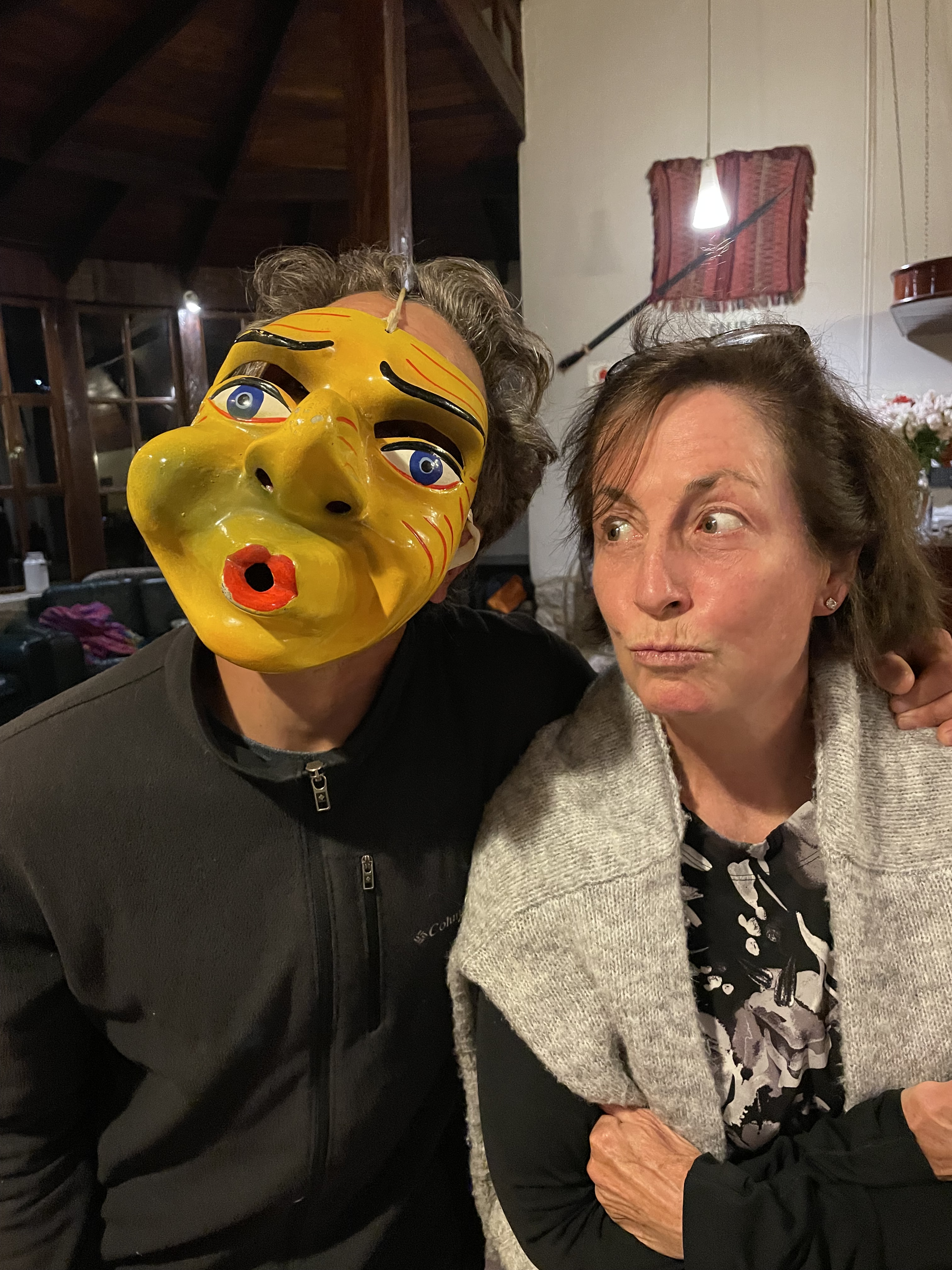
That night, we put on these amazing Incan masks after dinner.
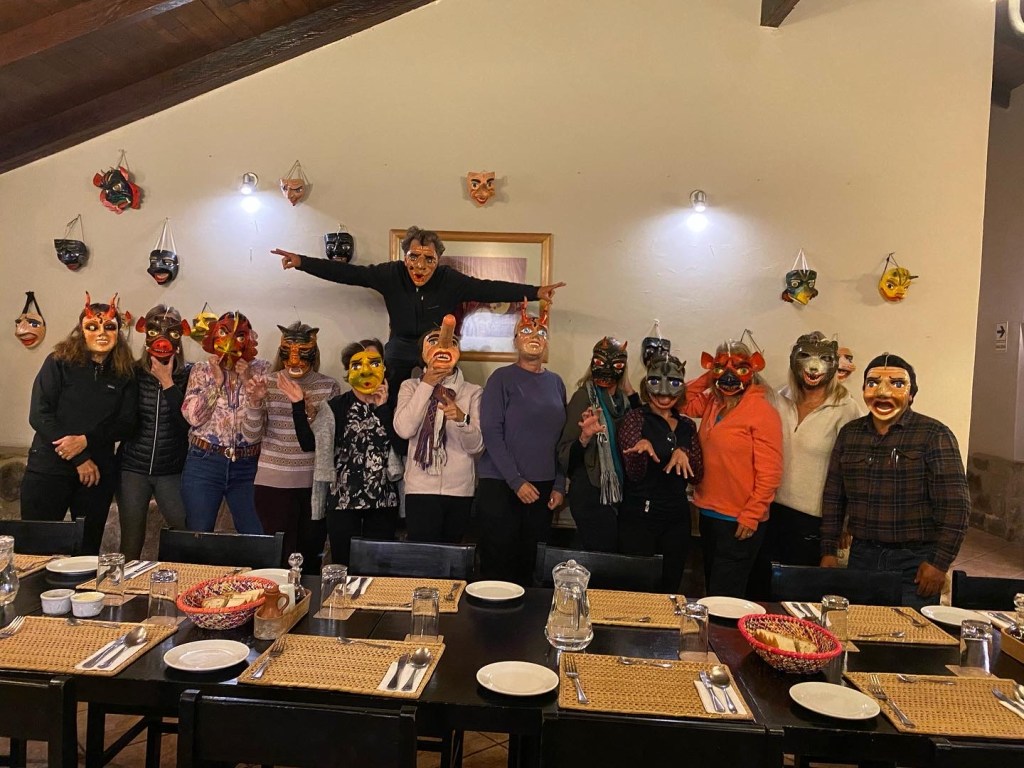
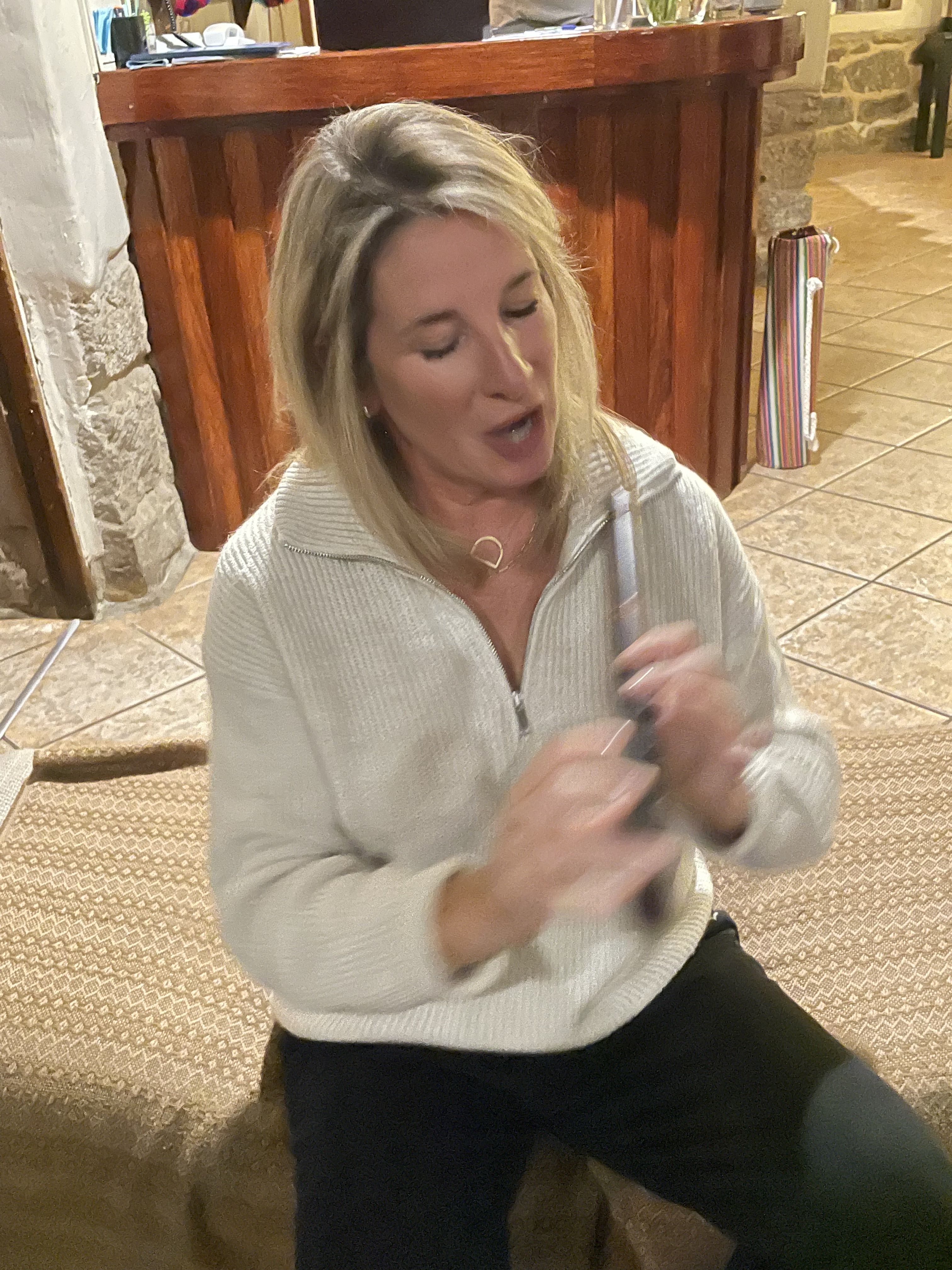
Then, we enjoyed a delicious feast and Wilfredo shared his handmade woodwind instruments (quenas and zampoñas and others) and gave us a concert. Daniel joined in on a drum.
DAY 12: FIRST VIEWS OF MACHU PICCHU
ACCOMMODATION: Hotel in Aguas Calientes (6,232’ / 1,900m)
DIFFICULTY: MODERATE TO CHALLENGING
TIME: 5 HOURS
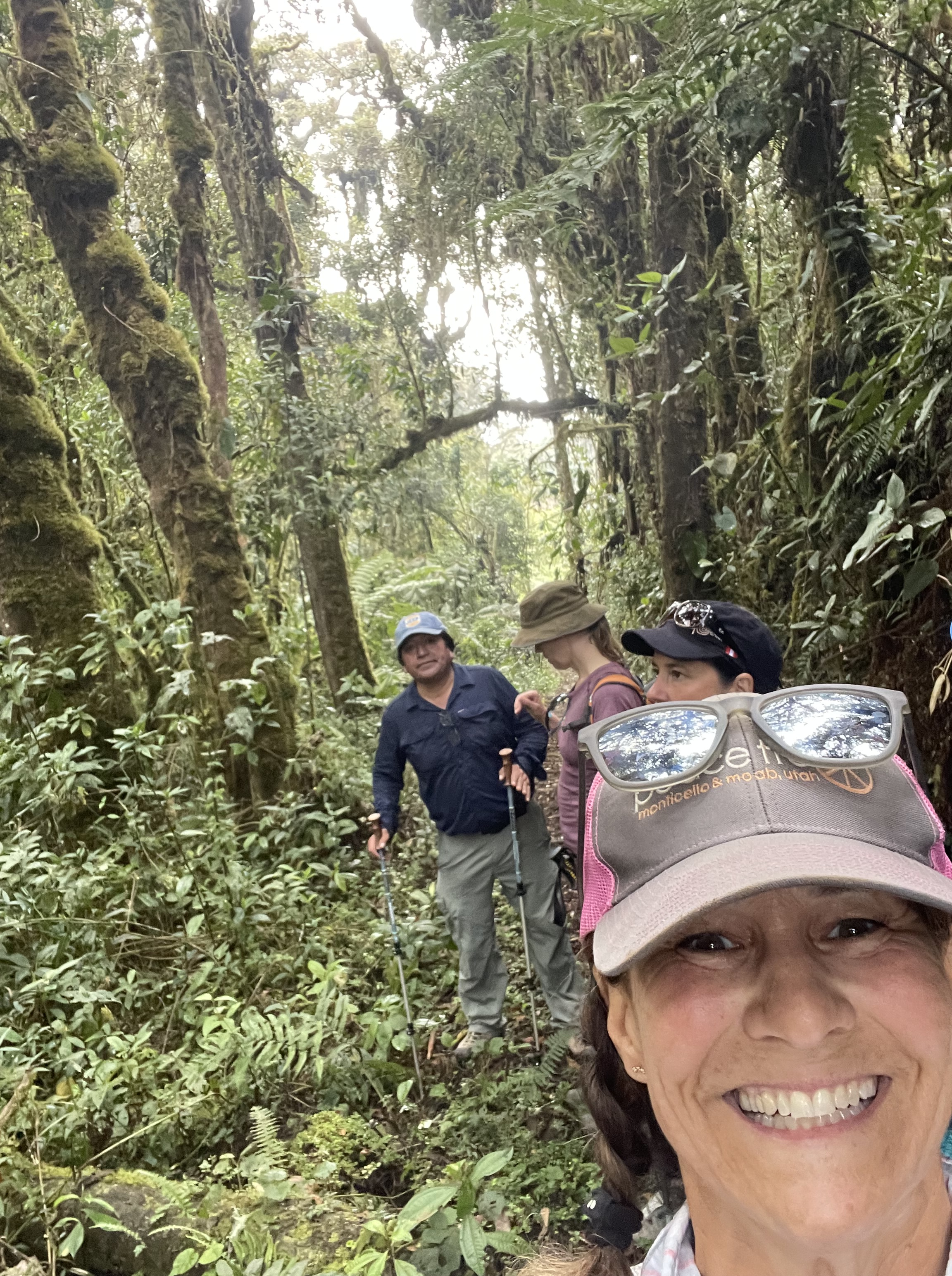
We were starting to wonder if all of Peru is uphill! We had a serious hike through the cloud forest to the Llactapata Pass, with some jaw-dropping vistas.

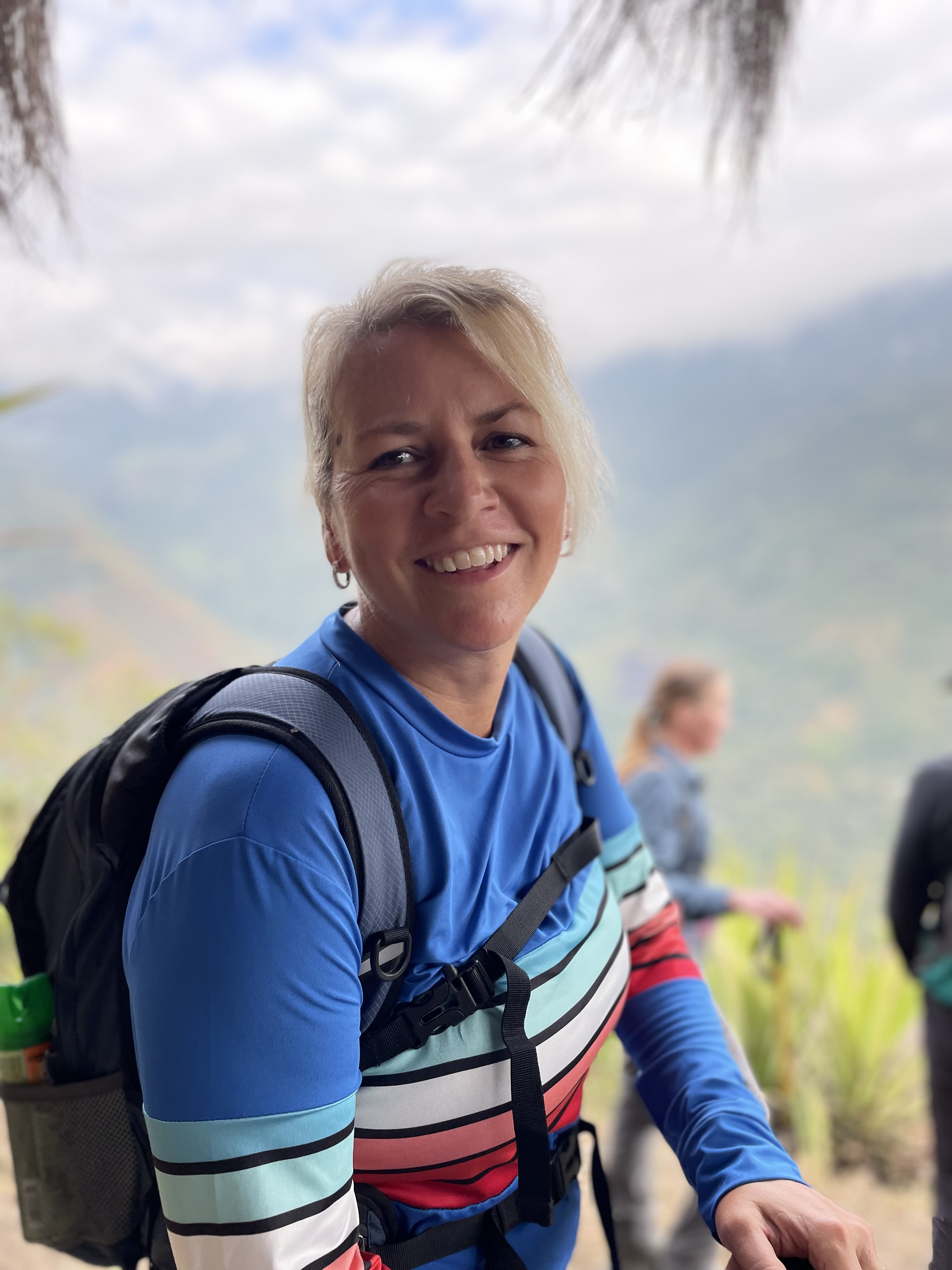
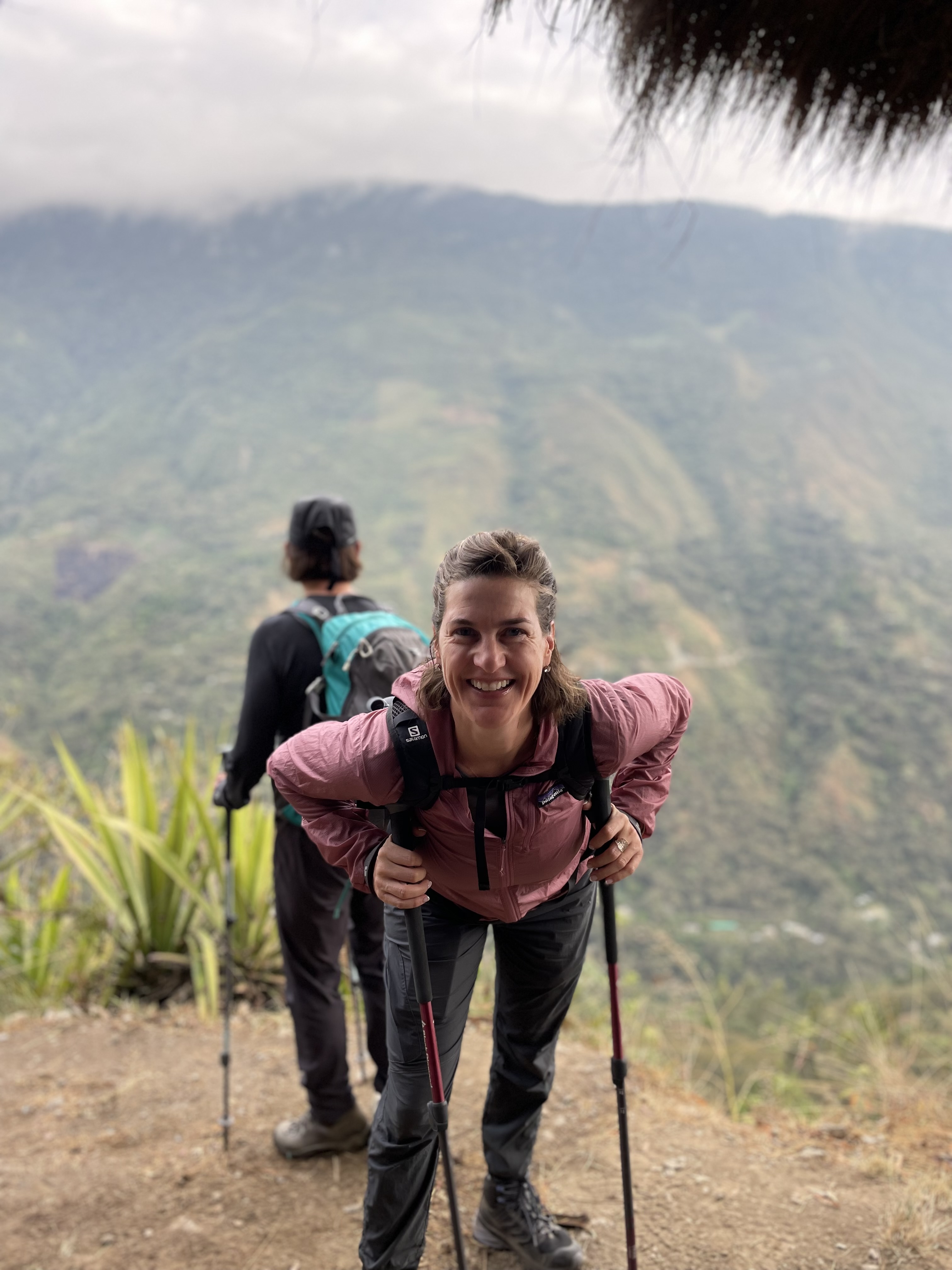
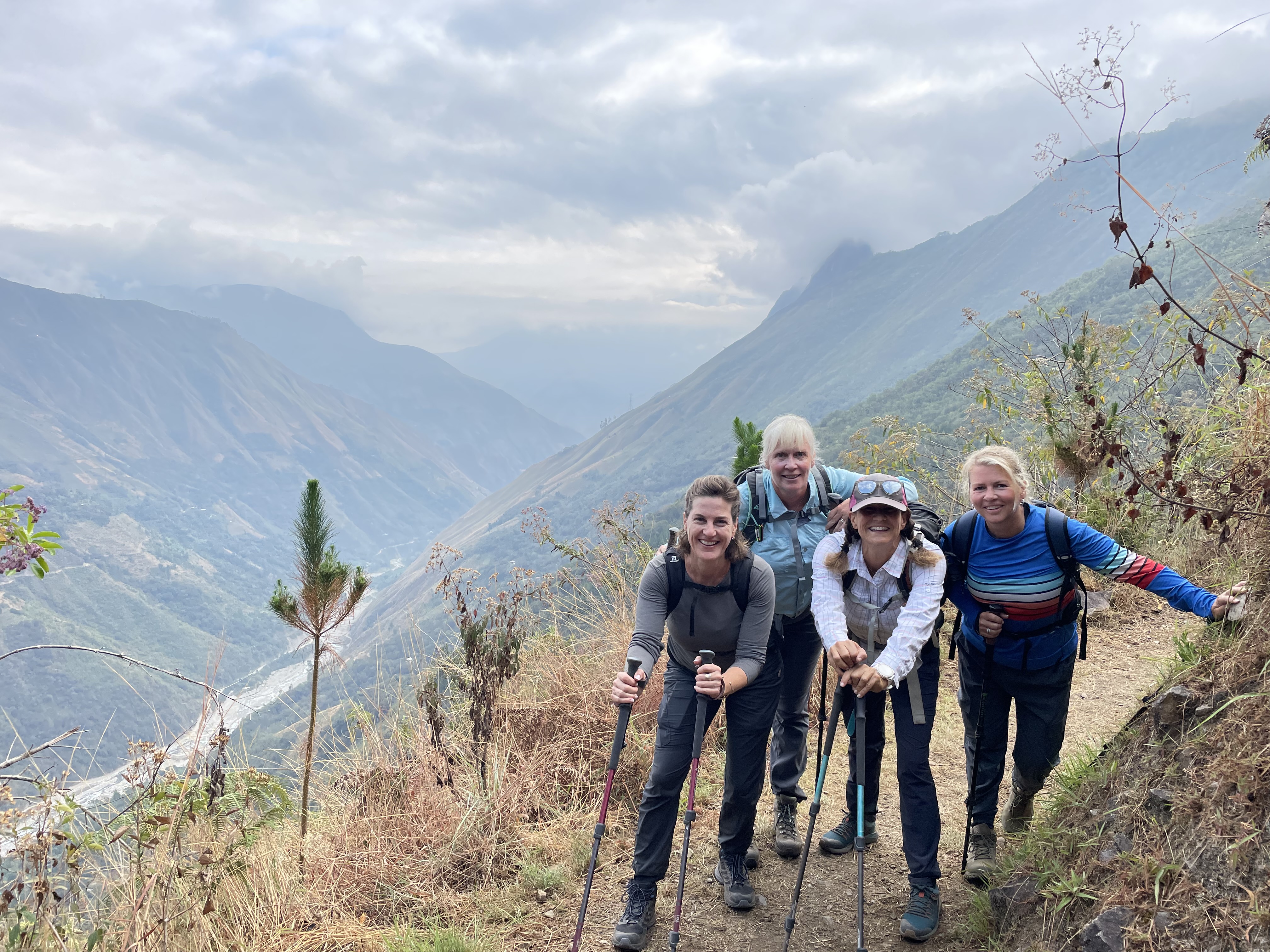

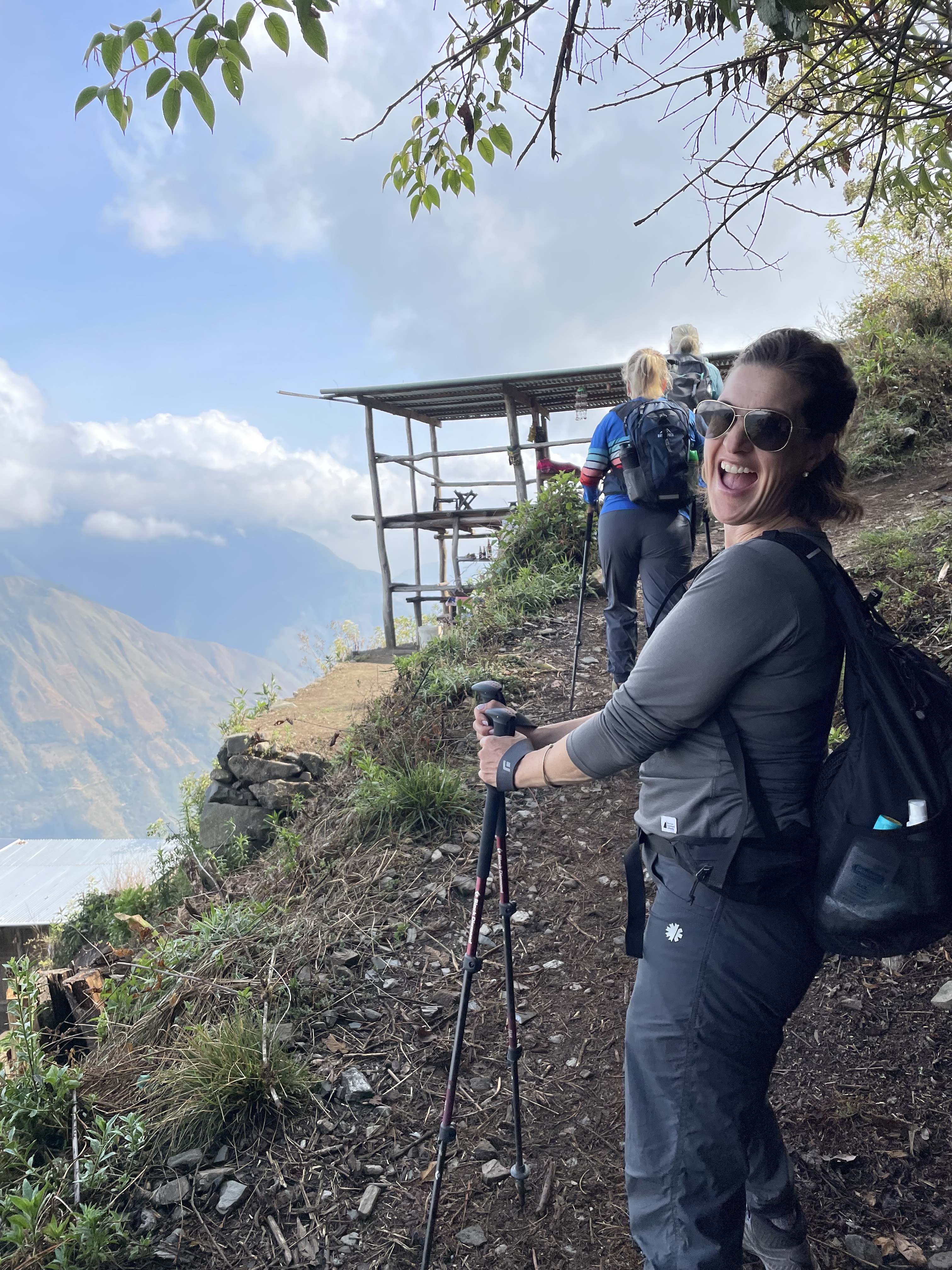
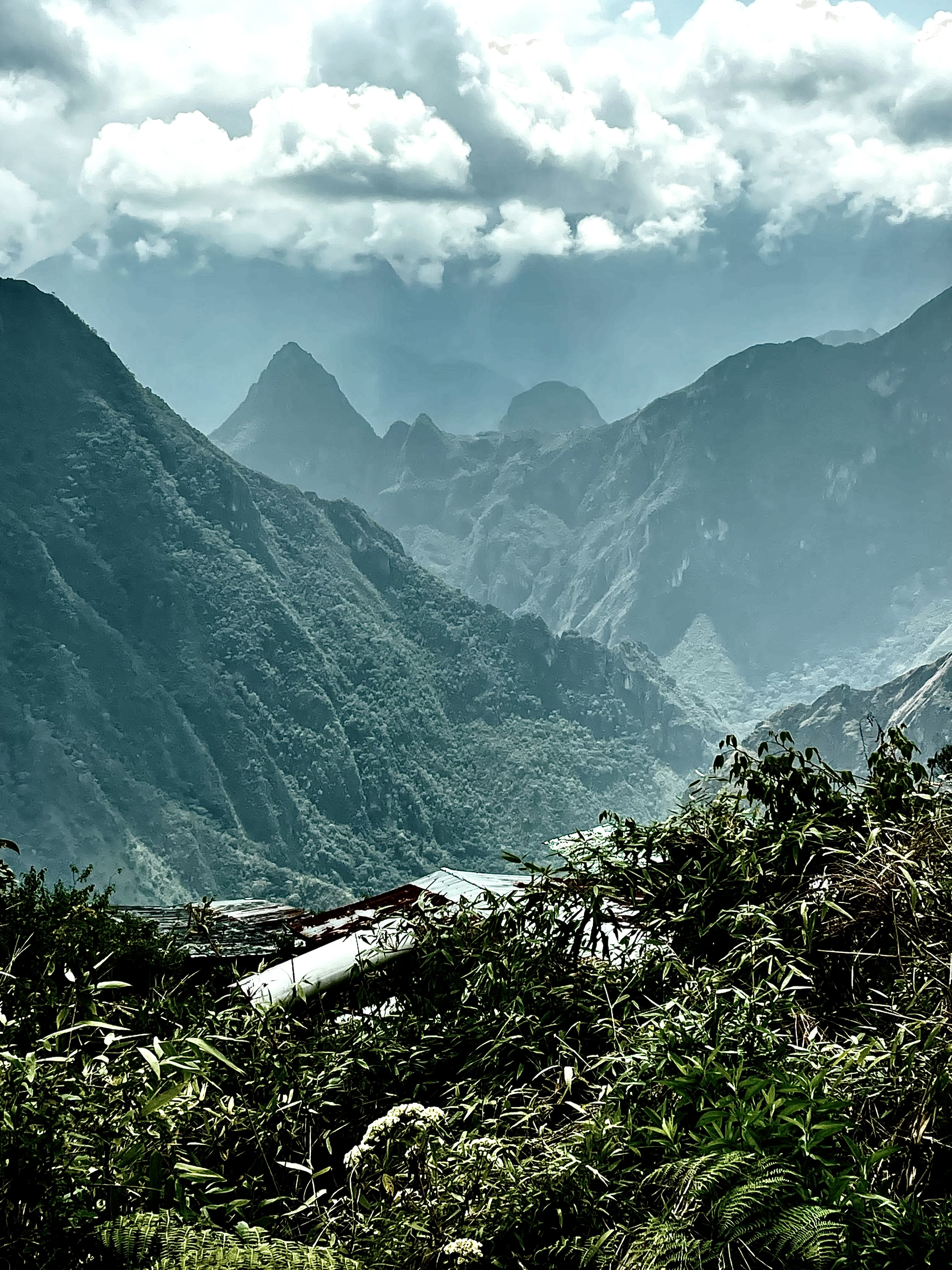
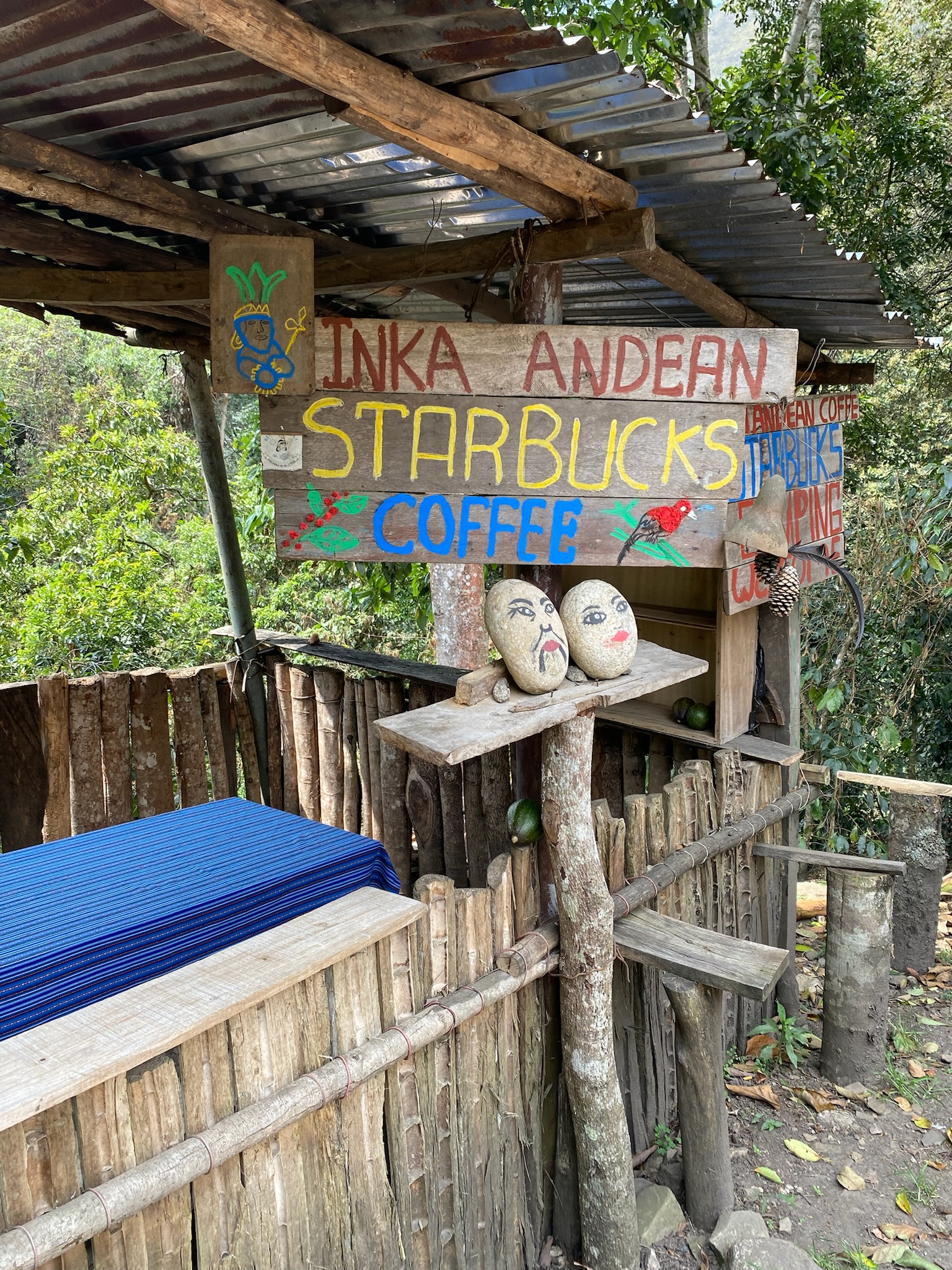
A few of us even tried the mountain ledge swing. Wahoo!
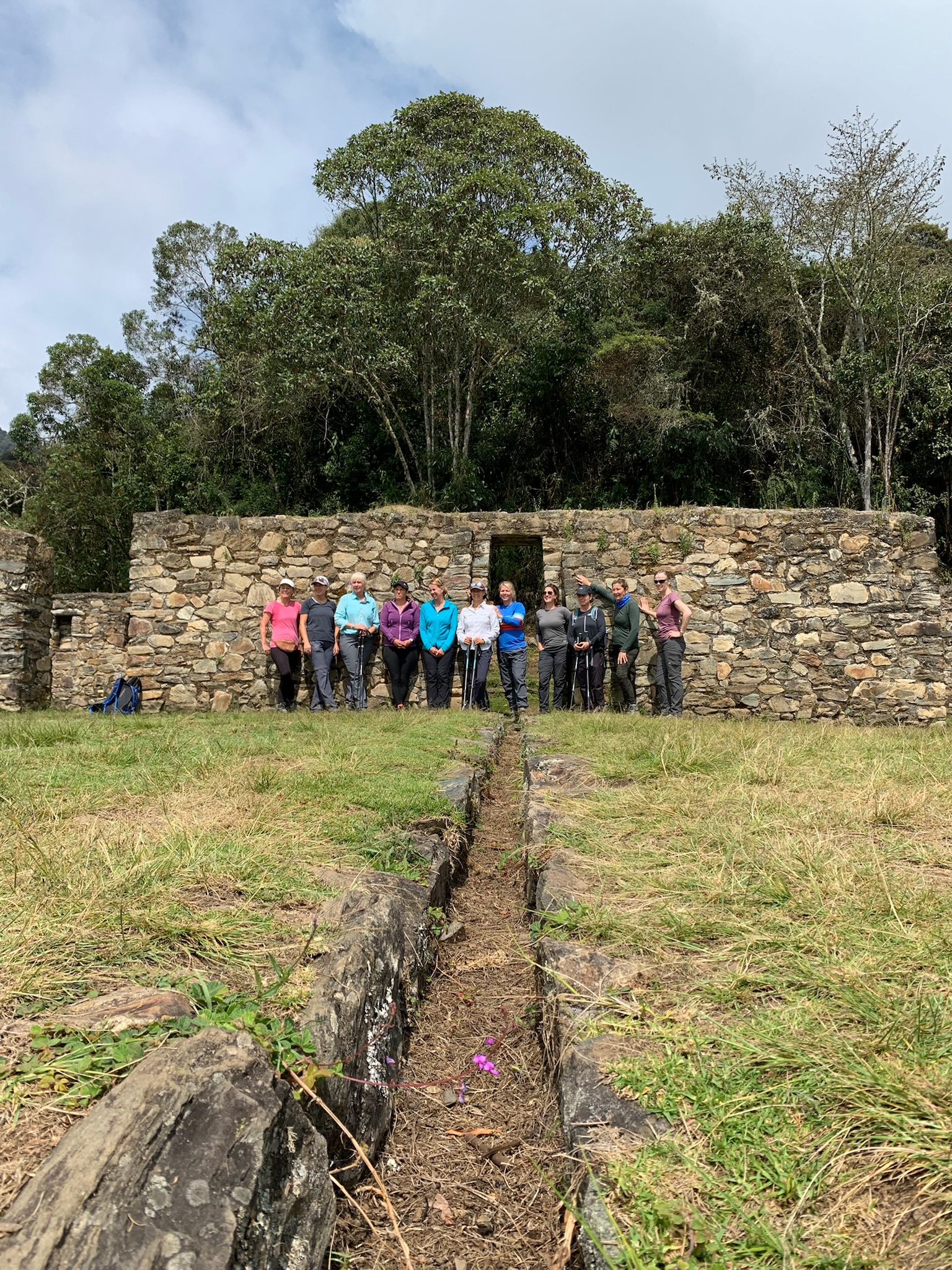
After bush-whacking, we walked around some rarely visited ruins. And then — and then — we finally saw Machu Picchu from a rare vantage point. Again, there were tears… and just pure exhaustion.

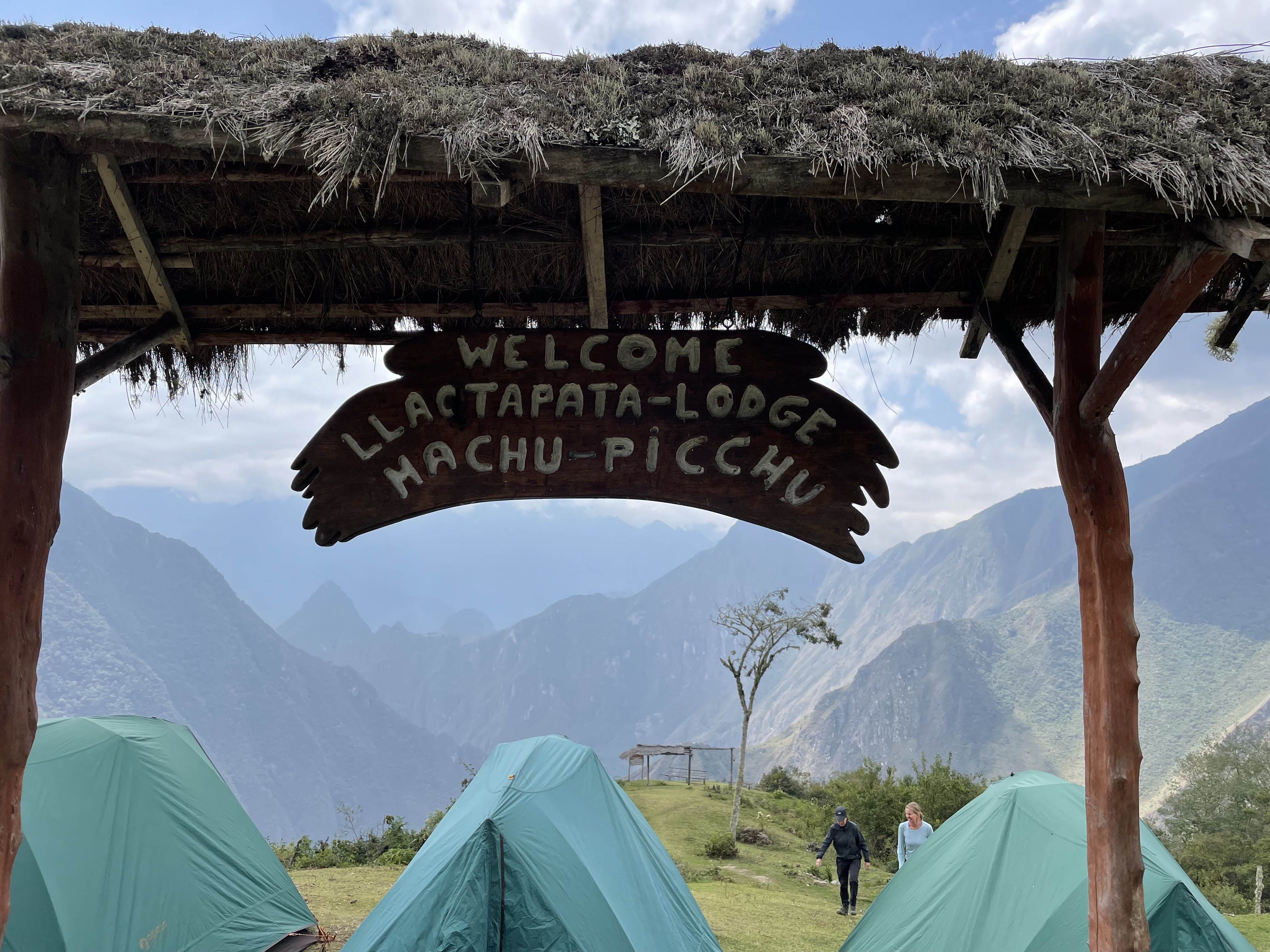
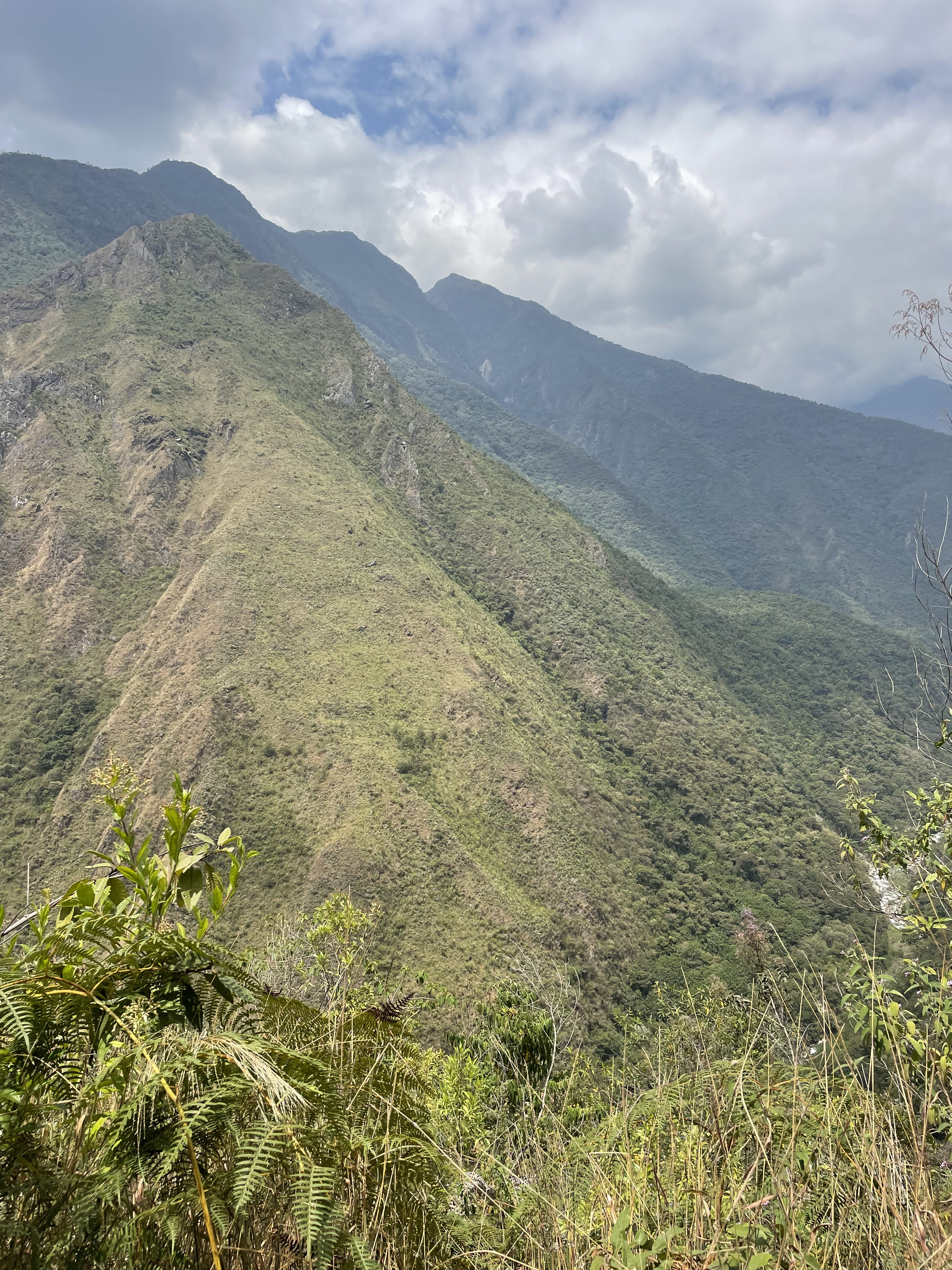
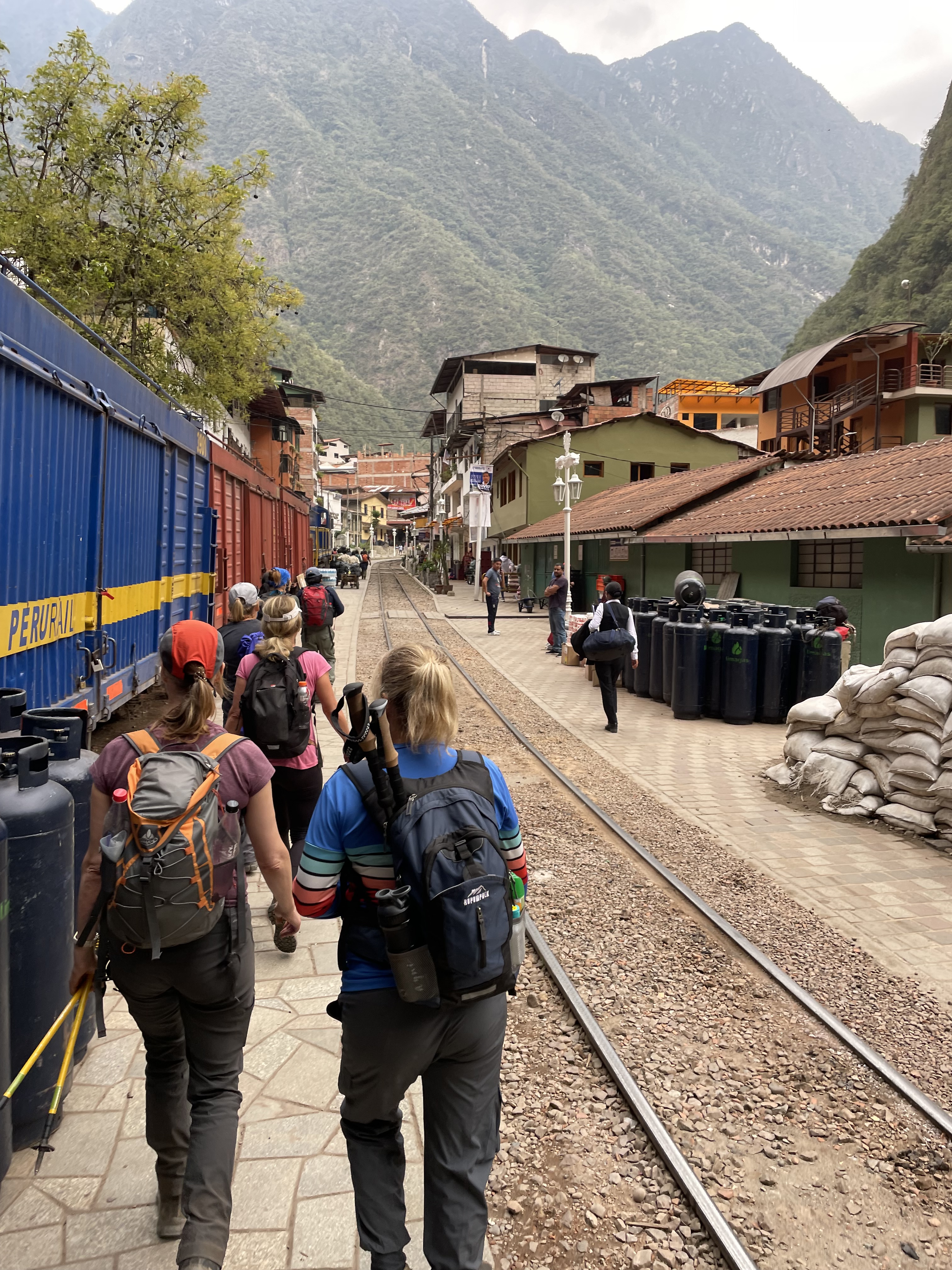
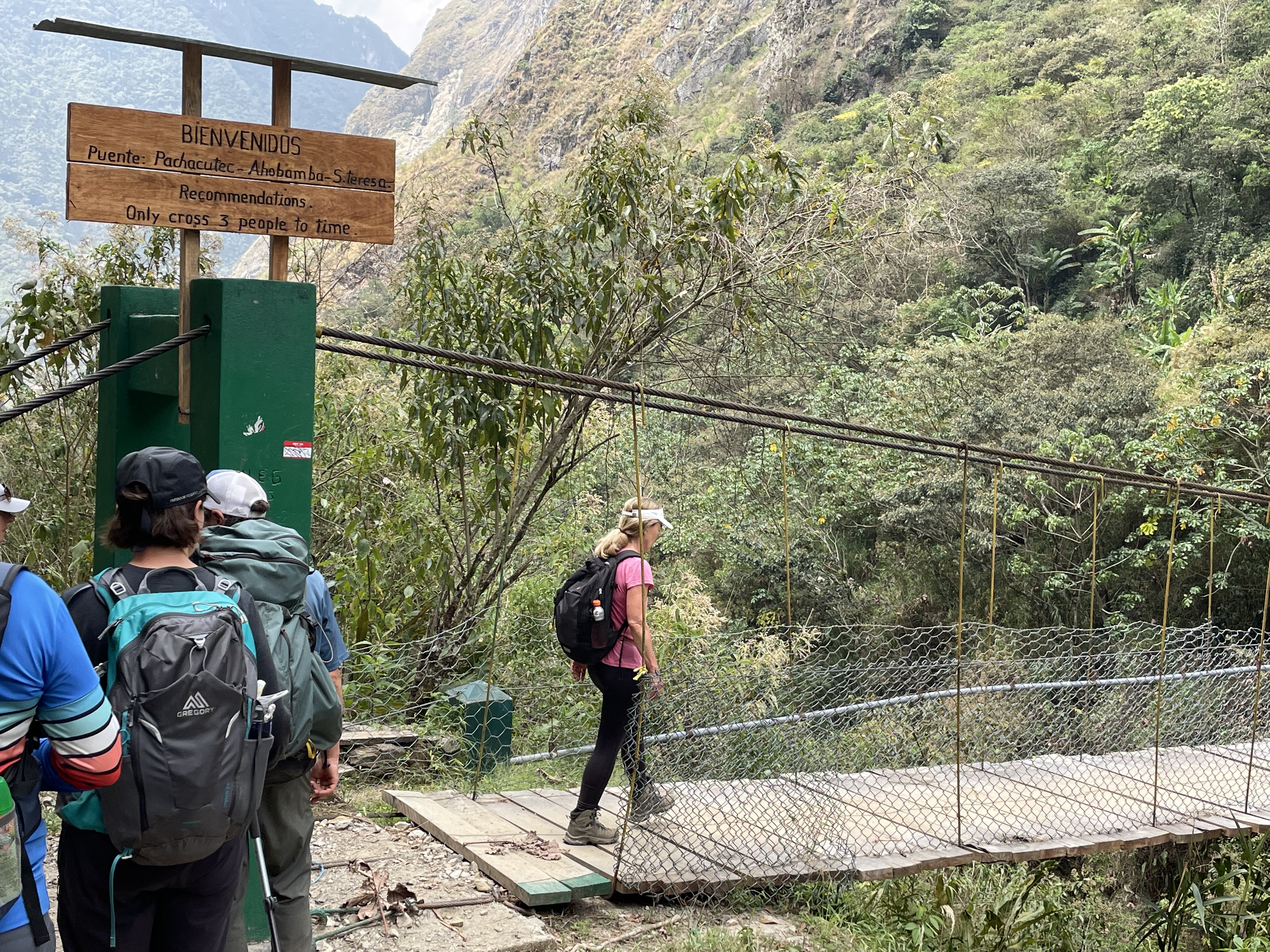
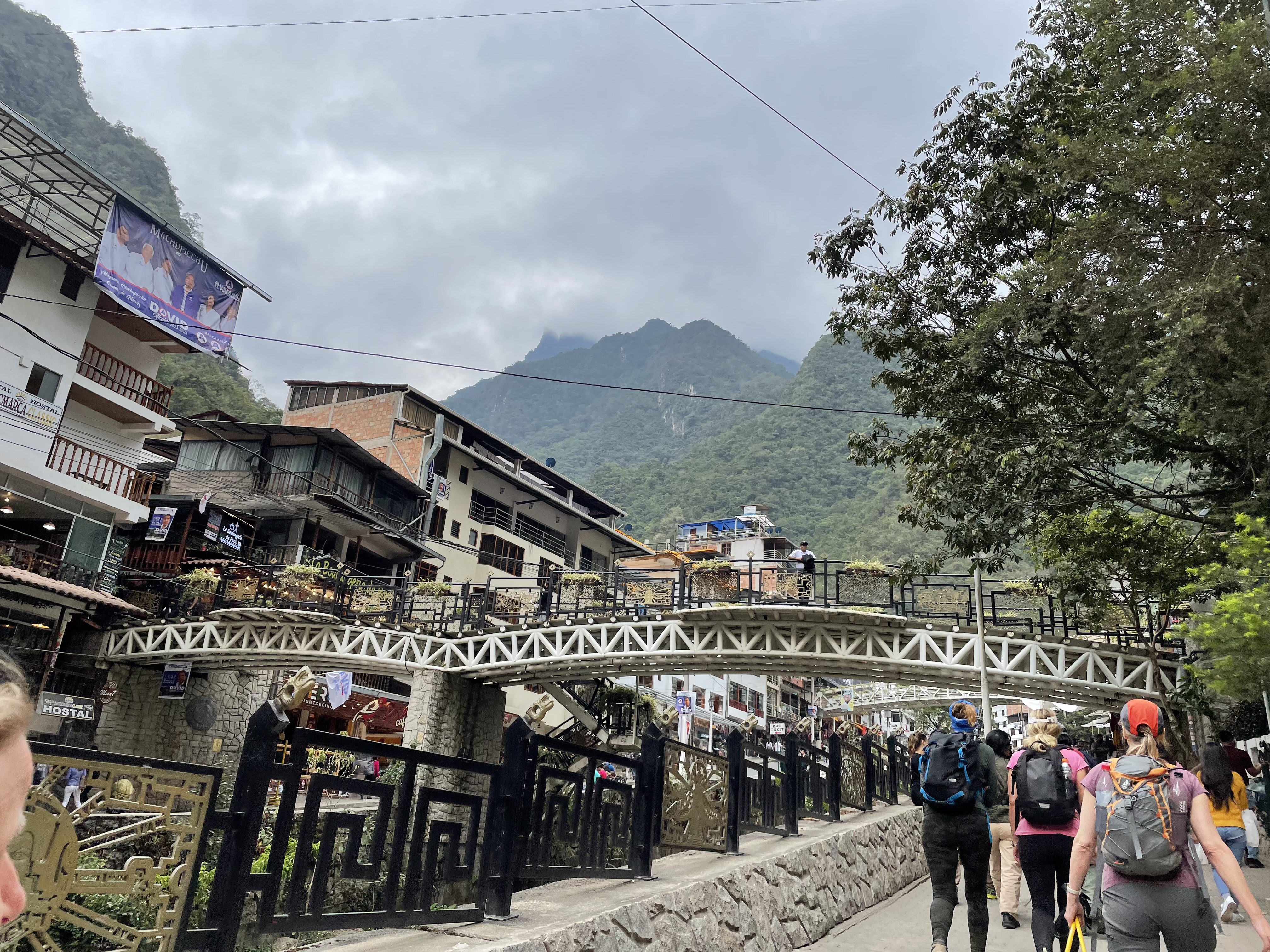
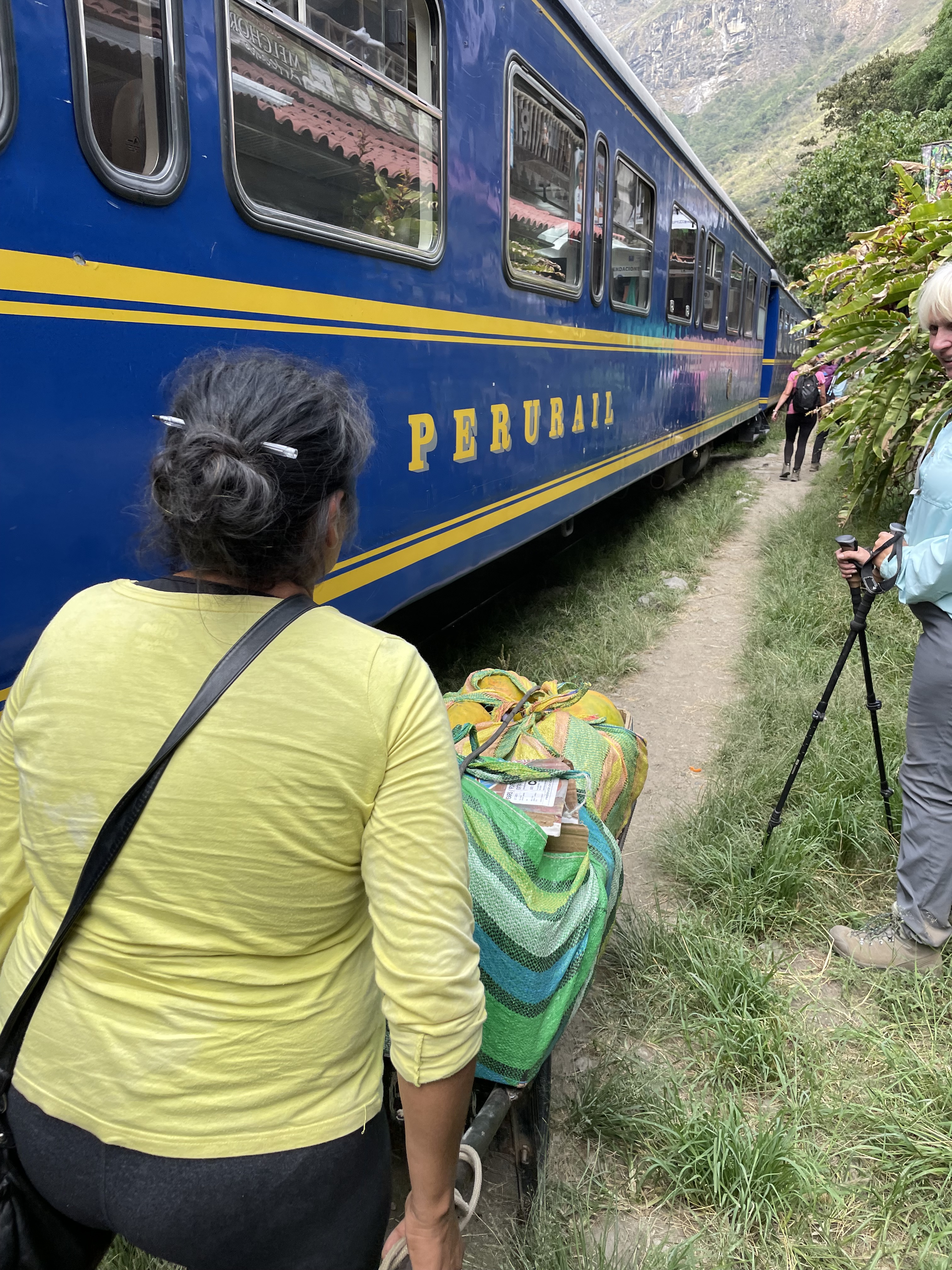
We hiked a winding descent to the Aobamba River Valley to the train station and rode 1/2 hour into the pretty town of Aguas Calientes. The train is hilarious, btw: they have musical performers and a fashion show!

DAY 13: MACHU PICCHU
To say that we were spoiled for the majority of our trip is an understatement: we were on our own, exploring ruins and meeting friendly villagers. At Machu Picchu, we were surrounded by crowds. Everyone was vying for a photo op (including us). There was a ridiculous woman in heels and a fancy dress, bus loads of tourists, and lineups for entry and water. We did escape some of the throngs by hiking up higher. If we’d time, I would have liked to hike Huayna Picchu.
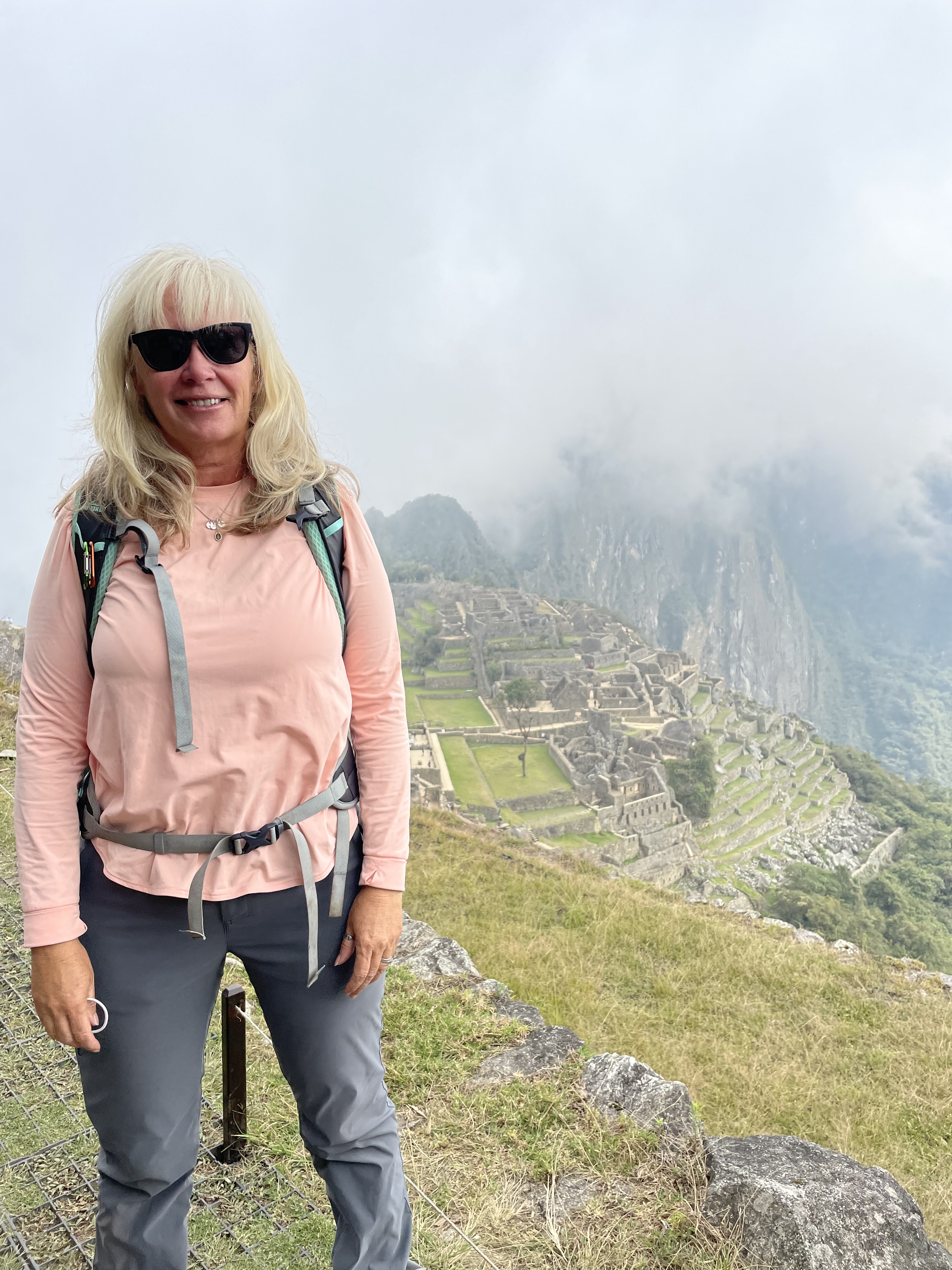
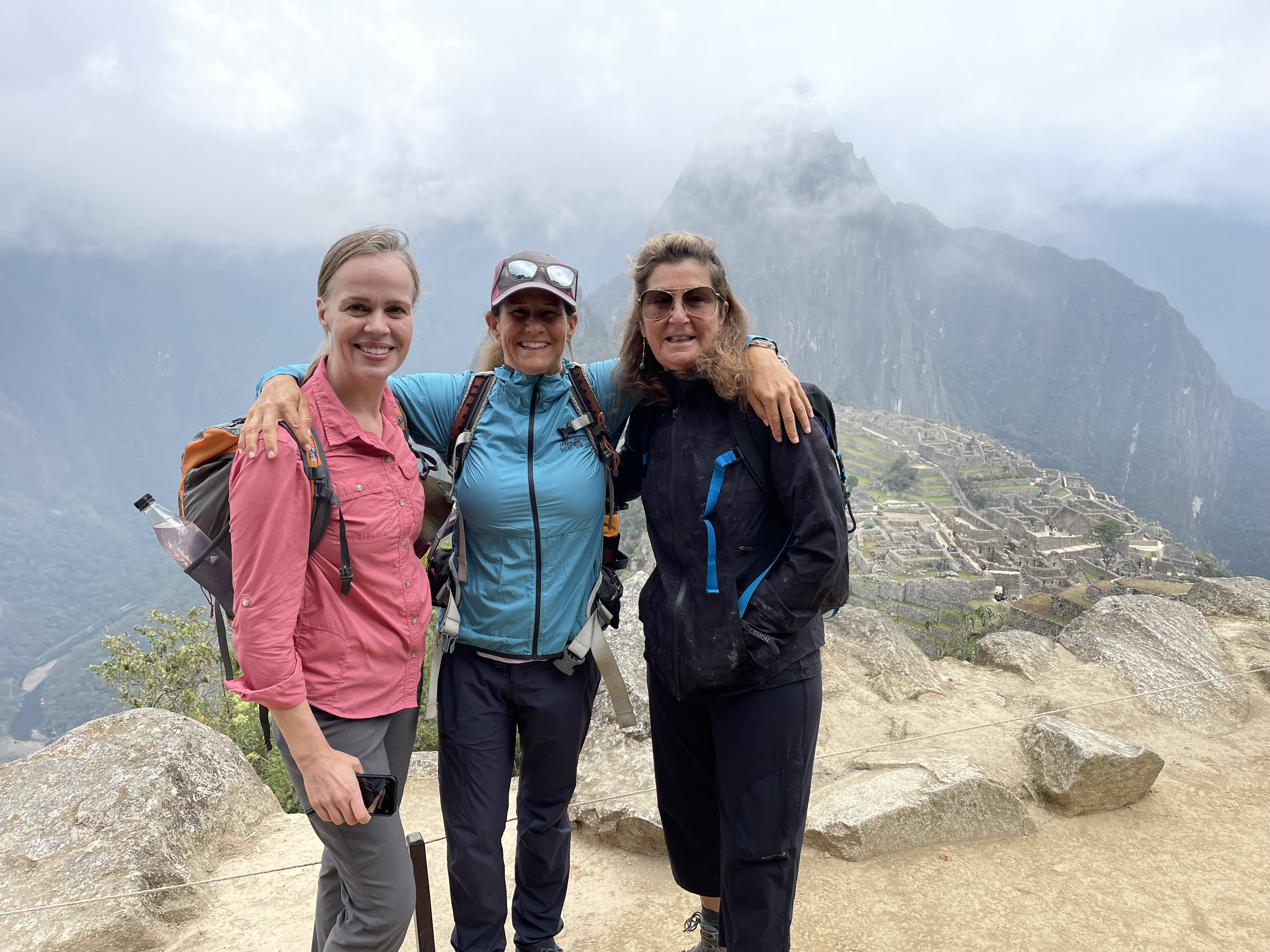
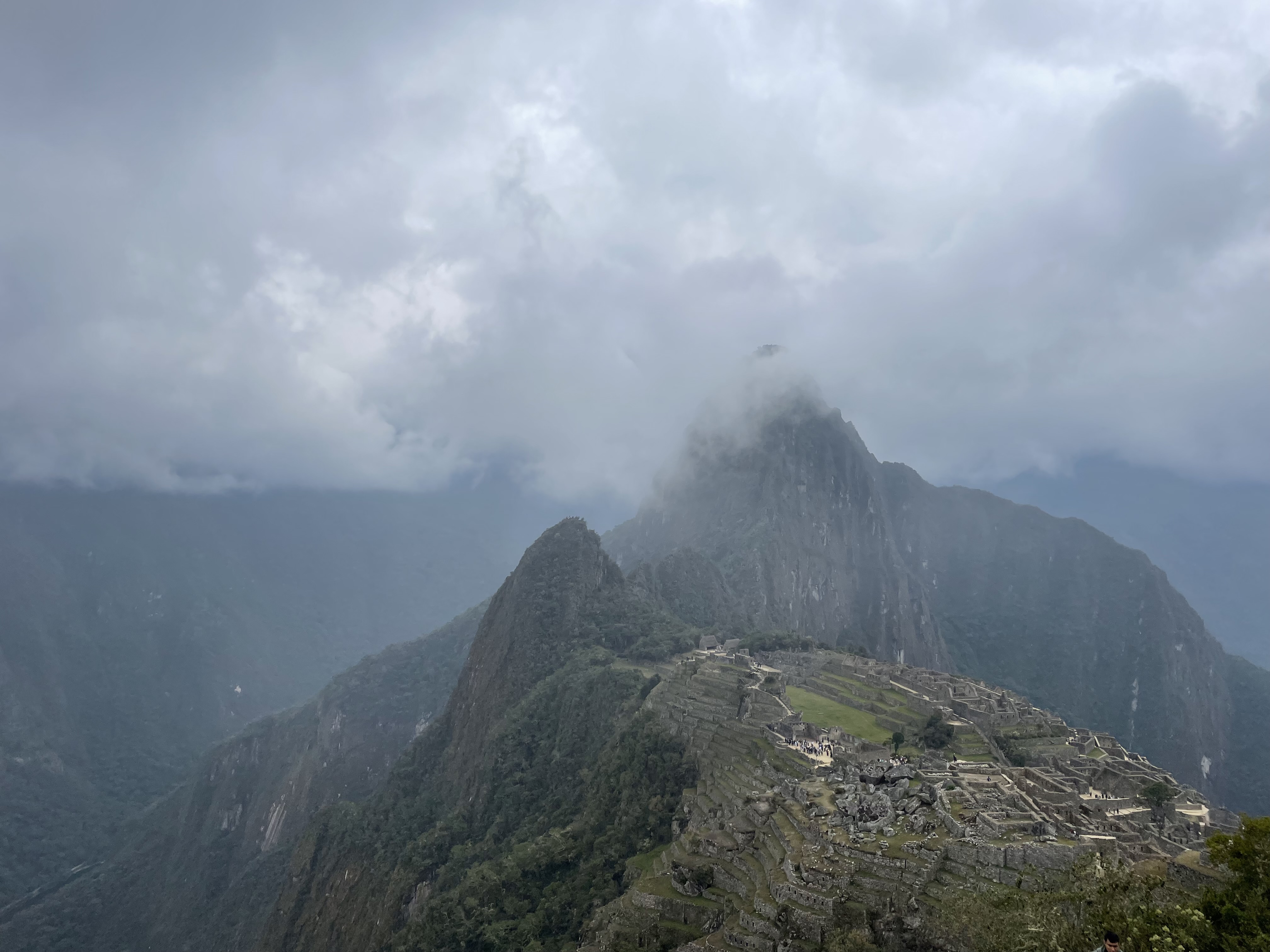
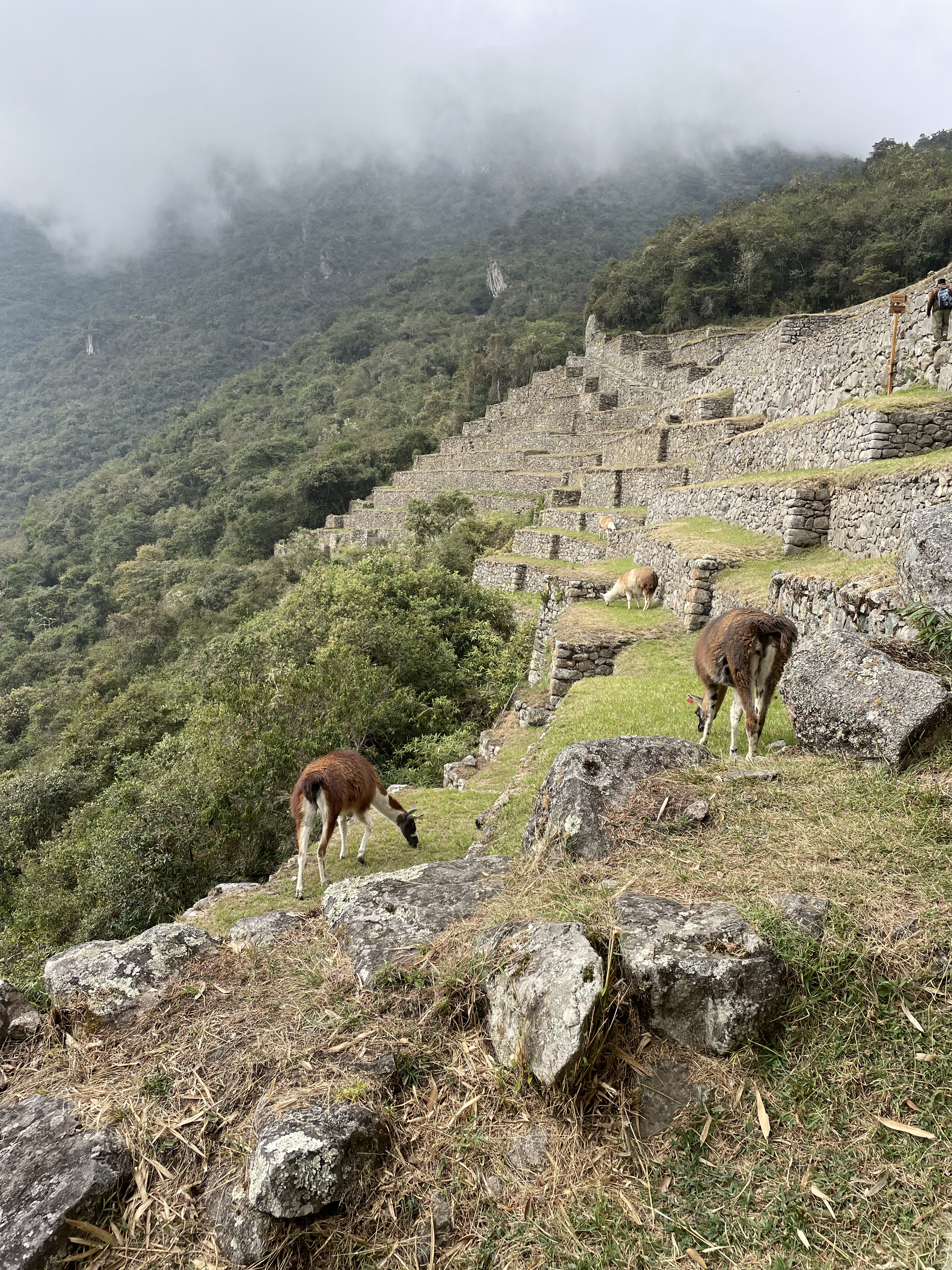
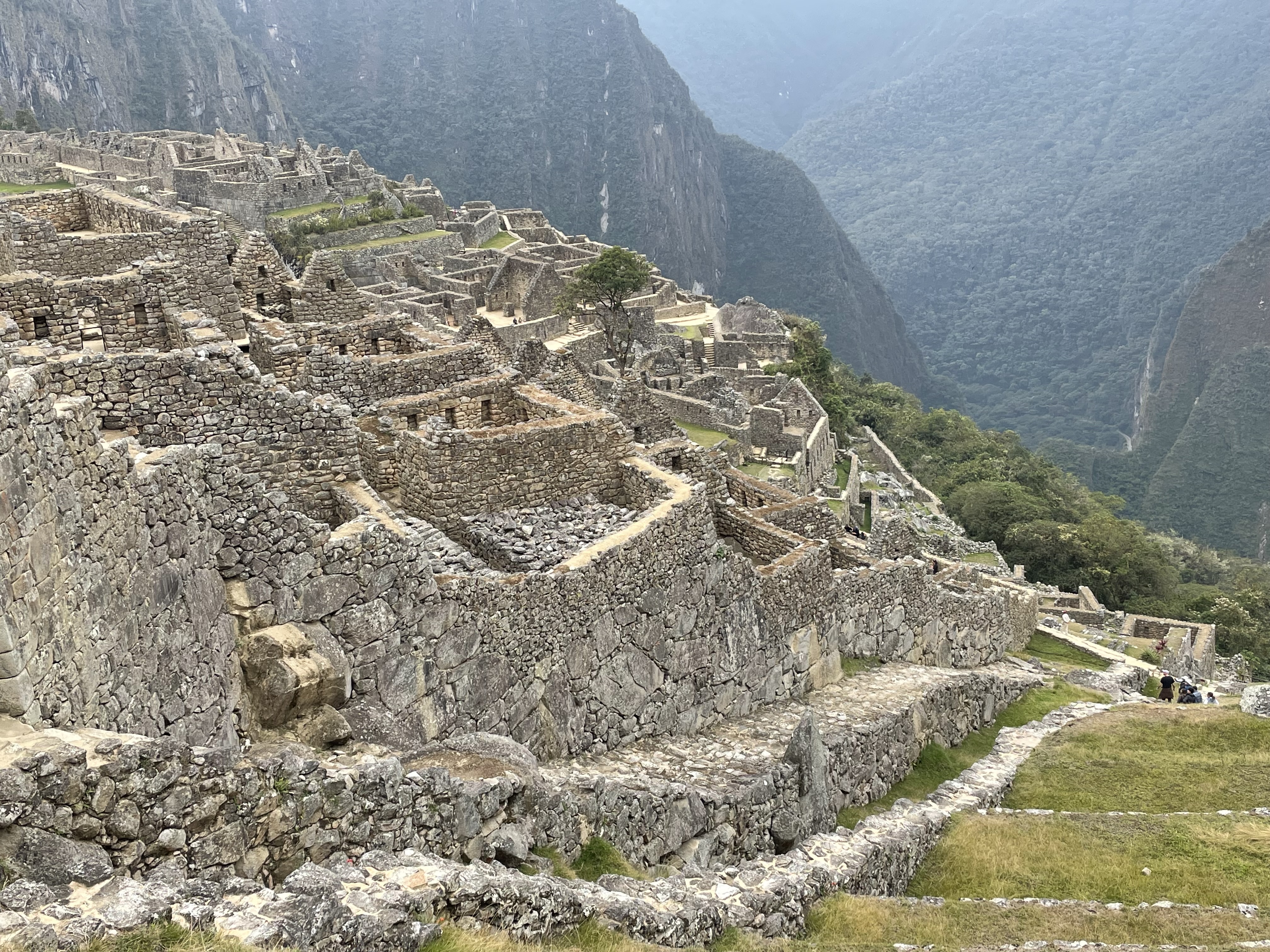
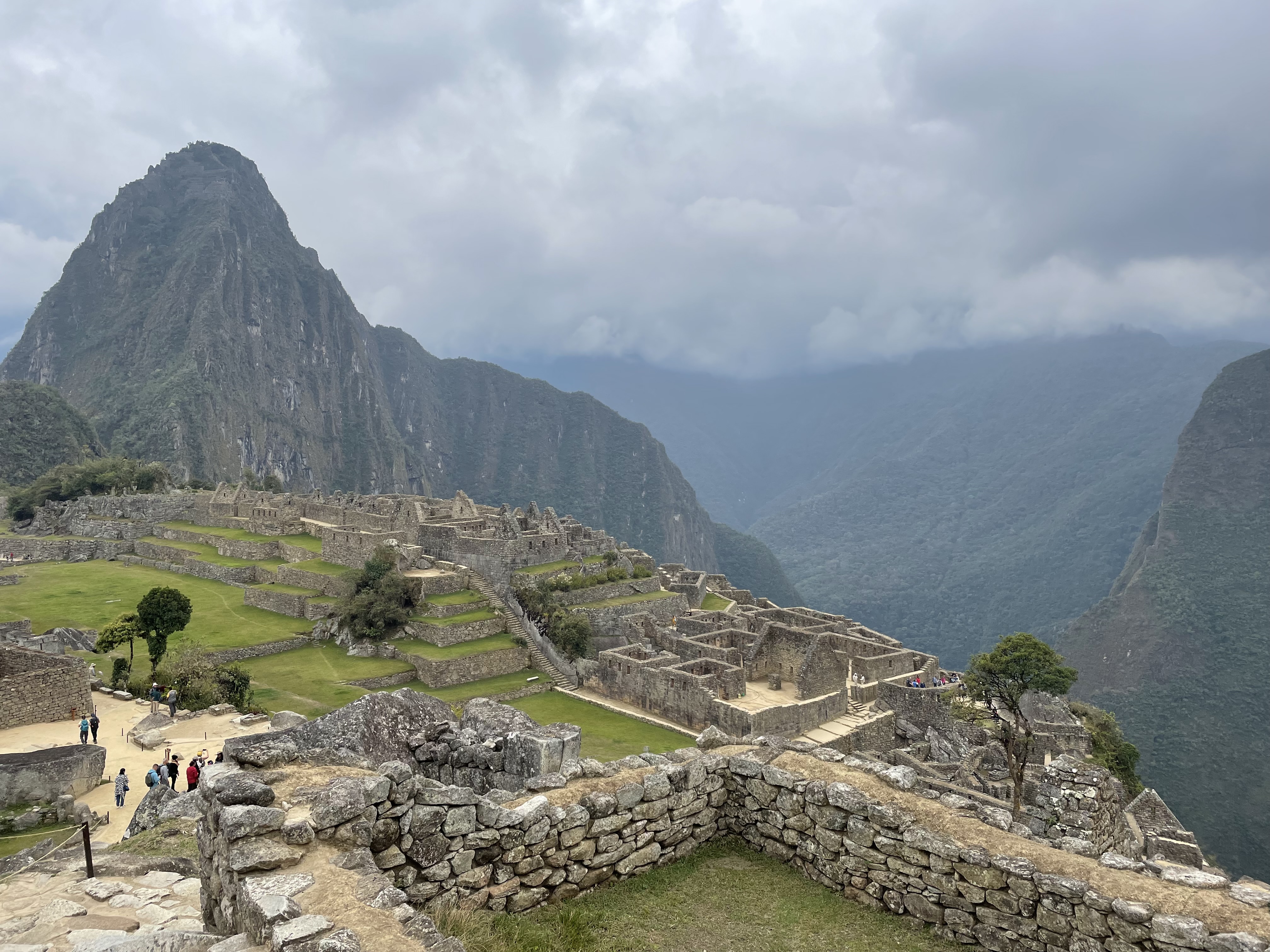
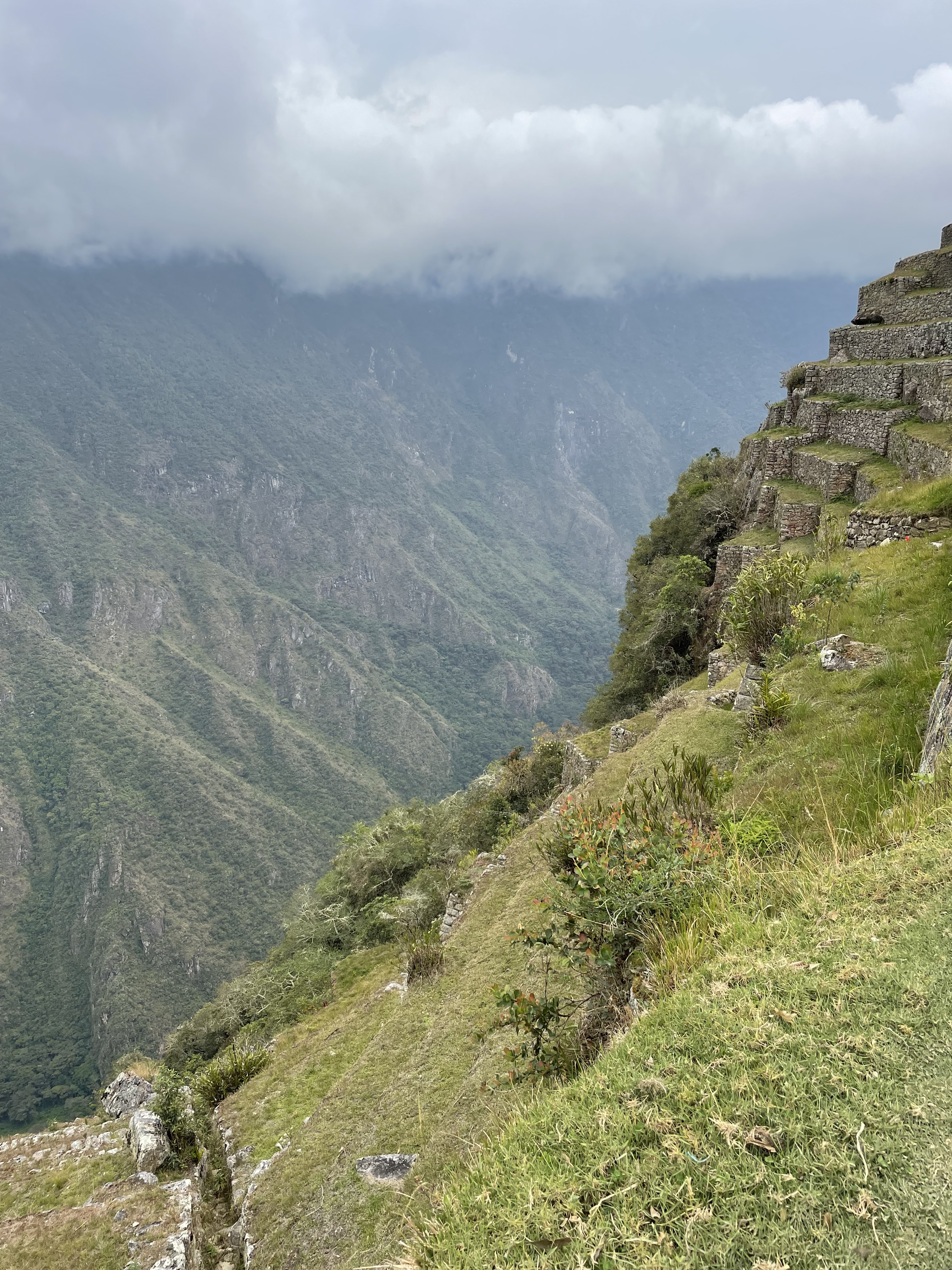
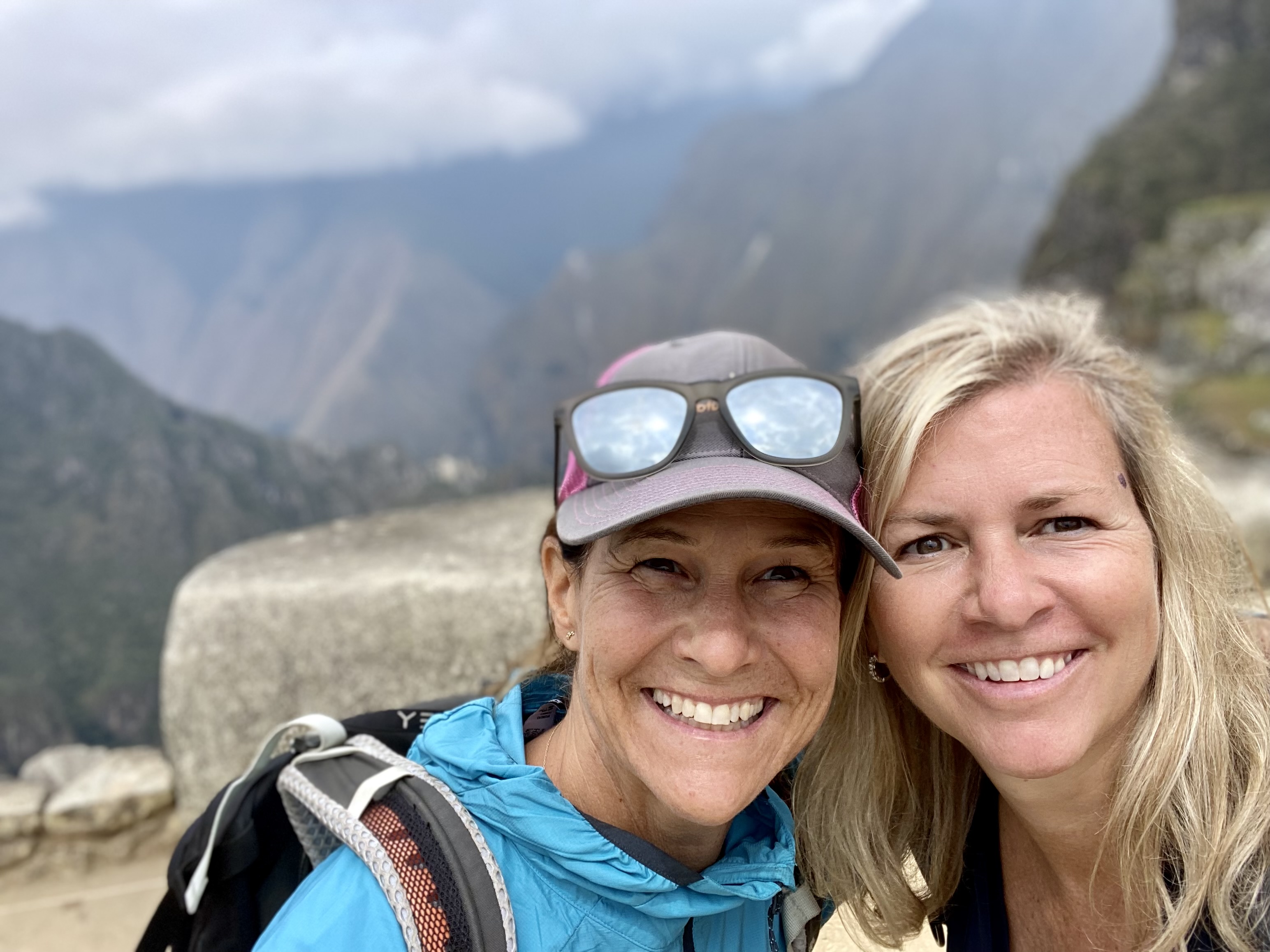
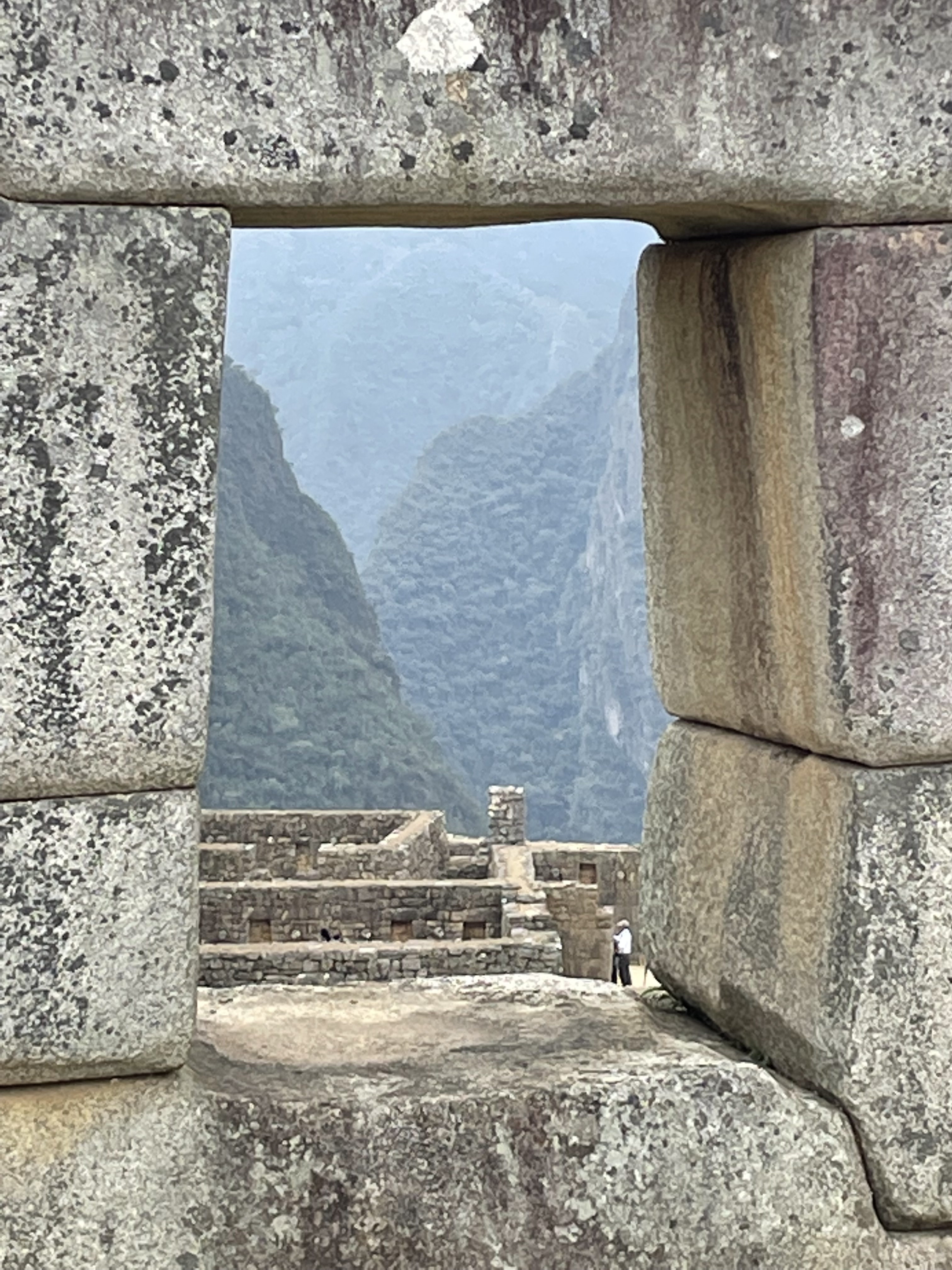
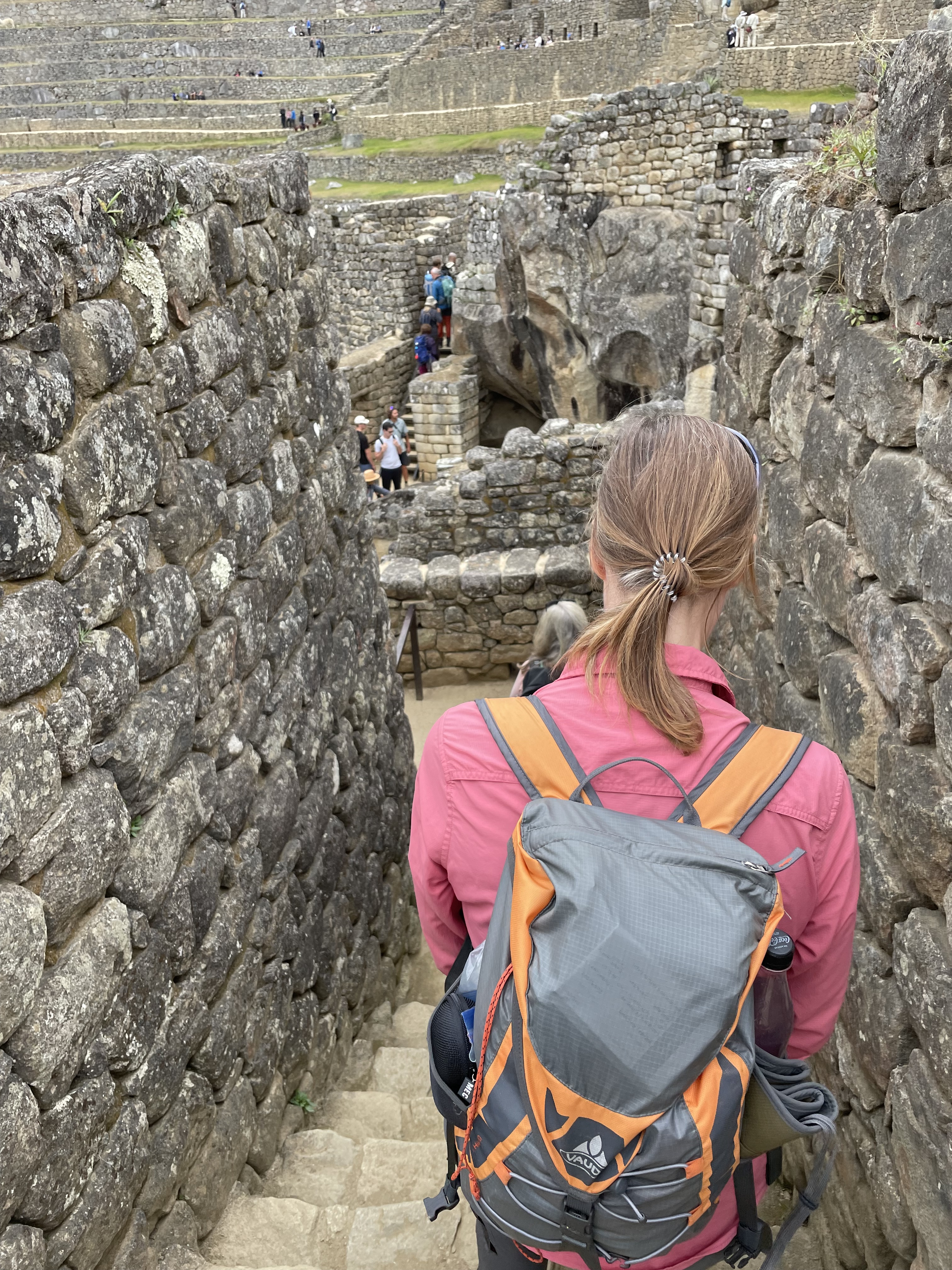
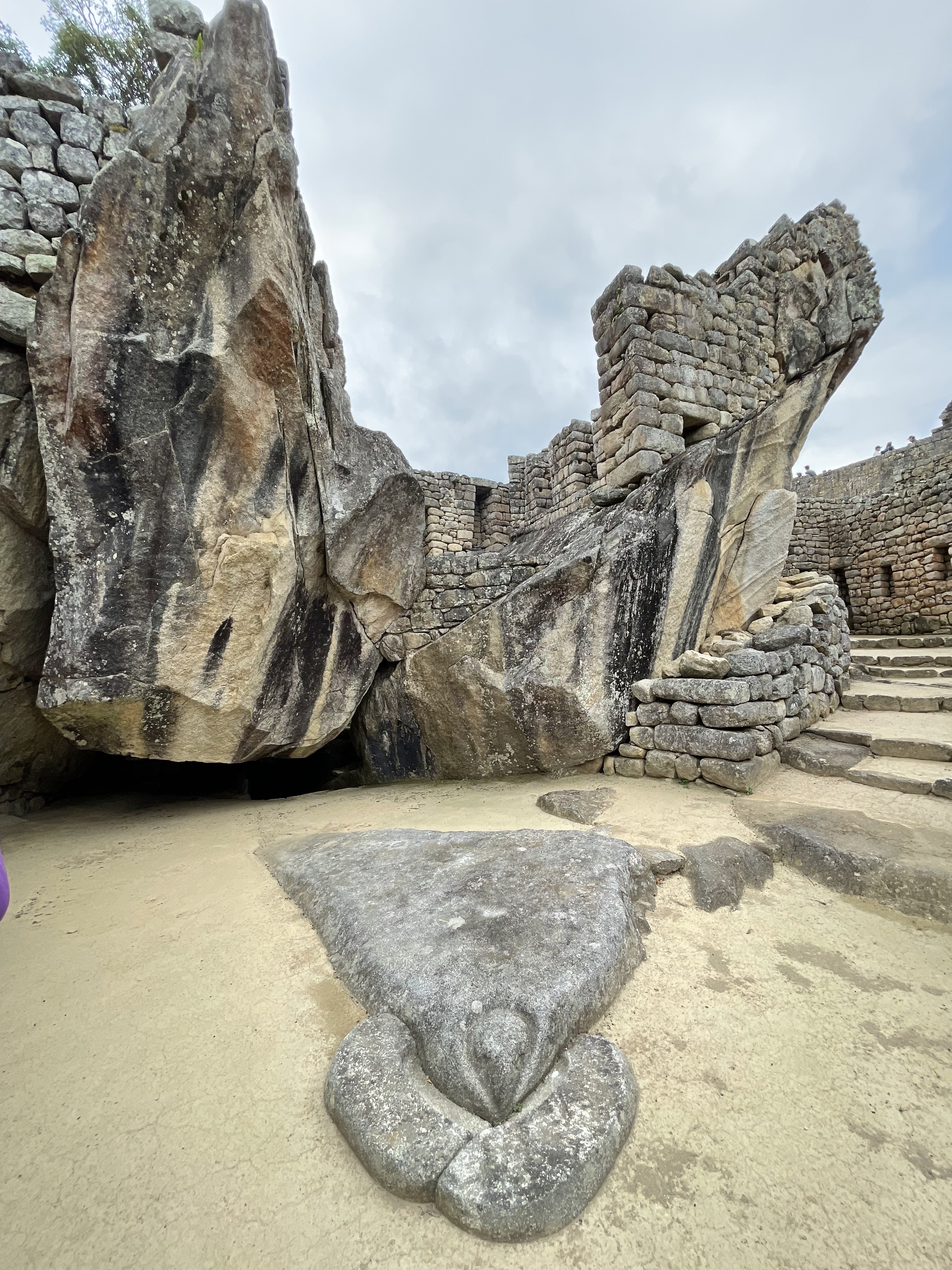
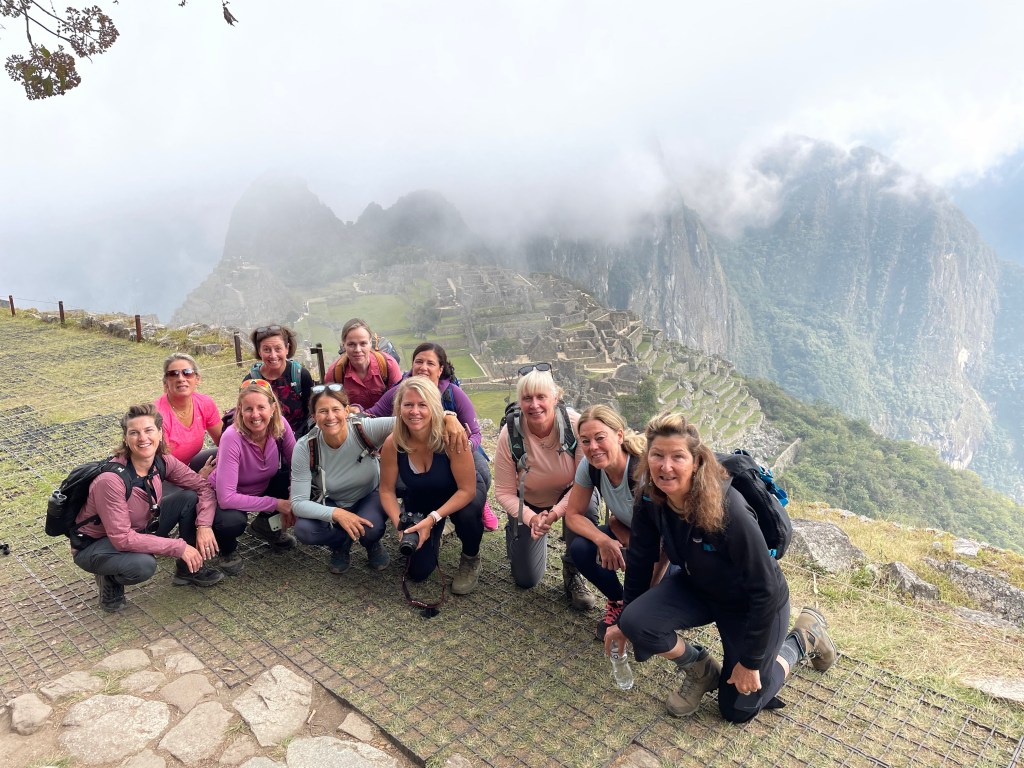
Machu Picchu is, of course, awe-inspiring: an archeological and cultural feat, perched high on a mountain. Was it my favourite part of the adventure? Sadly, the crowds and bus lineups were a big detractor.
That afternoon, we let the air out of our proverbial tires, explored the town, and then were transported back to Cusco. That night, Colleen and Alex ordered alpaca for dinner. I tried it: very stringy but okay!
DAY 14-15: TAMBO DEL INKA, COLDPLAY, and HOME
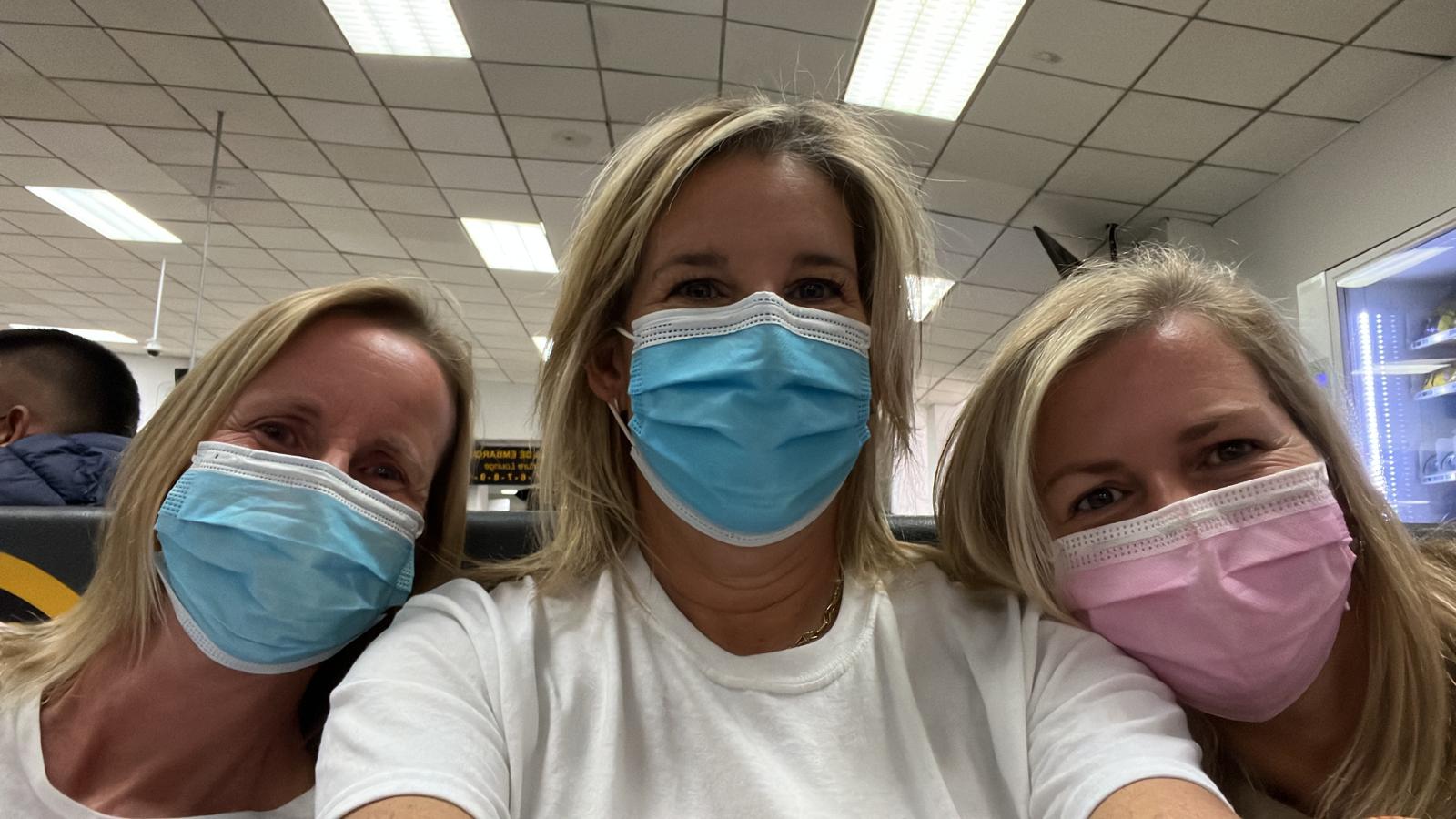
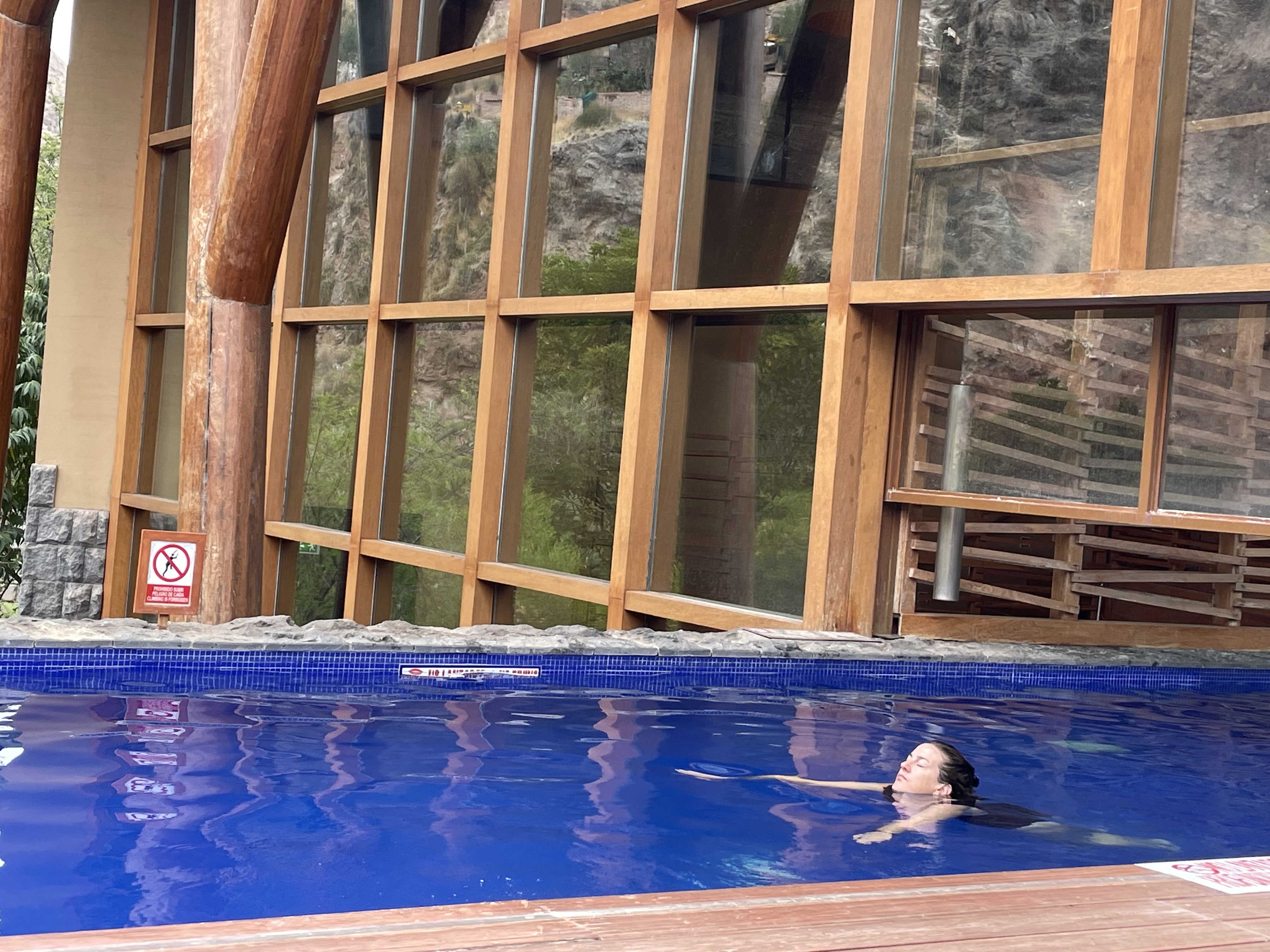
We chilled at this lovely hotel in Cusco. Dawna and Nikki left early and hit the Coldplay concert in Lima. 🙂 Then, everyone donned their CoVid masks and we jumped on planes to head home.
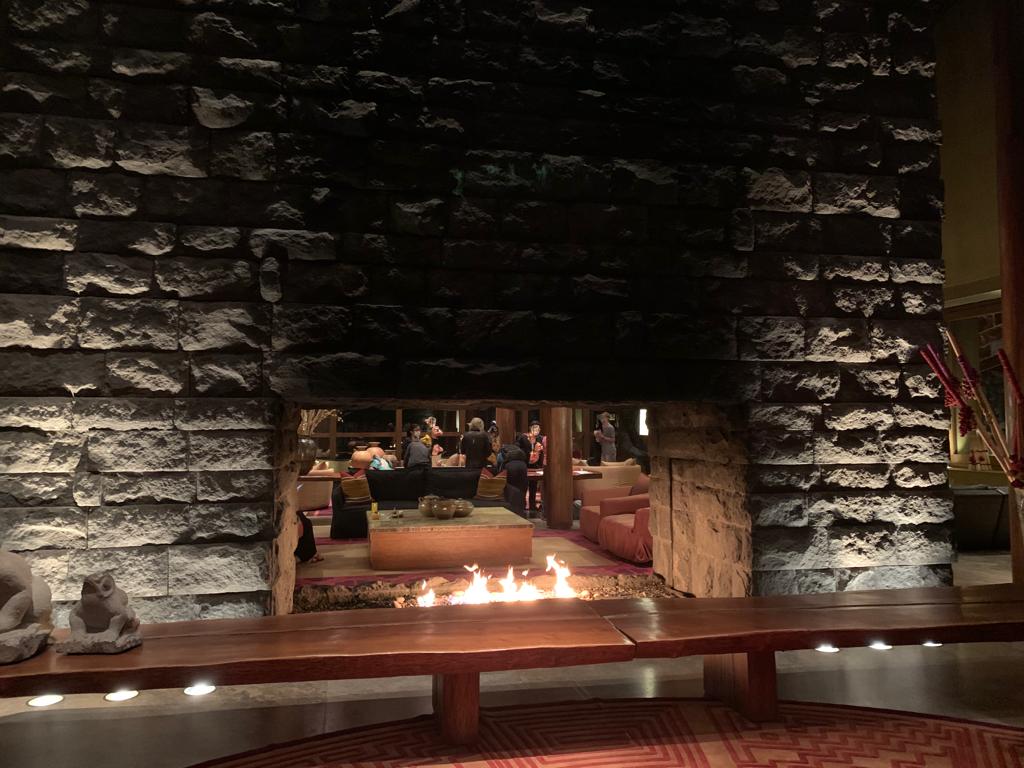
SUMMARY
I’d love to return to Peru and bring my family. It is a wondrous, magical place.
ALTITUDE PREPARATION: The Mountain Lodges of Peru definitely planned this well for us, giving us many days to acclimatize. For tips on how to deal with altitude, this is a good resource.
PACKING LIST: Here is what we were advised to bring for the Salkantay Trail. We left our street clothing with the guiding company in soft duffels while we hiked.
- Day pack
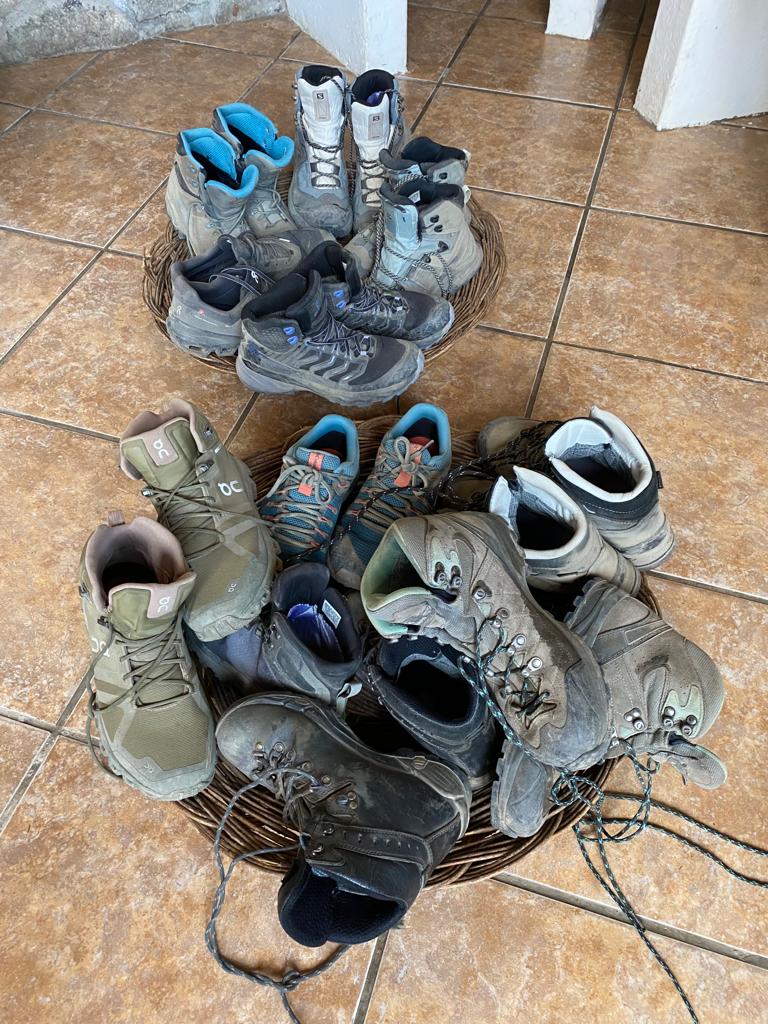
- Broken-in hiking boots (sneakers are not suitable)
- Full rain gear and poncho ( rain jacket, rain pants or gaiters, waterproof boots)
- Gloves
- Lightweight hiking pants (recommended) and shorts
- Fast-wicking and quick to dry top and bottom base layers
- Comfortable shoes/flip-flops
- Cold-weather jacket
- Long-sleeve fleece/sweater
- Woolen hat
- Baseball cap, sombrero
- Buff or Bandana
- Binoculars
- Headlamp
- Sunglasses
- Comfortable hiking socks
- Sunscreen
- Insect repellant
- Bathing suit
- Casual mountain wear for evenings
- Photo/video cameras and chargers
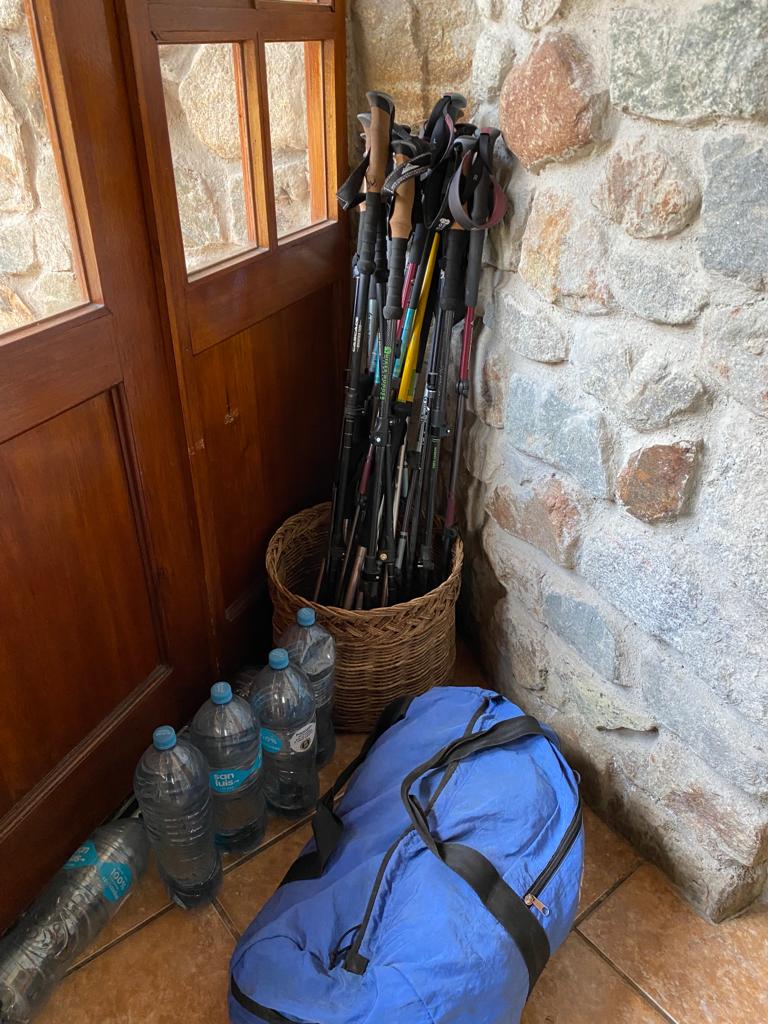
- Trekking poles
- Refillable water bottle
“We travel because we need to, because distance and difference are the secret tonic to creativity. When we get home, home is still the same, but something in our minds has changed, and that changes everything.” Jonah Leher
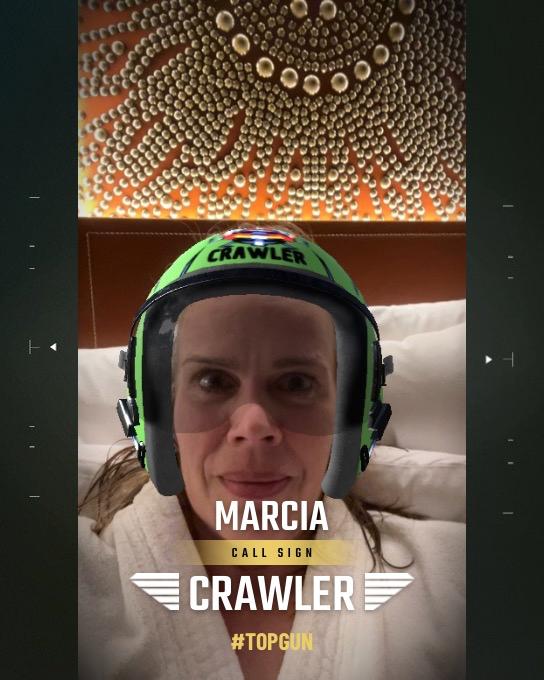
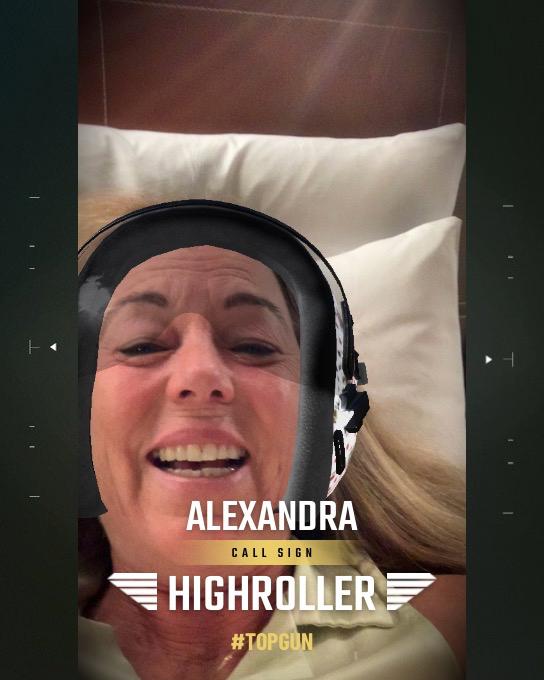
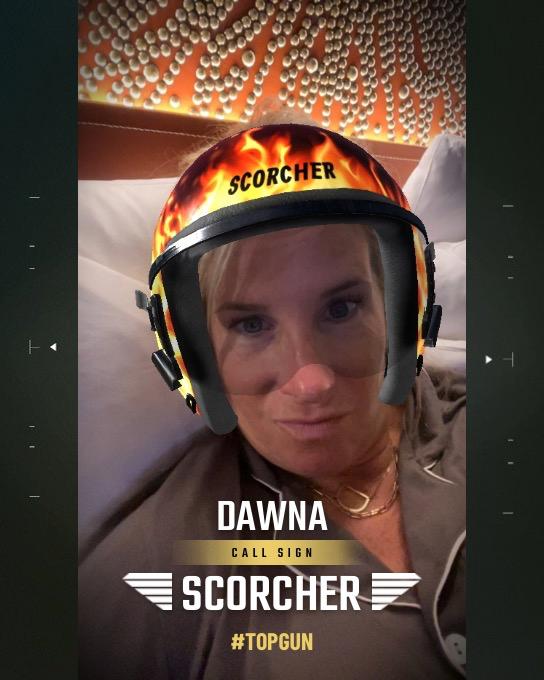
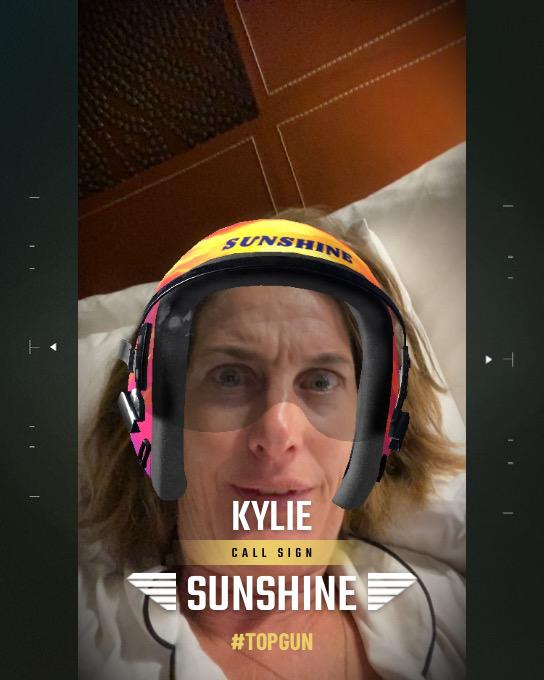
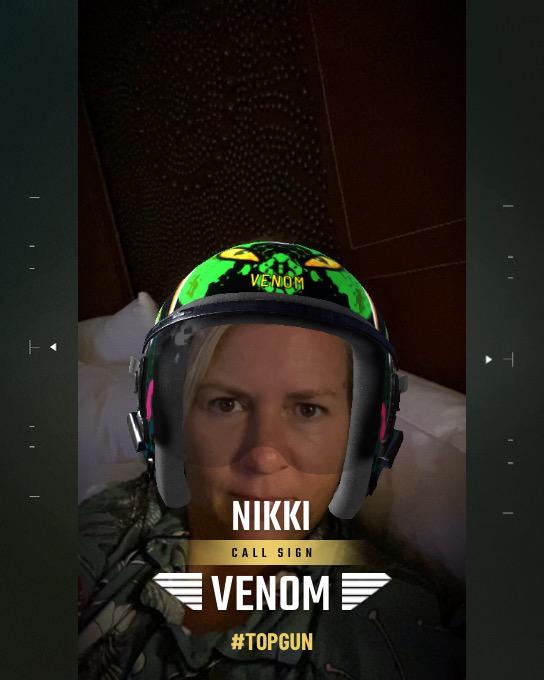
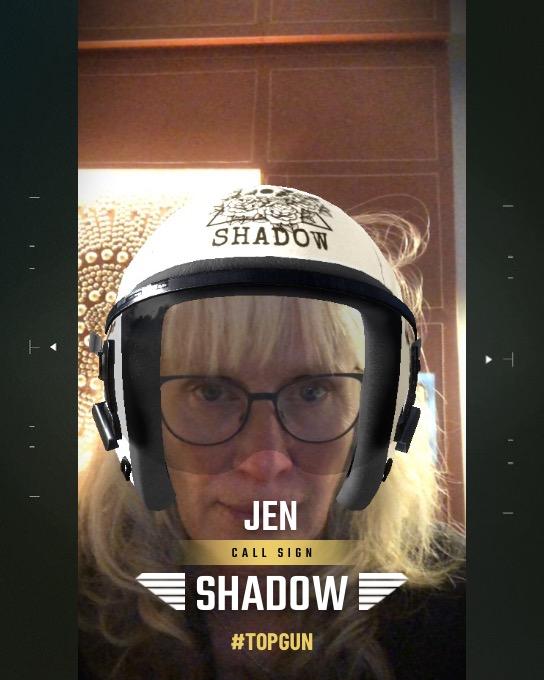
P.S. Late night antics in Cusco… There is an app that gives you your Top Gun handle. I loved all 10 of the women on this trip. They made me laugh. (And yes, I look like Tommy Lee Jones in my pic… damn sexy).

 TREDSUP